
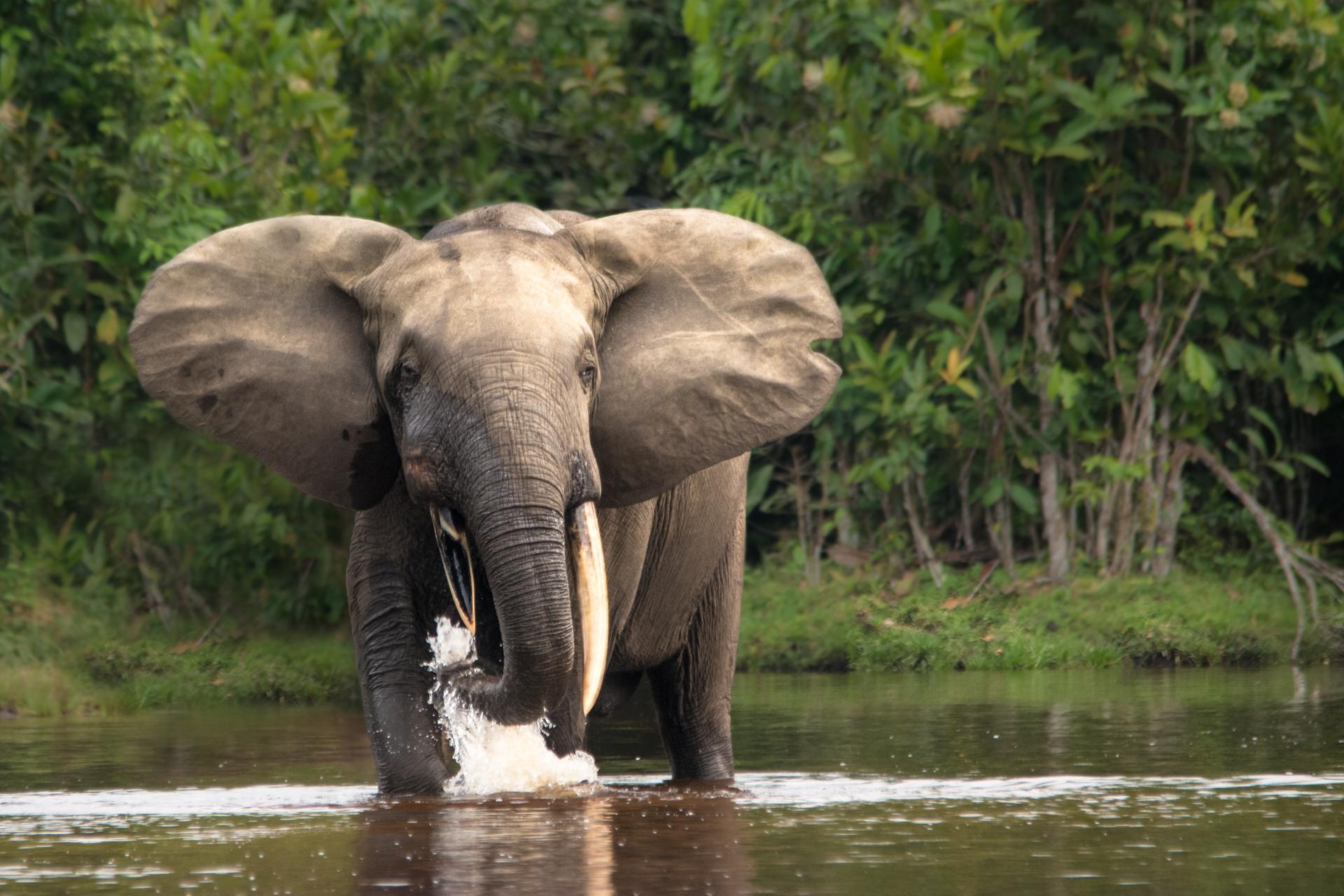
The GEF-funded Congo Forest Integrated Programme consists of two sequential initiatives, the GEF-7 Congo Basin Impact Programme (2021-2027) and the GEF-8 Congo Critical Forest Biome Integrated Programme (2025-2032).
Together, the programmes represent an investment of approximately $100 million, comprising funding from the Global Environment Facility (GEF) plus cofinancing.. The Congo Forest Integrated Programme supports forest conservation and sustainable management through a regional landscape approach that addresses deforestation and forest degradation. It promotes regional dialogue and collaboration while mobilizing climate finance to expand conservation efforts throughout the Congo Basin.
The ultimate goal of the Congo IP is to have a positive and lasting impact on biodiversity, sustainable forest management and local communities
---
For additional information about the geographies where the Programme is active, please visit: Where we work.
GEF Funded Congo Forest IP Pillars
Protecting Transboundary Forest Landscapes
In partnership with ECCAS, COMIFAC, civil society, and technical experts, the Congo Forest Integrated Programme enhances policies and regulations to conserve key landscapes—Mayombe, Atlantic Coastal Forests (São Tomé and Príncipe, Equatorial Guinea), and the Oubangui—focusing on transboundary cooperation and safeguarding critical ecosystems.
Scaling Up Biodiversity and Forest Carbon Initiatives
Recognizing the Congo Basin's status as a biodiversity hotspot, the programme implements targeted actions—strengthening protected areas, creating wildlife corridors, fighting wildlife trafficking, and establishing disease surveillance—while promoting habitat connectivity and regional collaboration for species resilience and carbon sequestration.
Supporting Community Livelihoods
With 65-80 million people relying on forests, the programme empowers Indigenous Peoples and local communities through capacity building, land rights support, and sustainable enterprise development. It facilitates private sector engagement and ensures conservation finance directly benefits those at the forefront of sustainable forest management.
Developing Innovative Financing Mechanisms
To sustain conservation efforts, the programme advances new financing models—such as biodiversity-positive carbon credits, market incentives, and indigenous finance readiness—mapping existing initiatives and establishing a transparent, regional database to mobilize and scale resources.
Enhancing Capacity, Knowledge, and Regional Collaboration
Focused on fostering effective governance and cross-border coordination, the programme promotes knowledge sharing among countries, supports the COMIFAC Convergence Plan, and aligns regional efforts with global biodiversity and climate commitments—strengthening the entire conservation landscape.
The Congo Forest IP is complemented by the IKI-funded Congo Basin Peatlands project, which advances peatlands governance, biodiversity conservation, and carbon storage, with a dedicated investment of €15 million over 2022–2027 focused on the Democratic Republic of the Congo and the Republic of Congo. Both efforts sit within a broader multi-donor collaboration designed to align landscapes, policy, finance, and private-sector engagement, ensuring coherent, integrated progress across the Congo Basin and reinforcing the overarching goals of a nature-positive, climate-resilient future.
Learn more about the IKI-funded Congo Basin Peatlands project
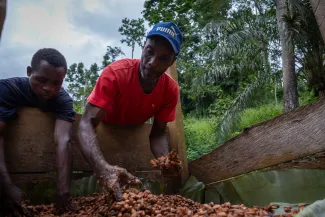
The Congo Forest IP addresses seven (7) fundamental barriers to achieving environmental benefits in the Congo Basin:
- Inadequate policies with weak cross-sector collaboration; • Insufficient ecosystem protection with protected areas below recommended levels and many underfunded “paper parks”;
- Ineffective governance characterized by overlapping mandates and poor community engagement;
- Technological limitations including restricted access to conservation technologies and poor infrastructure;
- Market failure that undervalues standing forests;
- Insufficient capacity among local stakeholders who lack control over land-use decisions; and
- Financial barriers including limited conservation funding and minimal private sector engagement.
Tackling these challenges through five (5) key focus areas
01. Strengthening Congo Basin forest governance:
Strengthen governance through supporting an enabling policy and regulatory framework at national and regional levels for Congo Basin forest conservation to protect biodiversity, enhance carbon sequestration capacity, and ensure ecosystem resilience;
02. Sustainable forest management:
Reducing deforestation and forest degradation while restoring ecosystem services by scaling up conservation and forest carbon initiatives through integrated landscape management;
03. Community livelihoods:
Empower indigenous peoples, women and local communities in the Congo Basin through green enterprises that enhance livelihoods for forest-dependent populations while fostering sustainable private sector partnerships;
04. Innovative financing mechanisms:
Mobilization and effective channelling of finance, piloting novel approaches such as natural capital accounting to strengthen biodiversity conservation in the Congo Basin landscape;
05. Regional Cooperation through knowledge exchange:
Facilitate national and regional interinstitutional coordination of efforts to preserve forest resources, protect biodiversity and improve forest and water management through knowledge building, technology exchange and resource mobilization.