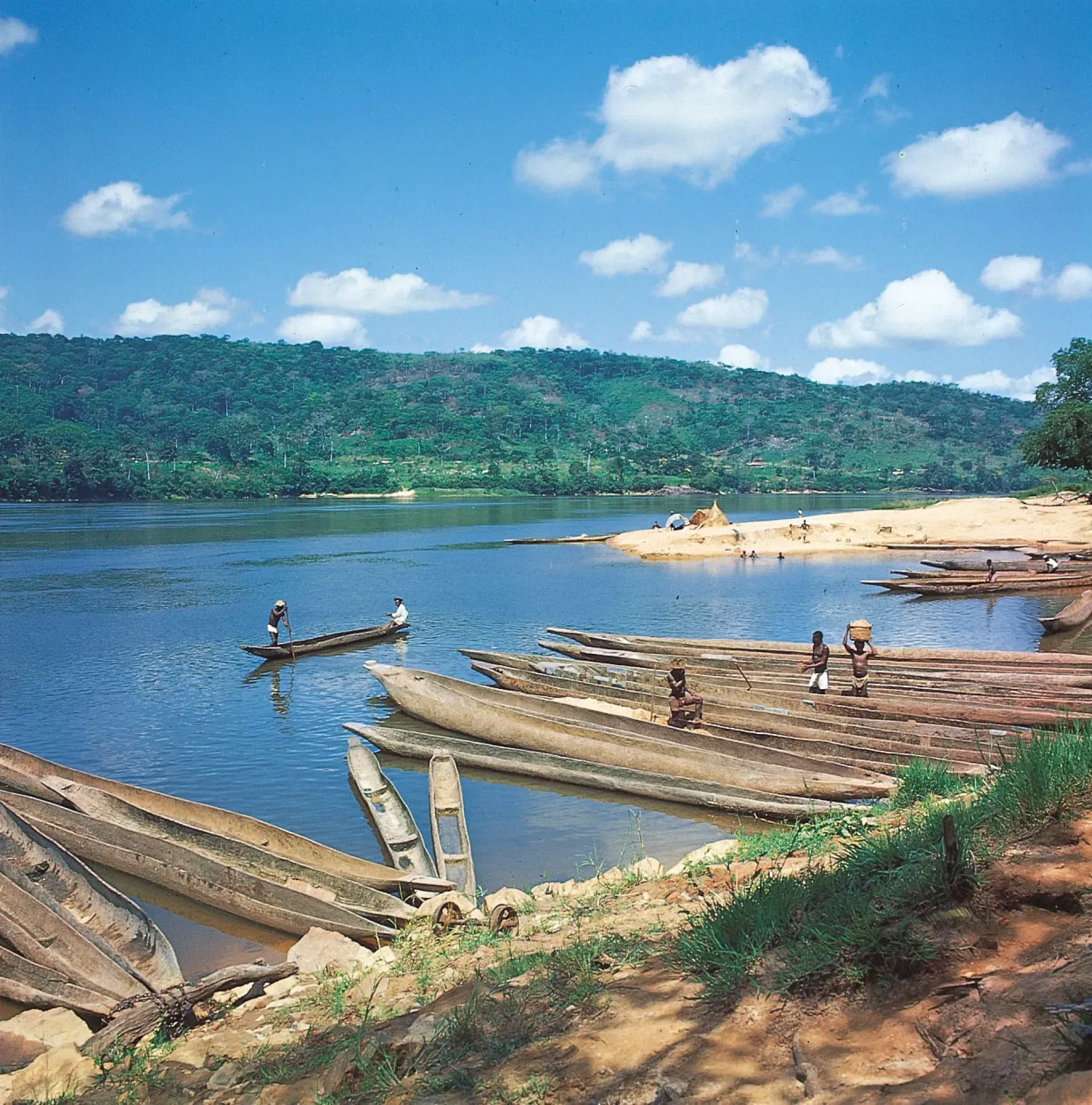
This project focuses on enhancing ecological connectivity by scaling up the creation and management of ecological corridors linking protected areas across the Ngotto Forest landscape and the Mbaéré-Bodingué National Park. Its primary goal is to promote landscape-scale conservation, improve biodiversity conservation, and support sustainable land use practices through integrated natural resources management (INRM). The initiative aims to foster transboundary cooperation between nations, strengthen ecosystem resilience, and facilitate sustainable livelihoods for local communities.
Co-financing Total
USD 22,400,000
GEF Project Grant
USD 7,606,881
GEF Agency Fees
USD 684,619
Image
Sections
Objectives
- Establish and expand ecological corridors to connect key protected areas, enhancing wildlife movement and genetic exchange.
- Promote integrated natural resources management that balances conservation with sustainable socio-economic use.
- Strengthen transboundary cooperation and governance for landscape-scale conservation efforts.
- Support local communities and indigenous groups in adopting sustainable livelihoods aligned with conservation goals.
- Improve biodiversity conservation and ecosystem resilience in the landscape.
Key components
- Ecological Corridors and Connectivity Scaling
- Transboundary Cooperation and Policy Alignment
- Integrated Natural Resources Management (INRM)
- Capacity Building and Stakeholder Engagement
- Monitoring, Research, and Knowledge Sharing
Threats
- Habitat fragmentation due to agriculture expansion, infrastructure development, and illegal logging.
- Poaching and illegal wildlife trade threatening species survival.
- Land use conflicts among communities, extractive industries, and conservation interests.
- Weak transboundary governance and inadequate legal frameworks.
- Climate change impacts leading to altered habitats and ecosystem health.
- Limited capacity and resources for effective corridor management.
Interventions
- Infrastructure upgrades for protected area management; multi-sectoral committees including indigenous and local communities.
- Capacity building: anti-poaching, monitoring, governance.
- Alternative livelihoods: agroforestry, ecotourism.
- Inclusive PNMB-led consultations (2024–2026) with WWF-FRM-PGRN support.
- Ecological inventories and habitat modeling for elephants and great apes.
- Legal frameworks for sustainable resource access via multi-stakeholder platforms.
- Align ILUMPs with PGRN/FRM; map and secure ecological corridors and buffers.
- Transboundary dialogue and joint planning; community participation in sustainable land management.
- Corridor conservation to deter illegal activities; local livelihood diversification.
- Formalize corridor protection and cross-border collaboration through policy instruments.
Outcomes
- Ecological corridors: established, linked to key protected areas; reduced fragmentation.
- Transboundary cooperation: enhanced policy harmonization for landscape management.
- Biodiversity: increased presence/connectivity of key species.
- Institutional capacity: stronger local/national integrated resources management.
- Community involvement: greater indigenous and local participation in corridor management.
- Infrastructure: upgrades for protected areas and ecological monitoring.
- Participatory governance: multi-sectoral committees with local communities.
- Capacity building: anti-poaching, biodiversity monitoring, sustainable management.
- Alternative livelihoods: agroforestry and ecotourism.
- Cross-border collaboration: regional agreements and joint management frameworks.
Expected impact
- Strengthened protected area management and governance
- Enhanced stakeholder participation, including indigenous communities, in conservation and resource use
- Improved monitoring of biodiversity and habitat status
- Increased sustainable livelihoods and reduced pressure on ecosystems
- Better legal and institutional frameworks supporting conservation efforts
- Progress towards long-term viability of key habitats and species in the Congo Basin region.
Area of intervention
Image
- Government of CAR
- COMIFAC (Central African Forests Commission)
- CEFDHAC (Conference on Dense and Humid Ecosystems of Central Africa)
- REPALEAC (Regional Network of Indigenous Peoples and Local Communities)
- ECCAS (Economic Community of Central African States)
- Local communities and forest-dependent peoples
- Civil society organizations and NGOs
- Private sector stakeholders.
Image
Image
Image