
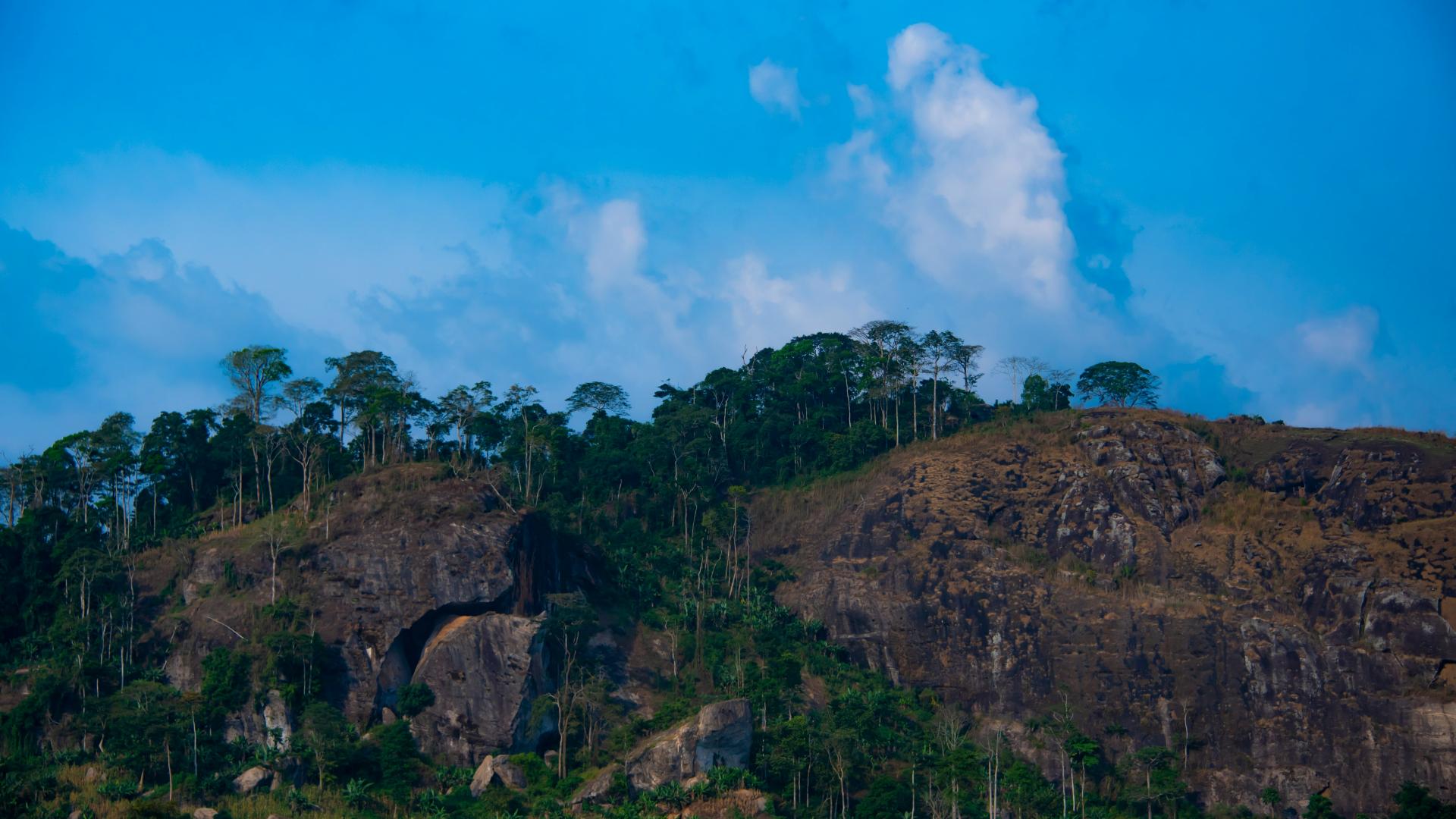
The project aims to implement integrated landscape management approaches across Cameroon’s forest landscapes within the Congo Basin. Its focus is on balancing conservation, sustainable resource use, and socio-economic development by enhancing landscape governance, promoting sustainable land use, and strengthening the resilience of ecosystems and local communities.
Co-financing total
USD 74,329,704
GEF project grant
USD 9,608,257
GEF agency fees
USD 864,743
Sections
Objectives
- Promote sustainable management of Cameroon’s forest landscapes through integrated, multi-sectoral approaches.
- Enhance governance structures and stakeholder participation in landscape planning and decision-making.
- Protect biodiversity and ecosystem services, including carbon sequestration, fresh water, and livelihoods.
- Support the implementation of landscape-level land use planning that harmonizes conservation and development goals.
- Strengthen local capacities and institutions to sustain landscape governance and adaptive management.
- Foster innovations in sustainable resource extraction, including forestry, agriculture, and mining.
- Improve socio-economic conditions of local communities through sustainable livelihood opportunities.
Key Components
- Landscape Governance and Multi-Stakeholder Engagement
- Development and Implementation of Integrated Land Use Plans
- Biodiversity Conservation and Ecosystem Restoration
- Sustainable and Climate-Resilient Resource.
- Capacity Building and Knowledge Management
- Innovative Financing and Incentive Mechanisms
- Monitoring, Evaluation, and Adaptive Management
Threats
- Deforestation driven by agricultural expansion, logging, and infrastructure development.
- Loss of biodiversity and fragmentation of habitats critical for species movement.
- Unsustainable resource extraction practices damaging ecosystem integrity.
- Limited stakeholder coordination and weak governance structures.
- Land tenure conflicts and inadequate tenure security.
- Climate change impacts affecting forest health and resilience.
- Poverty and livelihood dependency on unsustainable resource use.
Interventions
- Facilitate inclusive multi-stakeholder dialogues and establish landscape management platforms.
- Develop and implement landscape-level land use and zoning plans respecting ecological and social considerations.
- Support community-based conservation initiatives and sustainable harvesting practices.
- Enhance capacity of local authorities, communities, and private sector for sustainable resource management.
- Promote agroforestry, sustainable logging, and non-timber forest product (NTFP) value chains.
- Pilot innovative financial mechanisms such as payments for ecosystem services (PES) and green bonds.
- Carry out ecological restoration activities, including reforestation and corridor creation.
- Implement integrated monitoring systems for ecological and socio-economic indicators.
Outcomes
- Improved coordination and governance for landscape management.
- Conserved biodiversity and restored ecological connectivity across landscapes.
- Increased sustainable utilization of forest resources with minimized environmental impacts.
- Enhanced livelihoods of local communities through sustainable activities and benefit-sharing mechanisms.
- Strengthened institutional capacity and stakeholder ownership of landscape initiatives.
- Increased climate resilience through landscape restoration and sustainable land management.
- Development of replicable and scalable models for landscape management in the Congo Basin.
Activities
in Progress or Completed
- Developed Integrated Land Use Management Plans (ILUMPs) with strong community participation, including women.
- Pre-validated land use plans for Ngoyla and Mintom, with ecosystem asset maps and diagnostic reports
- Supported community forestry initiatives and public-private partnerships.
- Conducted capacity-building for forest governance and wildlife law enforcement.
- Promoted biodiversity-positive enterprises and sustainable tourism.
- Strengthened policies and governance frameworks for forest conservation.
- Advanced sustainable forest management and landscape-scale conservation efforts.
- 58% progress in implementing the CMNP management plan (2015-2019) through 2024 evaluation
- Training of 40 facilitators on natural capital accounting, with awareness campaigns in 80 villages
- Improved forest connectivity and protection
- Increased areas under sustainable forest management and biodiversity conservation
- Strengthened local governance and community participation
- Expanded sustainable economic opportunities reducing reliance on destructive practices
Expected Impact
- Long-term conservation of Cameroon's forest ecosystems within the Congo Basin.
- Sustainable socio-economic development aligned with biodiversity conservation.
- Strengthened land tenure and governance, reducing conflicts over land and resources.
- Contribution to global climate change mitigation via preservation of carbon-rich forests.
- Enhanced regional cooperation and knowledge exchange on landscape management.
- Establishment of Cameroon as a model for integrated, landscape-scale forest management in Central Africa.
Area of Intervention
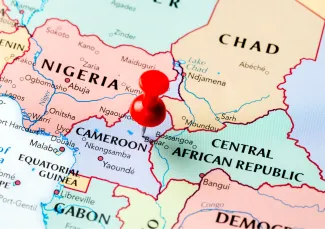
Executing Agency: Government of Cameroon, Ministry of Environment, Protection of Nature and Sustainable Development | GEF Agency: WWF-US (lead for Cameroon child project)
Project Partners: Regional bodies: COMIFAC, ECCAS, REPALEAC, CEFDHAC | NGOs: WWF Cameroon and others engaged in community forestry and conservation | Private sector actors involved in sustainable timber, ecotourism.
- A new hope for Cameroon’s Ebony tree through a successful Public-Private-Partnership between local communities and a thriving guitar business
- Building links between the private sector and forest communities in southern Cameroon
- Representatives from Cameroon, CAR, Republic of Congo, and Gabon Propose Five-Phase Roadmap to Combat Transboundary Environmental Crime Through Regional Eco-Security Cooperation
- Workshop to advance Transboundary Cooperation between Cameroon and Equatorial Guinea for the Conservation of the Campo Ma’an and Rio Campo landscape