
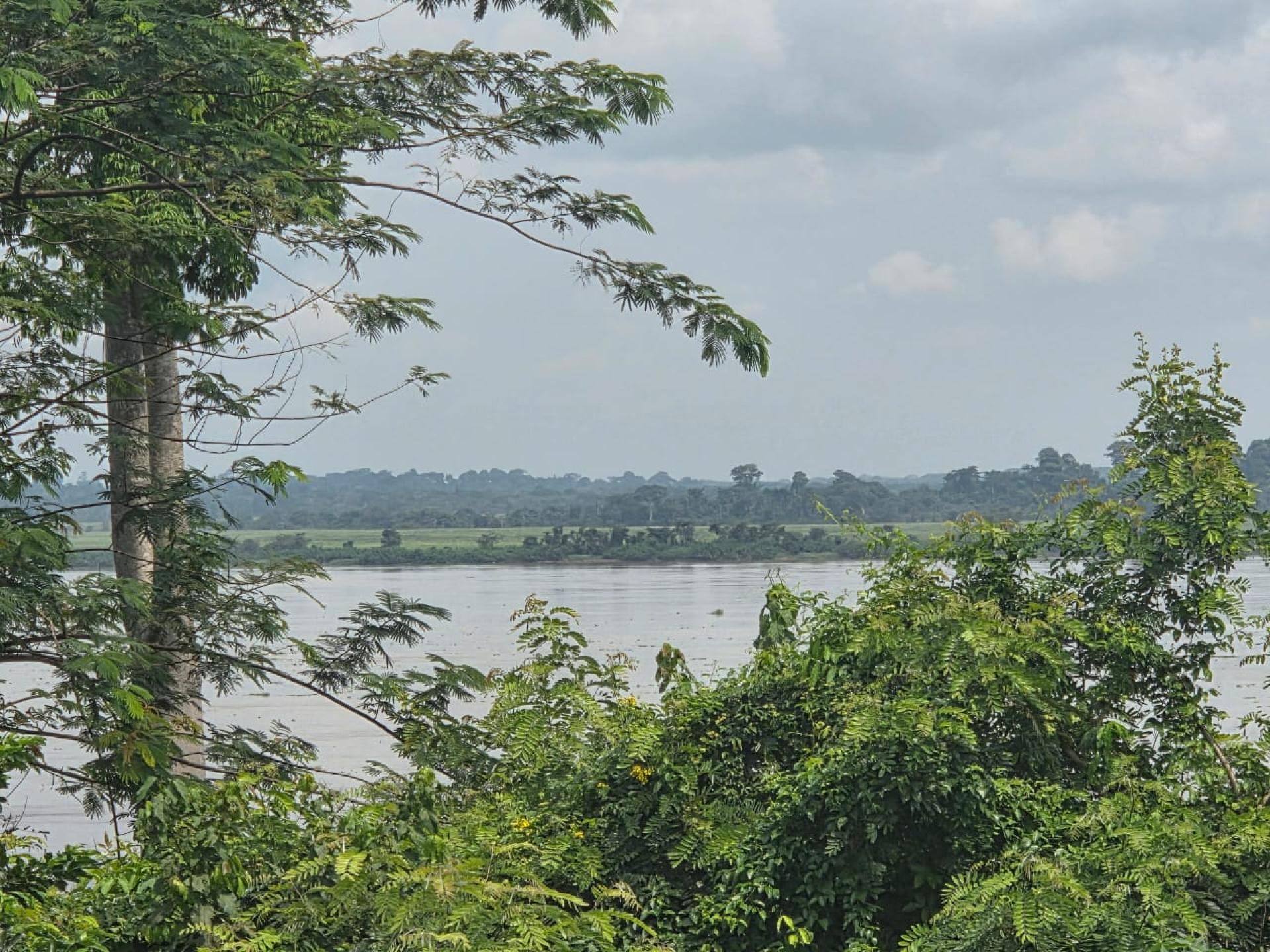
[to facilitate conservation of natural resources, local development, food security and climate change mitigation ]
The "Sustainable Management of the Mayombe, Oubangui, and Maï Ndombe Tropical Forest Landscapes in the Democratic Republic of Congo (DRC)" aims to promote integrated landscape-level conservation and sustainable use of vital forest ecosystems. The project focuses on balancing ecological integrity with social and economic development, addressing climate change mitigation while supporting local livelihoods, food security, and natural resource management.
Co-financing Total
USD 80,000,000
GEF Project Grant
USD 15,415,596
GEF Agency Fees
USD 1,387,404
Image
Sections
Objectives
- To conserve key biodiversity and ecosystem services within the Mayombe, Oubangui, and Maï Ndombe landscapes.
- To promote sustainable land-use planning that integrates forest conservation with agricultural development, infrastructure, and other land uses.
- To strengthen policies, institutions, and governance frameworks supporting landscape management.
- To empower local communities and Indigenous Peoples to participate actively in sustainable resource management.
- To enhance climate change mitigation through reduced deforestation and forest degradation, and by promoting natural climate solutions like forest restoration and afforestation.
- To foster regional coordination and transboundary cooperation for landscape connectivity.
Key Components
- Institutional strengthening, policy reform, and capacity building for sustainable landscape management.
- Implementing integrated land use and spatial planning approaches to harmonize conservation, food security, and development priorities.
- Establishing community-led protected and conserved areas, buffer zones, and ecological corridors.
- Supporting sustainable livelihood activities, including agroforestry, sustainable harvesting, and value addition to non-timber forest products (NTFPs).
- Promoting climate-smart practices, reforestation, and forest restoration initiatives.
- Developing innovative financial instruments such as PES, green credits, and private sector engagement to sustain conservation efforts.
- Strengthening regional and cross-border collaboration among the three landscapes for shared ecosystem services and biodiversity corridors.
Threats
- Rapid deforestation and forest degradation driven by agriculture, logging, illegal bushmeat hunting, and infrastructure development.
- Habitat fragmentation threatening biodiversity and ecosystem resilience.
- Weak enforcement of forest protections and land rights issues.
- Unsustainable resource extraction and logging practices.
- Socio-economic vulnerabilities leading communities to over-exploit natural resources for immediate livelihoods.
Interventions
- Developing and implementing integrated landscape management plans that encompass conservation, sustainable agriculture, and community development.
- Building capacity at community, local, and regional levels for effective landscape governance and sustainable resource use.
- Supporting local communities and Indigenous Peoples with training, tools, and resources for sustainable livelihoods, including eco-agriculture and sustainable harvesting.
- Restoring degraded areas through reforestation and agroforestry projects aligned with biodiversity conservation.
- Establishing and strengthening transboundary and regional cooperation frameworks to promote landscape connectivity and biodiversity corridors.
- Facilitating stakeholder platforms for dialogue and decision-making involving governments, local communities, private sector, NGOs, and regional bodies.
- Mobilizing financial resources through innovative schemes to support long-term landscape sustainability.
Outcomes
- Improved governance and policy coherence facilitating sustainable landscape management.
- Increased areas under community-led conservation, protecting biodiversity hotspots and ecological corridors.
- Enhanced livelihood options for local communities, reducing pressure on forests.
- Better landscape connectivity supporting wildlife movement and ecosystem resilience.
- Strengthened regional cooperation and transboundary ecosystem management.
Expected impact
- Reduced rates of deforestation, forest degradation, and biodiversity loss in the targeted landscapes.
- Increased climate change mitigation through decreased carbon emissions from forest loss and enhanced carbon sequestration.
- Improved food security and socio-economic conditions for communities living within and around the landscapes.
- Demonstrable models of integrated landscape management that can be scaled to other regions in DRC and Central Africa.
- Progress toward national and international commitments on biodiversity, climate, and sustainable development goals.
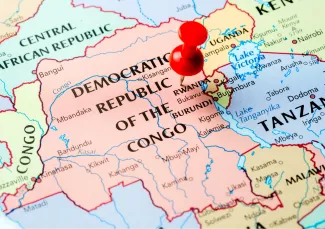
Area of intervention
Image
- DRC Ministry of the Environment and Sustainable Development
- UNEP
- IUCN (International Union for Conservation of Nature)
- IFAD (International Fund for Agricultural Development)
- Regional institutions (e.g., COMIFAC)
- NGOs
- local communities
- private sector
Image
Image

Image
Image
<Geospatial placeholder>
<Statistical placeholder>