
Please note that these web initiative pages represent the initial phase of our website development journey. Over the coming months, we will expand these pages and transform this website into a showcase for work being done at the national level. We will collaborate closely with our country partners to ensure all information is current and comprehensive, highlighting the full scope of work being accomplished. Should you have any questions in the meantime, do not hesitate to contact us on unep-ecosystems-congoforests@un.org

The GEF funded Congo Forest Integrated Programme is led by UNEP and includes individual country projects in eight countries, and a Regional Coordination project (RCP) to ensure coherence and maximize impact.  The geography covers (in alphabetical order) Angola, Cameroon, Central Africa Republic, Democratic Republic of Congo, Equatorial Guinea, Gabon, Republic of the Congo, and São Tomé et Principe.  

The information below includes summary information on the landscapes and partners associated with each participating country under both the GEF-7 and GEF-8 funding cycles. It is followed by more detailed information about each country project. As our website and the program evolves, this information will expand. In the meantime, for more information, please contact us on: ecosystems-congoforests@un.org

GEF-7 Congo Basin Impact Programme

Regional Coordination project lead: UNEP
Landscapes covered:  Sangha Tri-National  & Tri-National Dja- Odzala-Minkebe (Cameroon);
Lac Télé-Tumba (DRC); Campo Ma’an/Rio Campo (Cameroon & Equatorial Guinea)

National projects, lead agency and landscapes covered 
Cameroon: WWF-US; Rio Campo seascape on the coast, across the Cameroon segments of the Tri-National Dja- Odzala-Minkebe (TRIDOM) and Sangha Tri-National (TNS) landscapes towards the east

Central African Republic: World Bank; Ngotto Forest landscape and Mbaéré-Bodingué National Park

Democratic Republic of Congo: UNEP; Grand Kivu and Lac Télé-Tumba landscapes

Equatorial Guinea: IUCN; Monte Alen and Rio Campo transboundary landscapes in Equatorial Guinea

Gabon: UNDP; Lopé-Okanda landscape

Republic of Congo: UNEP; Lac Télé-Tumba Landscape

GEF-8 Congo Forest Integrated Programme

Regional Coordination project lead: UNEP
Landscapes and ecosystems covered:  Mayombe (Gabon, DRC, Angola and Republic of Congo),  Oubangui (DRC and CAR); Atlantic coastal forest (Equatorial Guinea and Sao Tome)

National projects, lead agencies and landscapes covered 

Angola: Conservation International; Maiombe forest ecosystem


Cameroon: UNEP; Dja Landscape


Central African Republic: UNEP; Oubangui Landscape 

Democratic Republic of Congo: IUCN and IFAD; Mayombe, Oubangui and Maï Ndombe tropical forest landscapes

Equatorial Guinea: UNEP: Atlantic coastal forest

Sao Tomè and Principe: IUCN; Obô Natural Parks & Atlantic coastal forests
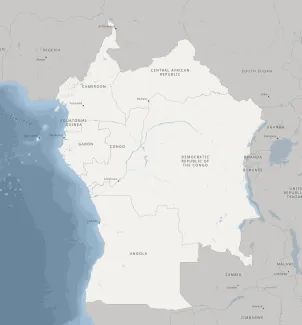
The national projects have their own specific focus areas as outlined below:

Image
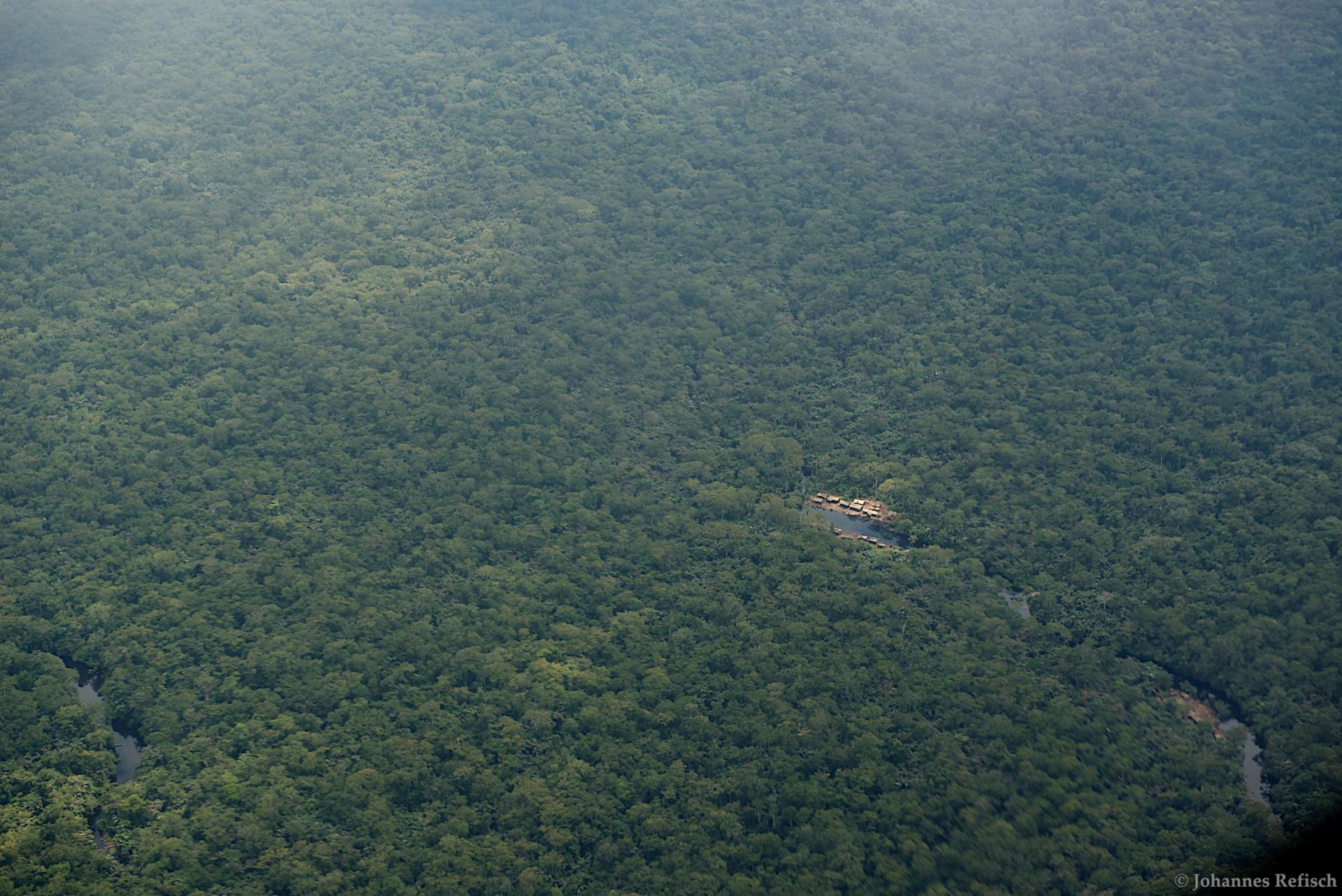
near Basankusu


ANGOLA (GEF 8)

Integrated conservation of the Maiombe forest ecosystem in Cabinda Province Angola. The Maiombe forest ecosystem in Cabinda Province, Angola represents the southernmost extension of the Congo Basin rainforest, forming part of a critical transboundary conservation area shared with the Democratic Republic of Congo, Republic of Congo, and Gabon. This unique ecosystem harbors exceptional biodiversity including endangered primates like western gorillas and chimpanzees, while also serving as an important carbon sink and watershed. Despite its ecological significance, the Maiombe forest faces mounting threats from unsustainable logging, hunting, agricultural expansion, and oil extraction activities in the resource-rich Cabinda enclave.

GEF agency: Conservation International

Objective: Based on an integrated approach, and inclusive stakeholder engagement, the project will support the conservation, effective governance, and sustainable management of the Maiombe forest ecosystems in Angola and in the transboundary context.

CAMEROON (GEF 7 & GEF 8)

Strengthening governance and ecosystem connectivity for biodiversity conservation and improved livelihoods in the Dja landscape. The Dja Landscape is located in southeastern Cameroon, encompassing the Dja Faunal Reserve. It is a large, protected area within the Congo Basin Rainforest, covering approximately 526,000 hectares.

GEF Agency: WWF-US (GEF7) UNEP (GEF8) 

Objective:  The national project in Cameroon, "Strengthening governance and ecosystem connectivity for biodiversity conservation and improved livelihoods in the Dja landscape," focuses on protecting biodiversity while improving local livelihoods in the critical Dja landscape. 

Implemented by UNEP with the MINEPDED  and Rainforest Alliance as executing partners, the project aims to foster conservation and effective governance of this vital part of the Congo Basin forest biome. The project is working to establish integrated land use planning and strengthen ecosystem connectivity while promoting sustainable management practices. A key aspect of the Cameroon project is empowering local communities, particularly indigenous peoples and women, through sustainable forest-related value chains and green enterprises. The project facilitates multi-stakeholder dialogue platforms to improve forest governance and supports transboundary collaboration with neighboring countries. Drawing from successful models, the project emphasizes gender-responsive and indigenous-sensitive approaches to natural resource management, ultimately contributing to biodiversity protection, carbon sequestration, and sustainable development in the region.


Image
Cameroon


CENTRAL AFRICAN REPUBLIC (GEF 7 & GEF 8) 

GEF agency : World Bank (GEF 7) / UNEP (GEF 8)

Objective: Under GEF 7, this project aims to improve governance and capacity in the Central African Republic's forest and mining sectors. The goal is to enhance natural resource management and sustainable livelihoods in the Ngotto Forest landscape and Mbaéré-Bodingué National Park. As part of GEF 8, the project is developing and implementing  an integrated land use management plan  (ILUMP) in the Basse-Lobaye landscape, to safeguard globally outstanding biodiversity, carbon stock and ecosystem services from key threats, particularly unsustainable land use practices.

Under GEF 8, the national project in CAR is seeking to implement Integrated Community-based Management of High Value Forest Ecosystems in the Southwestern Central African Republic. This initiative aims to safeguard globally outstanding biodiversity, carbon stock and ecosystem services from key threats, particularly unsustainable land use practices.

DEMOCRATIC REPUBLIC OF THE CONGO (GEF 7 + GEF 8)

Sustainable Management of the Mayombe, Oubangui and Maï Ndombe tropical forest Landscapes to facilitate conservation of natural resources, local development, food security and climate change mitigation in DRC.

GEF Agency: UNEP (GEF7), IUCN and IFAD (GEF8) 

Objective:  The objective of this project is to scale up and improve the management of peatlands and forest landscapes through Community Based Natural Resources Management in targeted transboundary landscapes. This will benefit not only the people in these landscapes, but also the country as a whole, the Congo Basin region, and the global community.  It will do so by helping to conserve the forests and other biological resources that are essential for economic development in these landscapes through cross-sectoral integration of sustainable land management into plans, policies, strategies, funding mechanisms and multi-sectoral stakeholder groups. Direct beneficiaries include millions of people whose social and economic well-being depend on the forests in these landscapes. Additionally, the project will empower direct resource users and other stakeholders to participate directly in the conception, monitoring and adaptive management of land and resources – with special attention of the vulnerable in society (women and indigenous groups).

Image
DRC


EQUATORIAL GUINEA (GEF 7  & GEF 8)

GEF 7: Conserve and sustainably manage biodiversity and forest ecosystems in the Monte Alen and Rio Campo landscapes in Equatorial Guinea

GEF 8: Developing biodiversity and bio-carbon finance financing instruments for conserving forests in Equatorial Guinea through improved livelihoods for Indigenous peoples and local communities (IPLCs)

GEF agency: IUCN (GEF 7), UNEP (GEF 8)

Objective:   GEF 7: The main objective of the project is to conserve and sustainably manage biodiversity and forest ecosystems in the Monte Alen and Rio Campo landscapes in Equatorial Guinea through an inclusive landscape approach, effective land use planning, enhanced management of protected areas and the promotion of local governance and sustainable livelihood options.

In achieving this goal, the degradation of terrestrial ecosystems will be reduced and there will be a multiplication of co-benefits. The project interventions will lead to improved community livelihoods through the diversification of income-generating sources, increased direct economic value and benefits from natural resources, and increased resilience to the effects associated with climate change. At the national level, baseline information gathered on natural resources and other variables as well as capacity building will contribute to sound and efficient decision making in Equatorial Guinea with regards to land use and natural resources. The project interventions will also contribute to informing meta-analyses at the regional level, thereby supporting the sustainable management of natural resources in the Congo Basin as a whole. In addition, the project will promote and support conservation activities, including transboundary collaboration, and improved governance of protected areas. 

GABON (GEF 7)

GEF agency: UNDP

Objective:

The project aims, first, to conserve high biodiversity, high carbon stock landscapes in Gabon and secondly, to achieve this simultaneously with a strengthening of livelihood opportunities and resulting socioeconomic benefits for the forest dwelling and other forest dependent local communities in the project area – the latter for its intrinsic value (i.e., human development) as well as linkages and contributions between poverty and environment.

This will be achieved through (i) improved governance; (ii) enhanced environmental monitoring and integrated land and resource use perspectives stemming from a landscape-level vision; (iii) strengthened community enterprises and livelihood and (iv) project-based learning and knowledge exchange, regional coordination, gender mainstreaming, along with constructive project monitoring and evaluation.

REPUBLIC OF CONGO (GEF 7)

Integrated Community - Based Conservation of Peatlands Ecosystems and Promotion of Ecotourism in Lac Télé Landscape of Republic of Congo

GEF agency: UNEP

Objective: The goal of this project is to enhance sustainable peatland management and avoid potential risk of Green House Gas (GHG) emissions from peatlands in the Republic of Congo, while enhancing the health of biological diversity by taking measures against Illegal Wildlife Trade (IWT). The project objective is to promote a model for integrated community-based conservation and protected area management applied to the peatland area and its forest ecosystem of the Republic of Congo’s Lac Télé Landscape. This project will therefore contribute to promoting sustainable peatland management, securing carbon stocks, and conserving biodiversity while improving the living standards of local communities. This will be achieved by: (i) capacity building for sustainable peatland management; (ii) reducing peatland degradation and fires; and (iii) adopting best practices for integrated, sustainable management of peatlands at a landscape level through enhanced engagement of the private sector and local communities. These will be complemented with project management and monitoring & evaluation sub-component.

Sao Tome e Principe (GEF 8) 

São Tomé e Príncipe's intact forests, including the Obô Natural Parks and their surrounding buffer zones, represent a precious ecological treasure to conserve and restore  their unique biodiversity and environmental services for future generations.

GEF agency: IUCN