
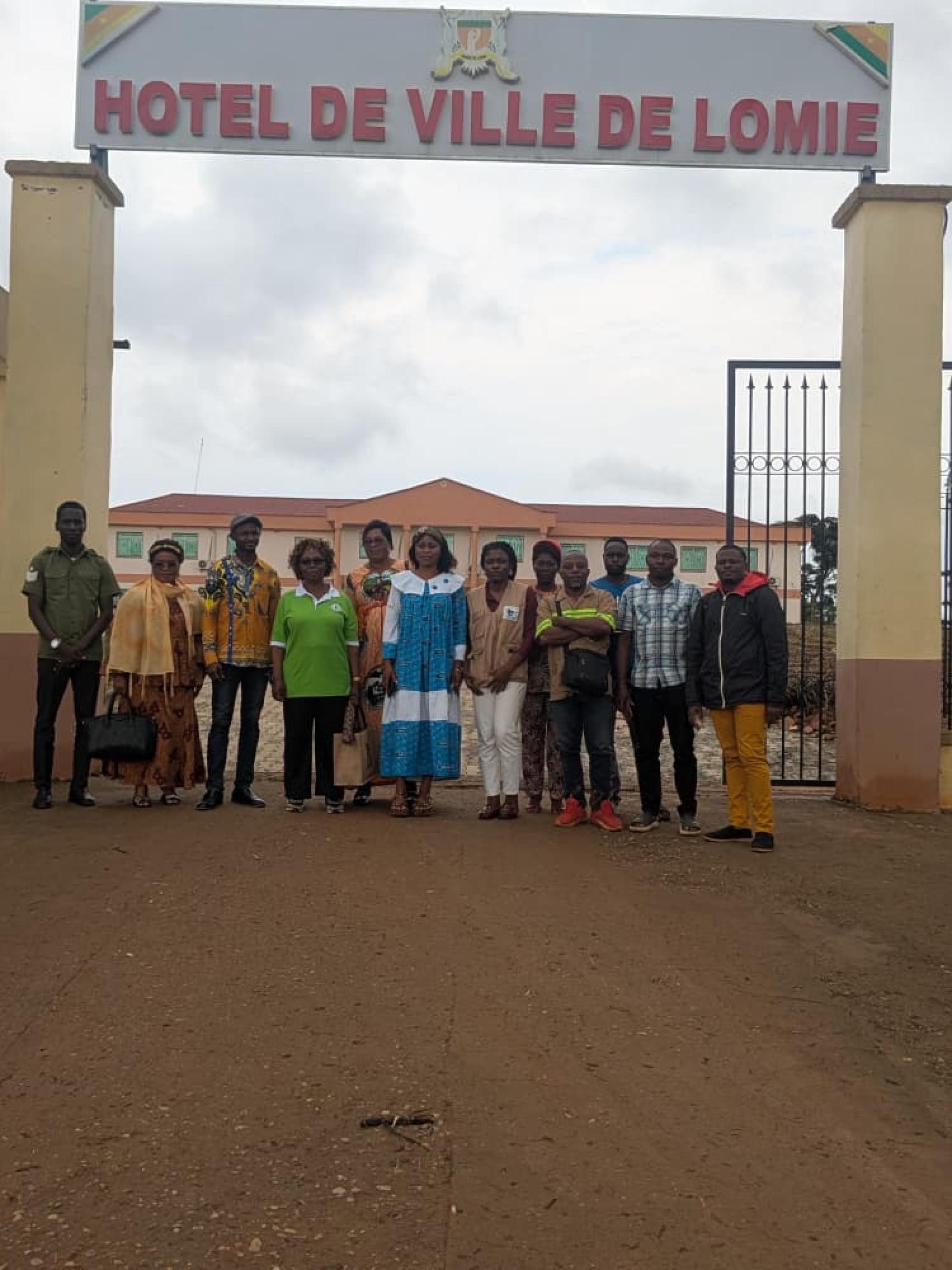
Lomié has taken a significant step toward strengthening local landscape governance as stakeholders reviewed and provisionally validated the framework document for the Municipal Landscape Management Committee (MLMC), paving the way for its official establishment later this month.
The day-long working session, held at the Lomié Council Hall, brought together traditional chiefs, municipal councilors, representatives of the Ministry of Environment, Protection of Nature and Sustainable Development (MINEPDED), civil society organizations, and the technical team of APROSPEN, implementing partner of the GEF-8 Dja Landscape Project.
Working through the document line by line, participants debated, amended, and reached consensus on provisions that will guide the Committee's mandate, structure, and operations. By the end of the session, the revised framework document had received unanimous provisional validation and was signed by all participants.
Building on a Growing Network of Landscape Governance
Once officially launched, Lomié will become the fourth of eleven councils in the Dja Landscape to establish a Municipal Landscape Management Committee, joining Djoum, Mintom, and Oveng in Cameroon's South Region.
While the first three committees demonstrated the value of locally driven, multi-stakeholder governance, Lomié's experience reflects the continued expansion and refinement of the model under the GEF-8 Dja Landscape Project as it extends into Cameroon's East Region.
A Framework Grounded in Local Realities
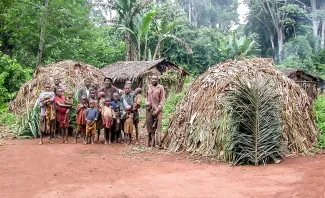
Rather than relying on a standard template, the framework document was developed from a socio-economic assessment conducted across Lomié's villages and informed by consultations with local communities, Indigenous Baka, traditional authorities, civil society organizations, and other key stakeholders.
This participatory process ensured that the framework reflected local realities and addressed the specific governance needs of the municipality and the broader Dja Landscape.
The review meeting opened with remarks from the Mayor of Lomié before participants followed a structured agenda that included:
- reviewing progress made toward establishing the MLMC;
- examining, revising, and validating the framework document;
- presenting the draft action plan for the Committee; and
- discussing additional issues.
Every article of the framework document was read aloud, discussed, and amended where necessary. Any contested provisions were resolved through consensus before adoption, reinforcing the collaborative spirit that underpins the Committee's creation.
Four Major Improvements to the Framework
The review resulted in several important amendments designed to strengthen the Committee's effectiveness and legitimacy.
Strengthening Local Representation
Participants confirmed a leadership structure that balances institutional leadership with traditional authority. The Mayor of Lomié, or a designated representative, will serve as Chairperson, while the Vice-Chairperson will represent MINEPDED.
The Committee's membership formally includes five traditional chiefdoms: the Baka chiefdoms of Payo and Nomedjoh, alongside the second-class chiefdoms of Diomedio, Lomié Centre, and the Canton of Mabia.
Women's participation will be ensured through RAFALO, the federation of women's organizations in Lomié, while civil society will be represented through RACOPI's Lomié chapter, coordinated by the NGO ASTRADHE. Together, these actors provide broad representation of the communities directly connected to the landscape.
Recognizing Volunteer Service
Although Committee members will serve voluntarily, stakeholders acknowledged that participation comes with practical costs.
To encourage consistent engagement, the revised framework introduces a modest package of logistical support for members during official working sessions.
Reinforcing Administrative Coordination
To strengthen institutional continuity, participants approved the creation of a Rapporteur position within the Committee's executive bureau.
The role will be filled by a civil society representative and supported by a member of the municipal executive responsible for administrative follow-up, helping ensure that decisions are properly documented and implemented between meetings.

Addressing Financial Sustainability
Discussions also focused on the Committee's future financing.
The Mayor explained that the municipality's final budget session for 2026 will take place in December, meaning there is no immediate guarantee that a dedicated budget line for the MLMC can be approved this year.
As an interim solution, stakeholders proposed developing a formal convention that would officially recognize the MLMC as a consultative body of the Council while providing a framework for its financial operations until dedicated municipal funding becomes available.
From Planning to Action
The meeting concluded with the unanimous approval of the Committee's draft action plan, presented by APROSPEN. The document outlines the first set of activities that will guide the MLMC once it becomes operational.
The Committee's Constitutive General Assembly has been scheduled for 27 July 2026, marking its formal establishment.
This will be followed by a series of capacity-building workshops from 28 to 31 July, during which newly appointed members will receive training on the technical, institutional, and governance responsibilities required to fulfil their mandate effectively.
Strengthening Landscape Governance Across the Dja Landscape
Lomié's progress represents more than the establishment of a new municipal committee. It reflects a broader approach to landscape governance being implemented across the Dja Landscape.
Although each municipality has its own governance structures, traditional authorities, Indigenous communities, and development priorities, the same participatory process has guided the establishment of every Municipal Landscape Management Committee. Socio-economic assessments, community consultations, collaborative drafting, and consensus-based validation ensure that each committee is rooted in local realities while contributing to a common vision for sustainable landscape management.
By allowing local adaptation within a shared governance framework, the initiative is building institutions that are both representative and resilient.
As stakeholders prepare for the Committee's official launch, Lomié joins a growing network of councils committed to managing their shared natural resources through inclusive dialogue, local leadership, and collaborative decision-making—one council at a time.