
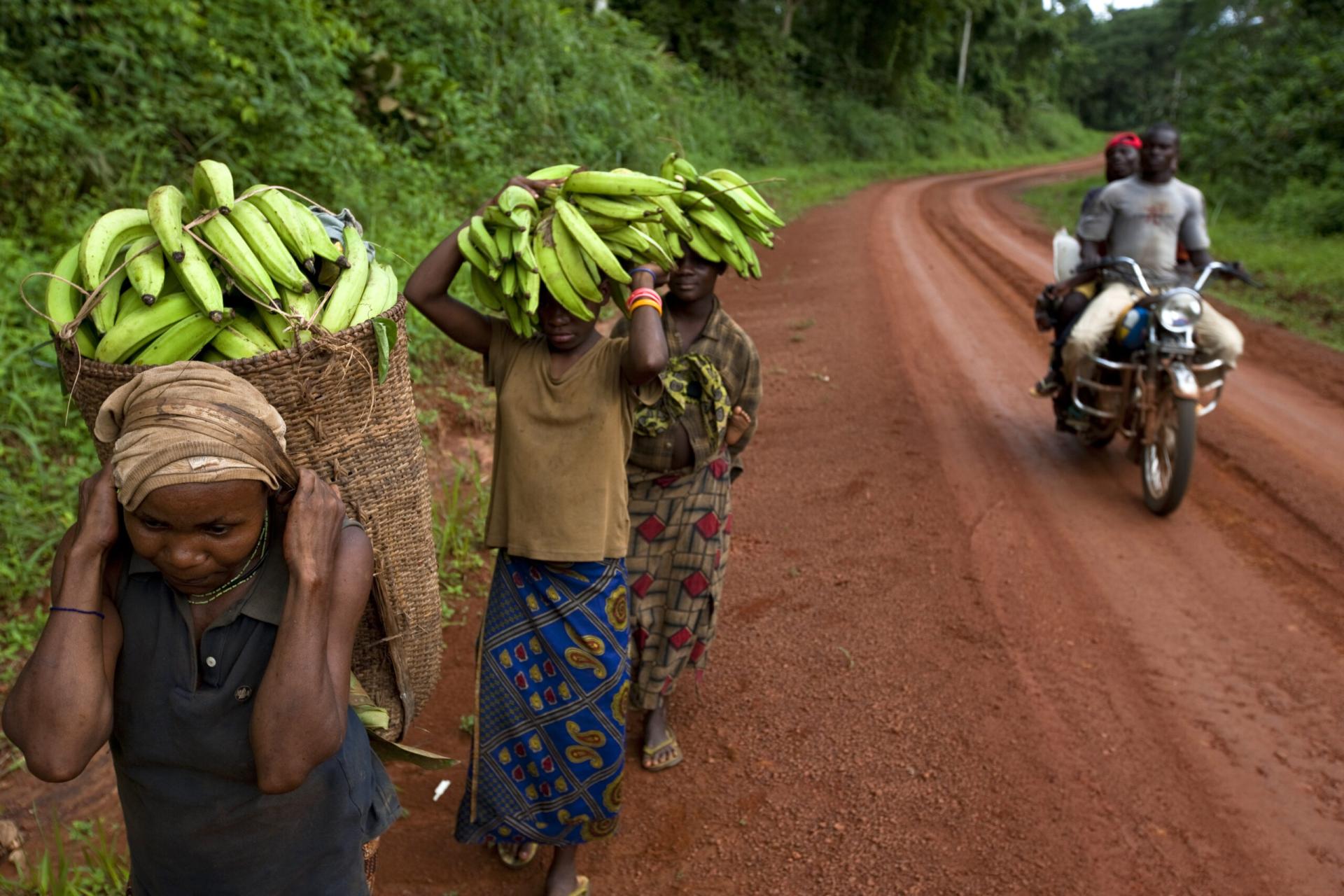
For many communities living around Lobéké National Park in eastern Cameroon, forests support everyday life in multiple ways. Products such as njansang (Ricinodendron heudelotii) and bush mango help households generate income, cover school fees and medical expenses, and maintain long-standing connections with forest landscapes.
But for years, many Indigenous Baka and neighbouring Bantu communities struggled to earn fair value from these products. Without proper equipment or storage facilities, producers often had no choice but to sell quickly to middlemen at low prices. This limited not only income opportunities, but also the ability of groups to organize sales collectively and negotiate stronger prices.Processing njansang was physically demanding, slow, and difficult to organize collectively.
“We struggled to process njansang because we did not have the right materials,” recalls Nicole Yele, an Indigenous Baka woman from Dioula village. “Sometimes we could not process enough, even when the harvest was good.”
Changes are emerging through the GEF-7 project for the Integrated Management of Cameroon’s Forest Landscapes in the Congo Basin, implemented under the wider Congo Forest Integrated Program and contributing to the broader goals of the UNEP-led Congo Basin Landscapes Initiative (CBLI).
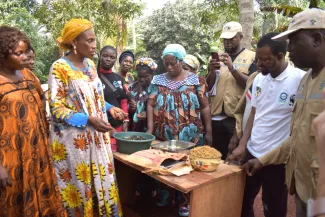
In Eastern Cameroon, the project works with communities surrounding Lobeke National Park to strengthen sustainable forest livelihoods and improve the management of non-timber forest product value chains. Together with local implementing partner ROSE — a network of local NGOs in southeast Cameroon — the initiative has supported 11 community groups across 15 villages with equipment including push-carts, pots, basins, machetes, protective gloves, and drying and storage facilities.
The changes may appear simple, but for many communities they have had an immediate impact.
Groups are now able to process and store larger quantities of njansang, organize sales collectively, and negotiate better prices. In recent harvesting seasons, the selling price of njansang increased from FCFA 2,500 to FCFA 4,500 per combo (a three-litre bowl). For the women-led group ‘Réseau des Femmes de l’Arrondissement de Salapoumbe’ (GIC RAFASAL), collective sales generated more than FCFA 20 million — the highest revenue the association has ever recorded.
“We used to sell quickly because we needed money immediately and could not store the products properly,” explains Madam Bekolo Rosette épouse Makele, President of GIC RAFASAL. “Now we can organize ourselves better and wait for better buyers.”
Alongside the equipment, the project also provided grants totaling more than FCFA 6 million to help reduce the pressure for community members to sell products immediately during periods of urgent household need such as healthcare, school fees, or funerals — allowing some groups greater flexibility to organize storage and collective sales.. Through a locally managed solidarity mechanism called LOUFONO, meaning “change” in the Bangando dialect, groups are also learning financial management and record-keeping skills.
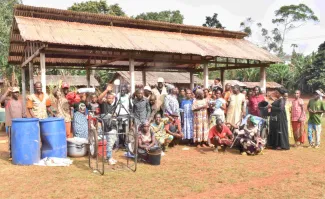
Beyond income generation, the project is also strengthening locally managed systems linked to forest stewardship, collective organization, and resource management. For many Baka communities, access to forest resources remains closely connected to cultural traditions, knowledge systems, and everyday livelihoods.
The work around Lobéké reflects a broader lesson emerging across Congo Basin landscapes: long-term forest management is often more effective when local communities are directly involved in how forest resources are used, managed, and valued over time.
Across the Congo Basin, communities are already living with the effects of environmental degradation, climate change, and economic vulnerability. Projects like this one show that practical, locally driven support — from processing equipment to community financing mechanisms — can make a meaningful difference in people’s daily lives while contributing to wider conservation goals.
As support expands to additional non-timber forest products, including bush mango, communities in eastern Cameroon continue to demonstrate how locally organized forest economies can contribute both to household resilience and longer-term forest steward.
-----
About the Congo Basin Landscapes Initiative (CBLI)
The Congo Basin Landscapes Initiative (CBLI) is a UNEP-led multi-country initiative supporting integrated landscape approaches across the Congo Basin through partnerships focused on biodiversity conservation, sustainable land management, climate resilience, and community livelihoods. The initiative includes programmes supported by the Global Environment Facility (GEF) and the International Climate Initiative (IKI), working with governments, local communities, research institutions, and regional partners across Central Africa. Learn more
--
This article was adapted from original partner stories. More on the GEF-7 Integrated management of Cameroon's Forest Landscapes project