
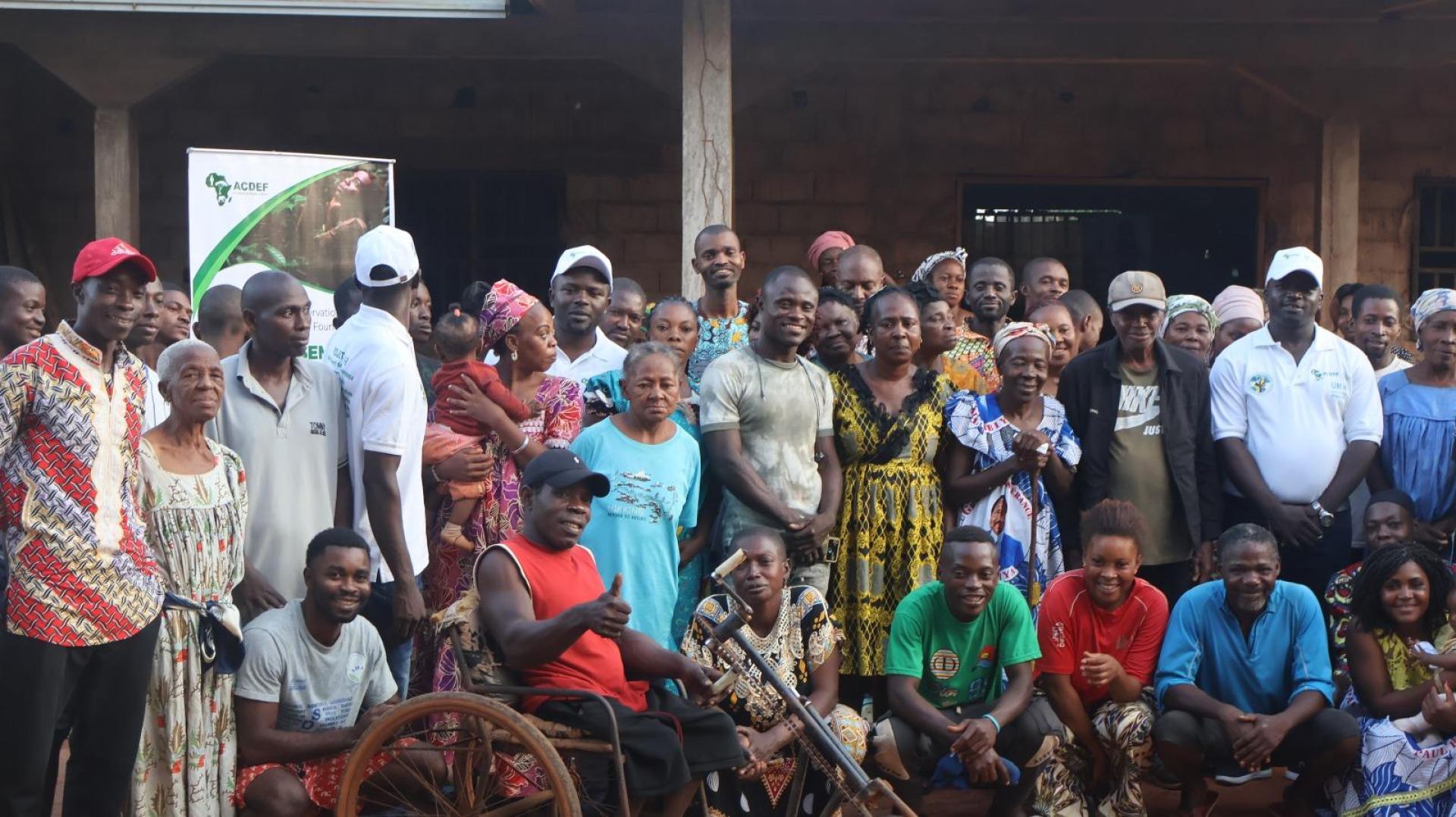
Somalomo – Ngoyla – Lomié, Eastern Region, Cameroon - 2026
Five months after its official launch, the GEF-8 Dja Landscape Project is already redefining collaborative conservation across one of the world’s most vital forest ecosystems. Anchored within the GEF-funded Congo Forest Integrated Programme and led globally by United Nations Environment Programme, the initiative is executed nationally by Cameroon’s Ministry of Environment, Nature Protection and Sustainable Development.
At its core, the project advances a governance model rooted in inclusion, transparency, and full respect for Free, Prior and Informed Consent (FPIC), ensuring that communities are not merely beneficiaries of conservation, but decision-makers and rights holders within it.
Firstly, the project took off on a foundation built on Consent and Accountability
Since its launch in September 2025, the project has recorded measurable progress across governance systems, social safeguards, community participation, and institutional partnerships.
Central to this progress is the operationalization of FPIC, a cornerstone of both the Global Environment Facility’s environmental and social safeguards and UNEP’s Environmental and Social Sustainability Framework. FPIC is not treated as a procedural requirement, but as a legal and ethical commitment that guarantees communities the right to approve, modify, or reject proposed interventions on their lands before implementation begins.
To date, FPIC processes have been successfully completed in six of the eleven targeted municipalities across the Dja Landscape. Structured community assemblies were convened, project documentation was disseminated in accessible formats and local languages, and decisions were formally recorded. Consultations in the remaining five municipalities are actively underway, reflecting a methodical and rights-based approach to project rollout.
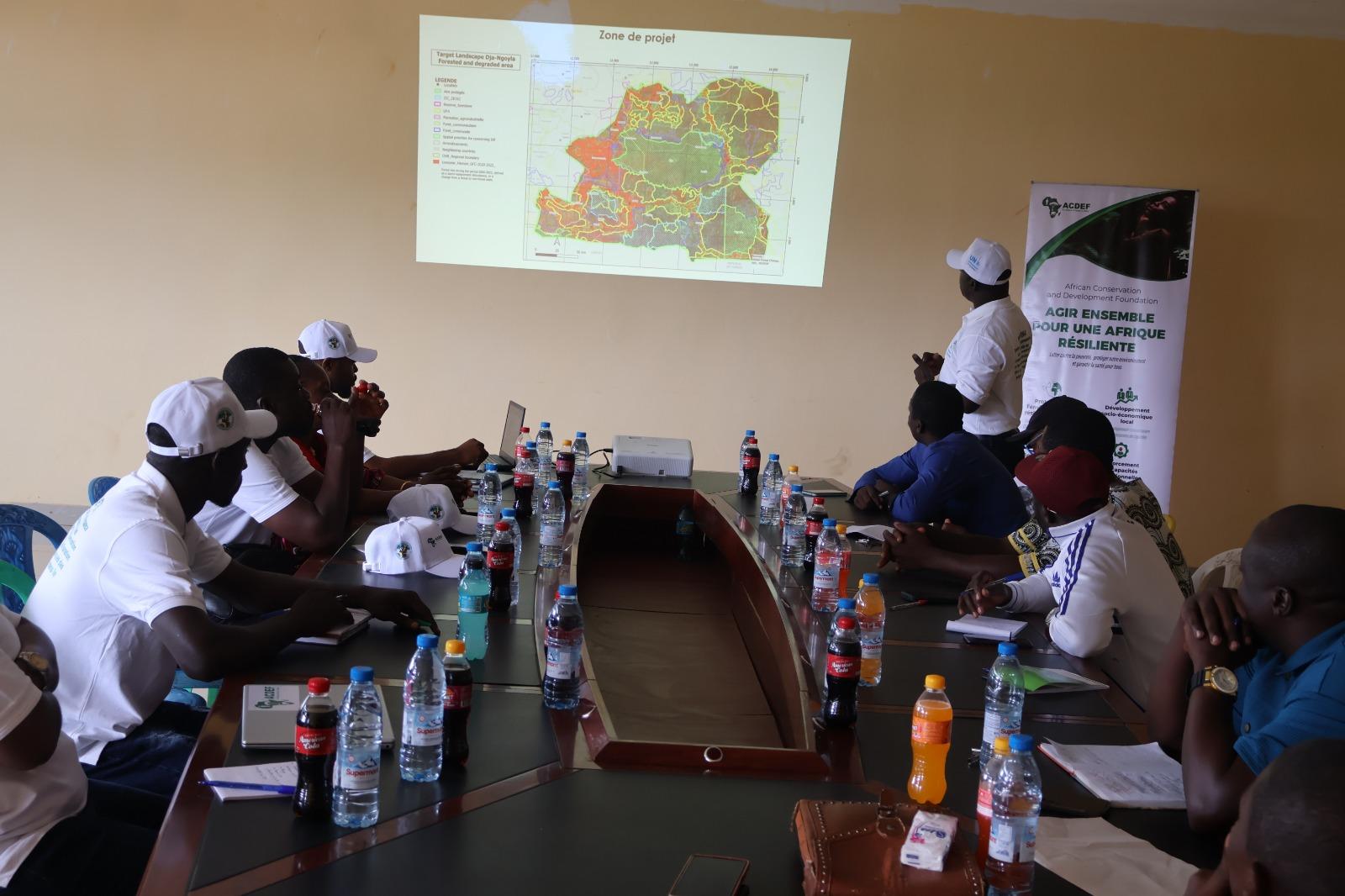
Secondly, the Project Sets Grievance Redress Mechanism in motion
In parallel, the project has moved swiftly to establish a fully operational Grievance Redress Mechanism (GRM) in four municipalities; Djoum, Mintom, Mvangan, and Oveng through its implementing partner African Indigenous Women's Organisation, Central African Network.
The GRM provides an accessible and culturally appropriate platform through which community members with particular attention to Baka Indigenous peoples and women — can raise concerns, seek remedies, and monitor the resolution of grievances linked to project activities. Rooted in the GEF Environmental and Social Risk Policy, this mechanism strengthens accountability and protects the rights of vulnerable stakeholders.
Its establishment within the project’s first five months represents a significant milestone in embedding safeguards at the heart of landscape governance. Click here for more information
Thirdly, the Project Capitalizes on Inclusive Governance Structures for sustainable management of landscape Resources
Building on earlier governance structuring efforts in Mintom led by Eco-PH, the African Conservation and Development Foundation has assumed leadership in advancing inclusive consultations across the eastern municipalities of Somalomo, Ngoyla, and Lomié.
Across approximately fifteen villages in these municipalities, ACDEF has implemented a structured, participatory consultation process designed to ensure broad-based representation. Its methodology is explicitly gender-sensitive and culturally responsive, with separate dialogue sessions organized for women, youth, and Baka Indigenous communities to ensure that historically marginalized voices are fully integrated into governance design.
As ACDEF emphasizes, its approach ensures that “every voice carries equal weight in the governance process.”
The achievements of these first five months provide a robust foundation. The next phase centers on translating consultation outcomes into durable and functional governance institutions capable of sustaining conservation and equitable resource management over the long term.
ACDEF’s immediate priority is the formal establishment of Municipal Landscape Management Commissions (MLMCs) in Somalomo, Ngoyla, and Lomié complementing similar structures being established in Mintom and other southern municipalities.
Each MLMC will serve as a multi-stakeholder governance platform, bringing together: Municipal councillors, traditional authorities, Community representatives, Women’s associations, Indigenous peoples’ leaders, Civil society organizations, conservation and development partners.
These commissions will be mandated to:
- Plan and oversee sustainable natural resource use across municipal territories
- Mediate land-use conflicts and channel grievances through the formal GRM
- Monitor environmental and social performance indicators
- Advocate for community rights in engagements with government and private sector actors
- Facilitate transparent and equitable benefit-sharing
A Model for Shared Stewardship
The Dja Landscape Project demonstrates that conservation success in complex forest ecosystems depends not solely on ecological expertise, but on governance systems grounded in legitimacy, consent, and shared responsibility.
By embedding FPIC, operationalizing grievance mechanisms, and institutionalizing inclusive decision-making bodies, the initiative is laying the groundwork for a new model of landscape governance in Eastern Cameroon one in which communities are recognized not as peripheral stakeholders, but as co-architects of sustainable development.
As implementation advances, the focus now shifts from consultation to consolidation transforming early momentum into enduring institutions capable of safeguarding both biodiversity and community rights for generations to come.