
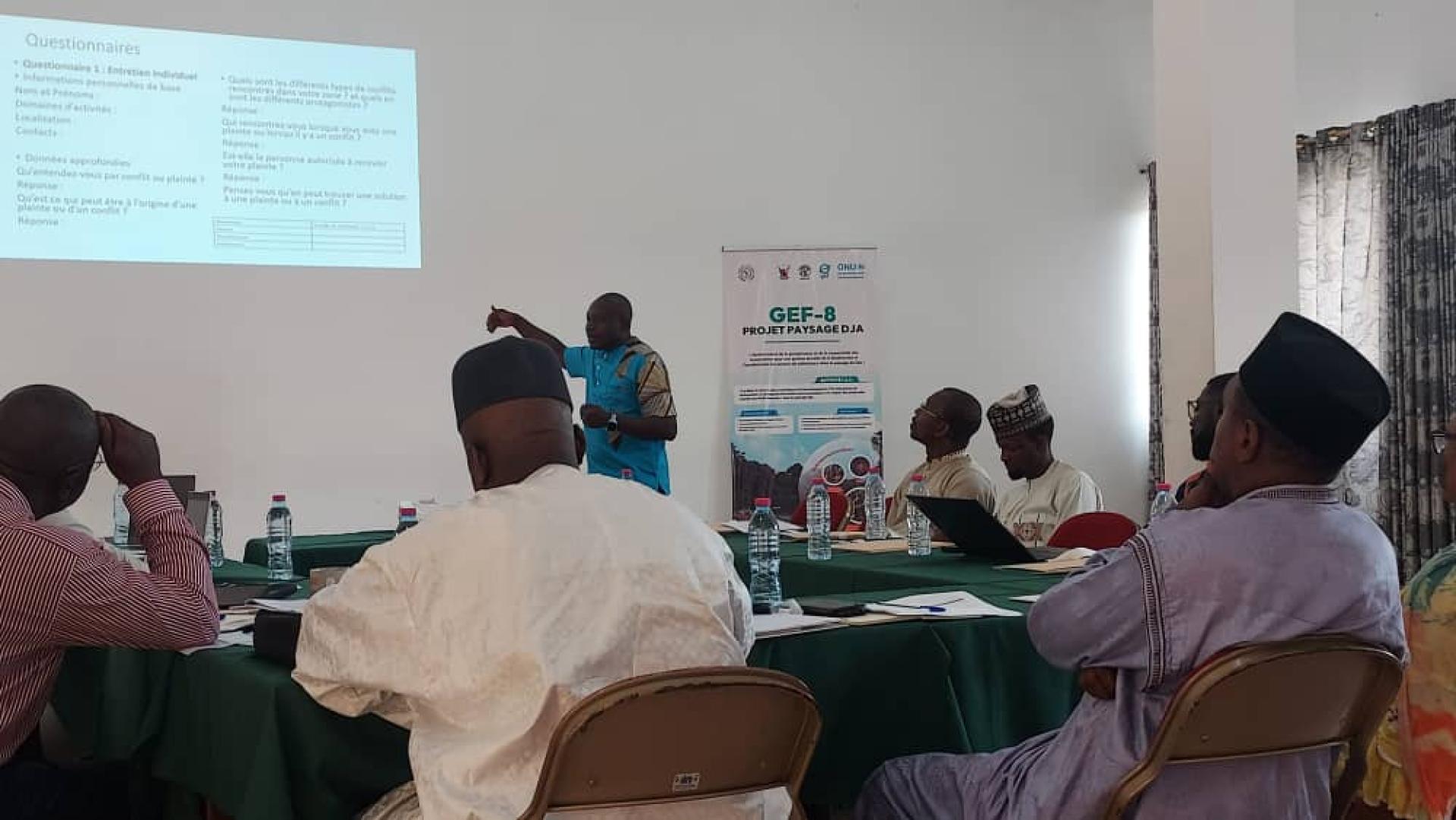
Indigenous peoples and local communities in the Dja Landscape are gaining a stronger voice in conservation efforts with the launch of a new Grievance Redress Mechanism (GRM) under the GEF-8 Dja Landscape Project (Cameroon). The mechanism aims to ensure that community rights are protected and that concerns related to project activities are addressed promptly and transparently.
The initiative advances Activity 1.2.5 of the GEF-funded project and reinforces alignment with international environmental and social safeguards, including key human rights principles.
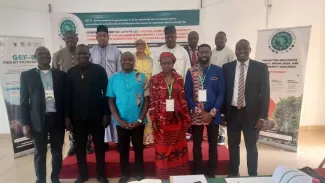
During an inception workshop in Yaoundé, African Indigenous Women's Organization Central African Network (AIWO-CAN), the technical lead for the mechanism’s development, presented the approach that will guide GRM implementation. “This is a major step towards establishing a functional and culturally appropriate platform for communities to be heard,” said Mrs. Hawe Hamman Bouba, President of AIWO-CAN.
Consultant Daniel Seba outlined the methodological framework for the mechanism, while Dr. Haman Unusa, National Director of the project (MINEPDED), emphasized the importance of ensuring strong alignment with activities affecting indigenous peoples and local communities.
The GRM will complement the ongoing Free, Prior and Informed Consent (FPIC) process, forming a core pillar of the project’s rights-based conservation approach. Implementation will focus on priority areas in Djoum, Mintom, Oveng, Mvangan, and Somalomo.
Field sensitization activities will begin on December 8, 2025 to ensure communities understand and can meaningfully engage with the mechanism.
This initiative underscores the GEF-8 Dja Landscape Project’s commitment to conservation efforts that uphold community participation, accountability, and the protection of indigenous peoples’ rights.