
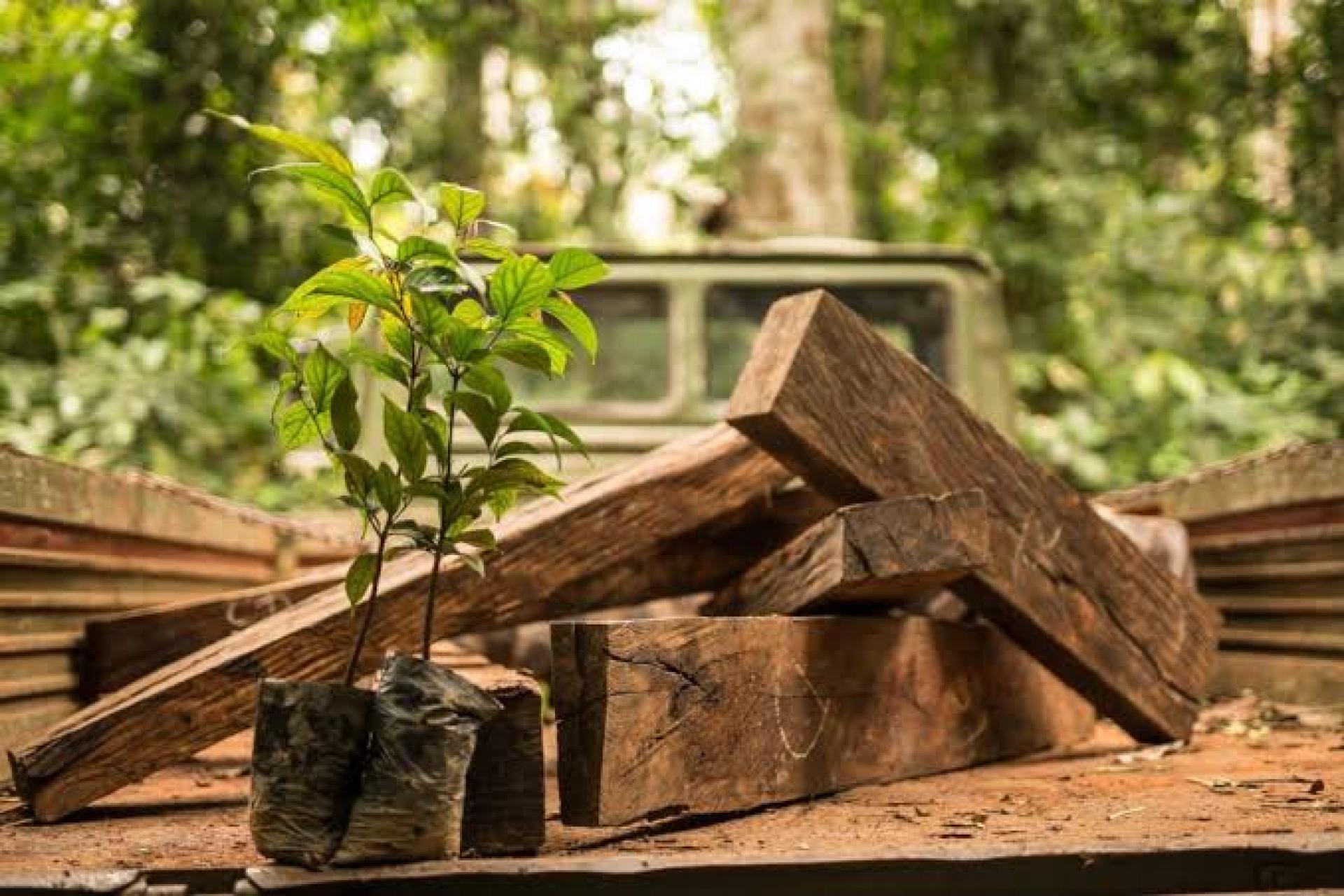
Restoration is a long-term process
Restoring tropical forests is about far more than planting trees. It requires understanding how ecosystems function, working alongside communities, and adapting implementation as experience grows.
Launched in 2016, the Ebony Project is coordinated by the Congo Basin Institute (CBI) in collaboration with research institutions, private-sector partners and communities across Cameroon. Originally established to conserve African ebony (Diospyros crassiflora), the project combines ecological research, forest restoration and community-based livelihood activities. Since 2022, it has also received support through the Global Environment Facility (GEF-7), alongside longstanding support from Taylor Guitars, Fondation Franklinia and, more recently, Germany's International Climate Initiative (IKI).
As the project has expanded, it has generated practical lessons that extend well beyond ebony restoration. For the Congo Basin Landscapes Initiative (CBLI), these experiences offer valuable insights into how restoration programmes can strengthen community participation, adapt to local realities and build long-term resilience.
Communities are not all the same
One of the clearest lessons emerging from the project is that communities cannot be treated as a single, uniform group.
As the Ebony Project expanded beyond the Dja landscape into communities around Lobéké National Park, differences in geography, livelihoods, ethnicity, leadership and access to markets became increasingly apparent. These differences influenced how communities engaged with restoration activities and highlighted the importance of adapting implementation to local contexts rather than applying identical approaches everywhere.
Recognising this diversity has helped shape the project's evolving approach to implementation.
Participation begins with consent—but does not end there
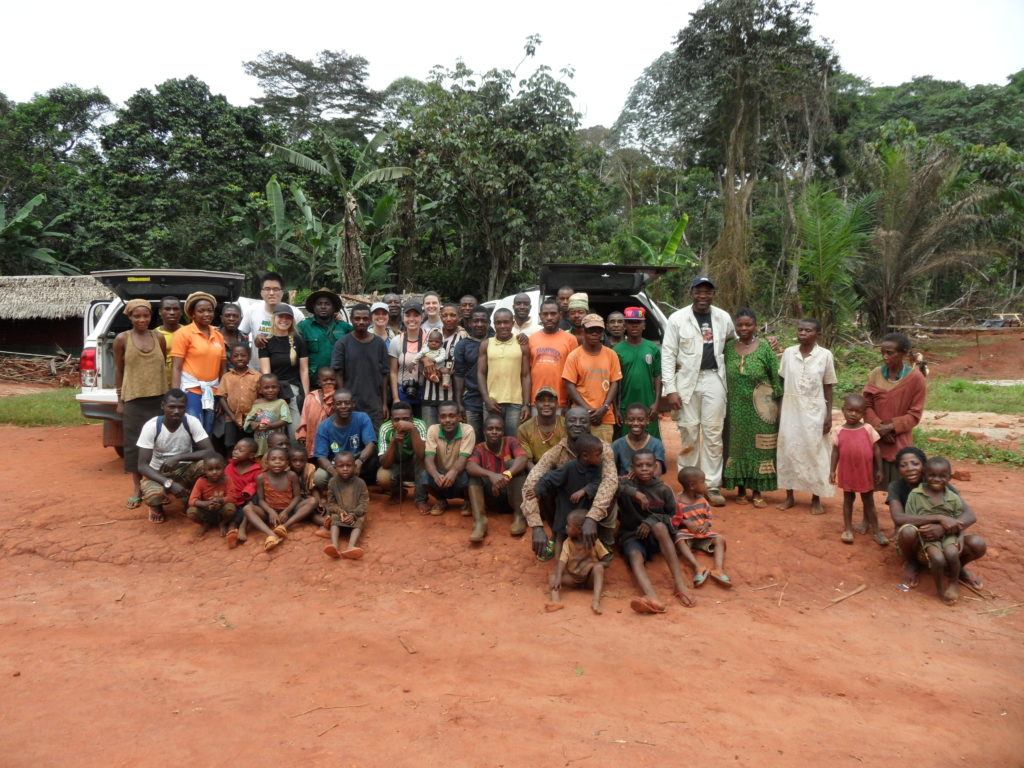
Community participation is central to the Ebony Project.
The project applies Free, Prior and Informed Consent (FPIC) at two levels. The first assesses whether a community wishes to participate, while the second recognises that interest also varies between households within the same village. Experience has shown that only a proportion of community members choose to participate actively, reinforcing the importance of distinguishing between community-level engagement and individual participation.
This experience has reinforced an important lesson: obtaining consent is only the starting point. Maintaining participation requires continued dialogue, trust and implementation approaches that respond to changing circumstances over time.
Learning by adapting
The report shows that restoration programmes must evolve as they grow.
Expanding into more remote landscapes has required new logistical arrangements, including locally based technical staff, closer collaboration with other initiatives and continued reflection on whether implementation approaches should be adapted to different contexts while maintaining a coherent overall programme.
The project has also recognised that communities participate in different ways throughout the restoration journey. Its evolving community typology—from onboarding and active participation to graduated and independent communities—reflects a growing understanding that long-term engagement changes as communities build experience and capacity.
Rather than viewing these differences as obstacles, the project increasingly treats them as opportunities to improve implementation.
Restoration depends on healthy ecosystems
Scientific research has become an important part of the project's evolution.
In 2025, Ebony Project researchers published findings demonstrating the ecological relationship between African forest elephants and ebony regeneration. The study showed that elephants play a critical role in dispersing ebony seeds, protecting them during germination and maintaining natural regeneration processes across forest landscapes. Forests where elephants have declined show markedly lower ebony regeneration.
These findings reinforce an important message: restoring forests is not only about planting trees. It also means maintaining the ecological relationships that allow forests to regenerate naturally.
The project has also expanded research on other threatened tree species and worked with Indigenous Baka community members to identify seed trees and strengthen field research, demonstrating how scientific and local knowledge can complement one another.
Lessons for restoration
The Ebony Project offers several practical lessons that are relevant beyond Cameroon.
- Communities differ, and restoration approaches must be flexible enough to respond to different social and ecological contexts.
- Participation is an ongoing process that extends beyond initial consultation and consent.
- Restoration programmes benefit from combining ecological research with community knowledge.
- Long-term monitoring and adaptive management help strengthen implementation as projects evolve.
- Measuring broader outcomes—not only the number of trees planted—provides a more complete understanding of restoration impact.
Looking ahead
Nearly a decade after it began, the Ebony Project has grown from a species-focused restoration initiative into a broader platform for learning about community-based forest restoration.
Its experience suggests that successful restoration depends not only on ecological expertise, but also on the ability to learn, adapt and work in partnership with communities over time.
For the Congo Basin Landscapes Initiative, these lessons contribute to a growing body of knowledge on how restoration efforts can become more resilient, more locally grounded and better equipped to support both people and forests across the Congo Basin.