
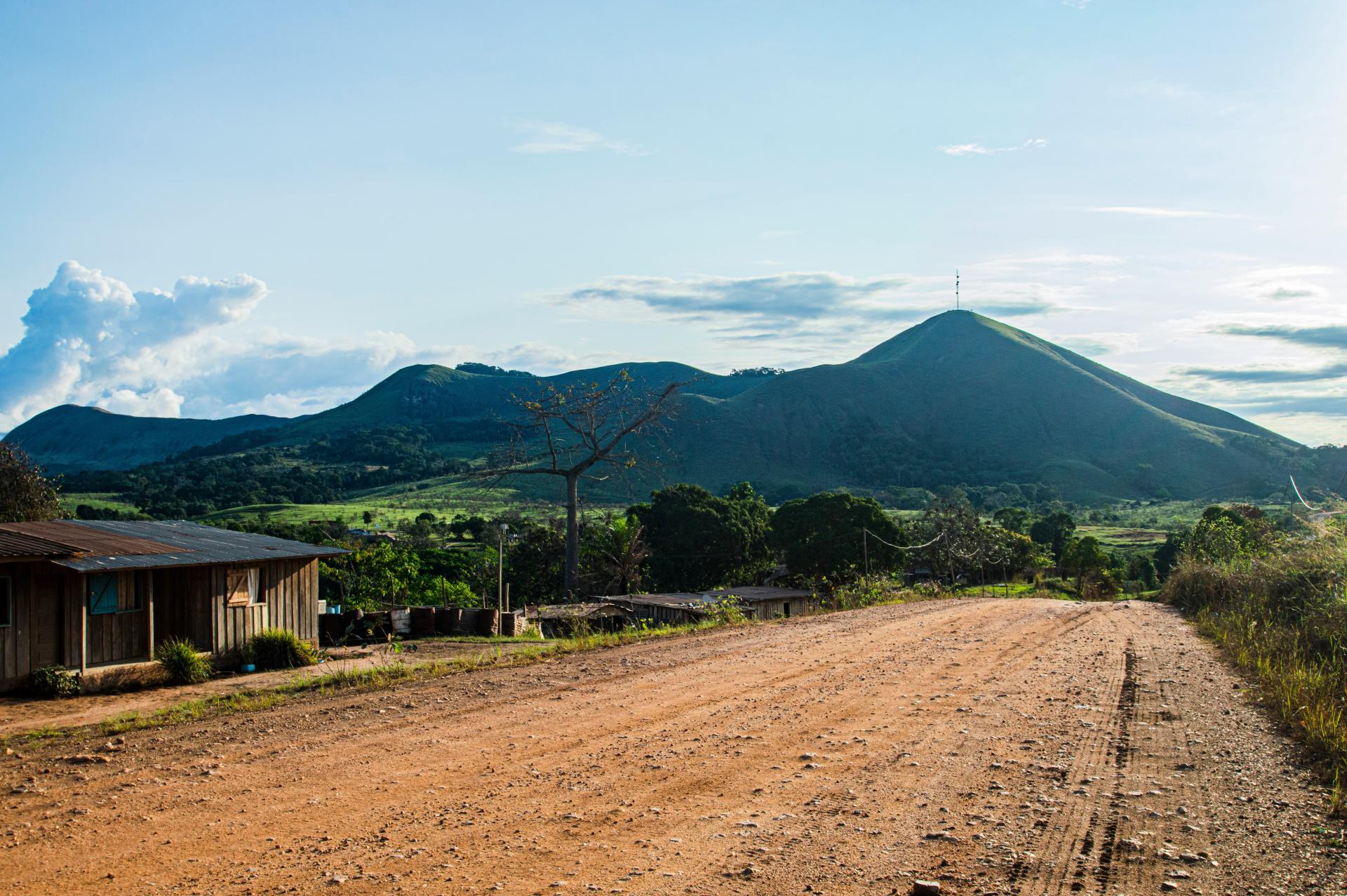
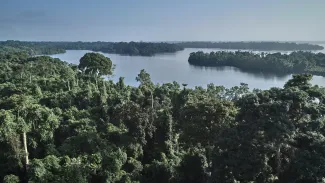
Gabon is one of the most forest-covered countries in the world, with over 80% of its territory under forest cover, and is a cornerstone of biodiversity conservation in the Congo Basin. Its largely intact forest landscapes support exceptional biodiversity, store significant carbon stocks, and play an important role in regional and global climate regulation.
Gabon has demonstrated a strong national commitment to conservation, including the establishment of an extensive protected area network and the integration of natural capital into development planning. Within the framework of the Congo Basin Landscapes Initiative (CBLI), Gabon plays a leading role in efforts to maintain forest integrity, protect wildlife populations, and advance climate and biodiversity objectives at scale. CBLI engagement emphasizes landscape-scale land-use planning, wildlife corridor protection, and strengthened monitoring and enforcement systems.
Sections
Topography
Gabon’s terrain is characterized by coastal plains, inland plateaus, and low mountain ranges, notably the Cristal Mountains in the northwest and the Chaillu Massif in the south-central region. These landforms support extensive tropical rainforest ecosystems, as well as wetlands and lowland forest mosaics. The country’s relatively low relief and humid equatorial climate have contributed to the long-term stability and continuity of its forest cover.
Water Systems
Gabon is drained by a dense network of rivers, dominated by the Ogooué River system, one of the largest in Central Africa. The Ogooué and its tributaries sustain floodplain forests, freshwater wetlands, and productive fisheries, while supporting high levels of aquatic biodiversity. These river systems play a critical role in carbon storage, nutrient cycling, and ecosystem connectivity, linking inland forests with coastal and estuarine environments.
Regional Position
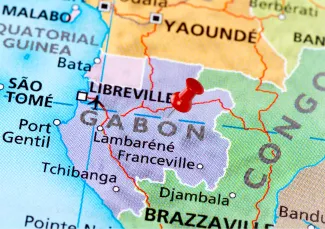
Gabon is classified as an upper-middle-income country, with an economy historically dependent on oil, timber, and mining, particularly manganese. In recent years, the government has placed increased emphasis on economic diversification, sustainable forest management, and natural capital accounting as pillars of national development.
Key Socioeconomic Indicators
- Population: ~2.4 million
- GDP (nominal): ~USD 21–22 billion
- GDP per capita: ~USD 9,000–9,500
Gabon is one of Central Africa’s wealthier countries, with a high level of urbanization (over 85%), which has helped reduce direct population pressure on forests but increased demand for infrastructure and services. Despite relatively high per-capita income, economic inequality and continued dependence on extractive industries remain key challenges.
The country provides a strong model for linking forest protection, sustainable land-use planning, and long-term economic resilience.
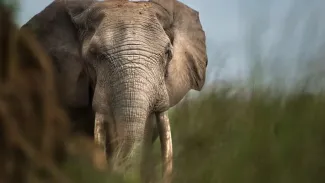
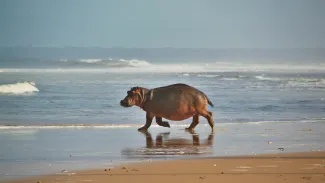
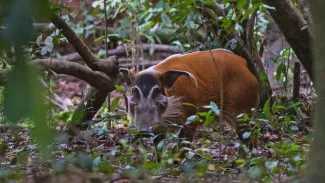
Gabon hosts exceptional levels of biodiversity, including more than 8,000 plant species, approximately 190 mammal species, and around 700 bird species. Its forests support globally significant populations of forest elephants, western lowland gorillas, chimpanzees, and mandrills, making Gabon a global priority for large-mammal conservation.
Approximately 11% of Gabon’s national territory is protected through a well-established national park system comprising 13 national parks, complemented by other conservation and sustainable use designations. The country’s intact forests and peatland systems store large carbon stocks and provide essential climate regulation and ecosystem services.
Despite strong conservation frameworks, Gabon’s ecosystems face a number of emerging and persistent pressures. Illegal logging and mining, particularly in remote forest areas, continue to pose risks to forest integrity. Poaching and wildlife trafficking remain challenges, even with comparatively robust legal and enforcement systems.
Expanding transport and energy infrastructure, including roads, railways, and ports, is increasing the risk of forest fragmentation and habitat disruption. In addition, climate change is expected to affect rainfall patterns and forest resilience over time, reinforcing the need for adaptive, landscape-scale conservation and planning approaches supported under CBLI.
| Transforming Forest Landscape Governance in the Lower Ogooué - Lower Nyanga Landscape Corridor |
|
View project |
Source : Country information synthesized from international reference sources, national data, scientific literature and CBLI project documentation.