
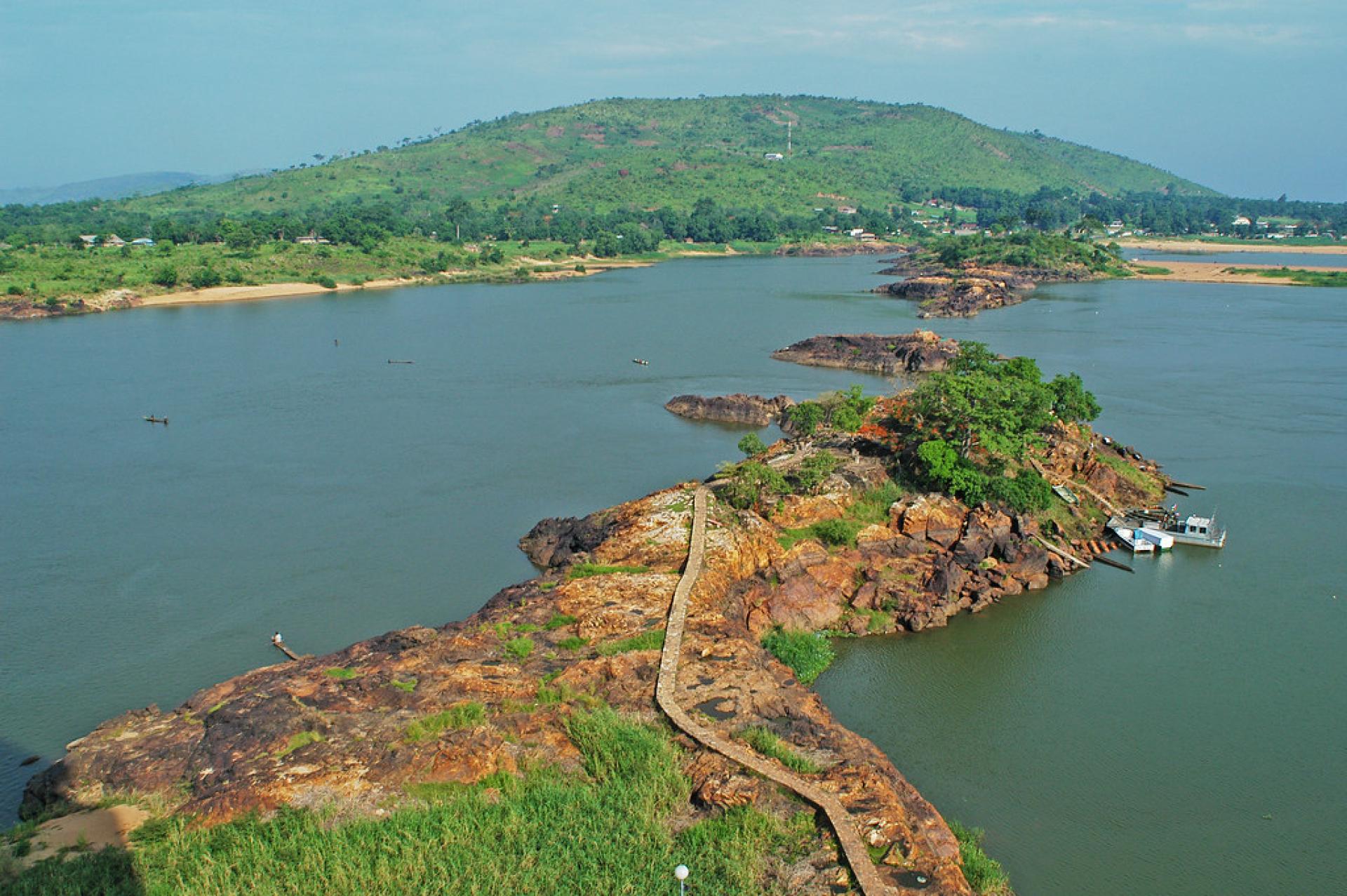
The Central African Republic (CAR) occupies a strategically important portion of the northern Congo Basin ecological region, forming a transition zone between dense tropical forests in the south and savanna landscapes in the north. This positioning gives CAR high ecological value, with forests that support significant biodiversity, provide essential ecosystem services, and contribute to regional climate regulation and transboundary conservation.
Despite this ecological importance, persistent socioeconomic fragility, governance constraints, and limited institutional capacity pose major challenges to sustainable biodiversity management. Within the framework of the Congo Basin Landscapes Initiative (CBLI), CAR’s engagement focuses on strengthening governance, safeguarding priority forest landscapes, and advancing community-based conservation approaches in key areas such as Basse-Lobaye and Mbaéré-Bodingué.
Through national projects, UNEP and partners are supporting the development and implementation of Integrated Land-Use Management Plans (ILUMPs) in priority landscapes, alongside strengthened community-based forest management to protect biodiversity, carbon stocks, and vital ecosystem services.
Sections
Topography
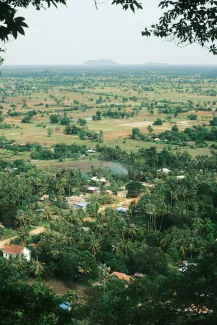
The CAR’s topography is generally flat to gently undulating, with limited highlands. Elevations range from river valleys in the south to modest uplands near the Cameroon border.
Water Systems
The country is a hydrological nexus for the Congo Basin, with southern rivers such as the Oubangui and its tributaries feeding the Congo River system, contributing vital freshwater and wetland habitats for aquatic biodiversity and human livelihoods. (ScienceDirect)
Regional Position
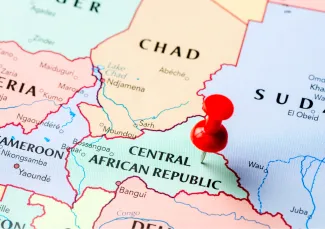
The Central African Republic (CAR) is one of the world’s least developed and most fragile countries, with an economy heavily dependent on subsistence agriculture and natural resources. Economic activity is constrained by longstanding governance challenges, insecurity, limited infrastructure, and weak market access. According to World Bank and IMF assessments, growth prospects remain modest and highly vulnerable to shocks, with national priorities focused on stabilization, basic service delivery, and recovery of productive sectors.
Agriculture is the backbone of livelihoods for the majority of the population, particularly in rural and forested areas, where communities rely directly on forests and ecosystems for food, fuel, income, and resilience. Forestry and mining contribute to export revenues, but value addition remains limited and regulation is weak. As a result, poverty, food insecurity, and dependence on natural resources remain widespread, making sustainable natural resource management central to both poverty reduction and environmental sustainability.
Key Socioeconomic Indicators
- Population: ~5.6 million
- GDP (nominal): ~USD 2.8–3.0 billion
- GDP per capita: ~USD 500–550
- Economic structure: Subsistence agriculture dominates; forestry and mining contribute to exports but remain largely informal and weakly regulated
- Employment: Agriculture employs the majority of the workforce
- Poverty: Widespread, particularly in rural and forest-dependent areas; among the highest rates globally
Ecological Significance
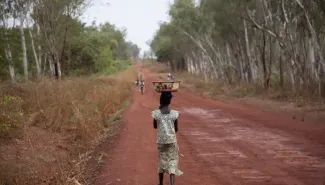
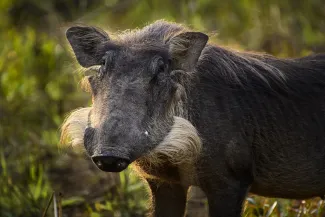
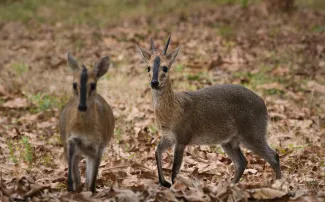
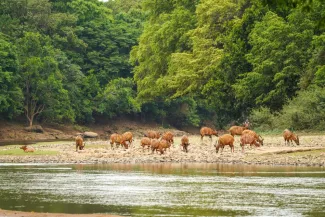
CAR’s forests are part of the Congolian forest-savanna mosaic and dense rainforest ecoregions, supporting primates, large mammals, diverse bird communities, and critical carbon stocks. Protected areas include the Zemongo Faunal Reserve, known for diverse birdlife and primates, and Chinko Nature Reserve, a vast landscape under sustainable management partnership.
Poaching & Law Enforcement Gaps
Poaching remains a pervasive threat, driven by weak law enforcement and limited resources for protected area management. Many protected areas lack adequate monitoring and management capacity. (ScienceDirect)
Land-Use Pressures & Habitat Degradation
Shifting agriculture, unsustainable land-use practices, and extractive activities contribute to forest degradation and fragmentation. Continuation of these trends risks undermining the ecological integrity of CAR’s forest landscapes. (ScienceDirect)
Governance & Capacity Constraints
Limited institutional capacity, sustained political instability, and economic challenges hinder effective biodiversity conservation planning and enforcement. (ScienceDirect)
| Forests and Biodiversity Conservation Program in the Central African Republic (CAR) |
|
View project |
| Mise à l’échelle des corridors écologiques et de la connectivité transfrontalière grâce à la gestion intégrée des ressources naturelles dans le paysage forestier de Ngotto et le Parc national de Mbaéré-Bodingué |
|
View project |
| Scaling up ecological corridors and transboundary connectivity through integrated natural resources management in the Ngotto Forest landscape and Mbaéré-Bodingué National Park |
|
View project |
Source : Country information synthesized from international reference sources, national data, scientific literature and CBLI project documentation.