

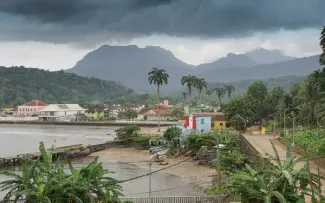
São Tomé and Príncipe is a small island state in the Gulf of Guinea, located off the west coast of Central Africa. Though outside the core Congo Basin forest block, the islands’ ecosystems are ecologically connected to the Basin through shared marine currents, migratory species, and climatic patterns. The islands are recognized for exceptional levels of endemism, particularly among plants and birds, and harbor globally significant terrestrial, freshwater, and marine ecosystems.
These ecosystems provide essential services for local communities, including food security, water supply, and coastal protection, while supporting tourism and climate resilience. CBLI and UNEP recognize São Tomé and Príncipe as strategically important for biodiversity conservation and as a model for integrated island ecosystem management.
Sections
The islands have a tropical climate with two main seasons: a wet season (October–May) and a dry season (June–September). Annual rainfall ranges from 1,500–5,000 mm, depending on altitude, supporting dense rainforests.Temperatures are relatively stable, averaging 24–28°C, but climate change and sea-level rise are increasingly affecting coastal and lowland ecosystems.
Topography
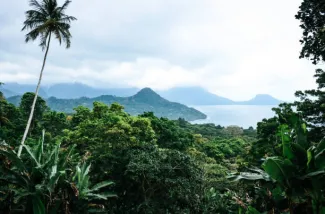
São Tomé and Príncipe are volcanic islands with rugged mountains, steep slopes, and dense forests.
- São Tomé, the larger island, features Pico de São Tomé (2,024 m), a volcanic peak surrounded by montane and submontane forests.
- Príncipe, smaller and older geologically, has low mountains and hills with well-preserved tropical forests.
This altitudinal variation creates microclimates that support high biodiversity and distinct endemic species. The islands’ topography also influences rainfall patterns, with orographic rainfall supporting lush forests and numerous freshwater streams.
Water Systems
Short rivers and streams originate in the volcanic highlands, draining directly to the Atlantic Ocean.
- These freshwater networks sustain small floodplain ecosystems, wetlands, and estuaries, providing habitat for amphibians, freshwater fish, and endemic invertebrates.
- Coastal mangroves and nearshore reefs are critical for coastal protection, fisheries productivity, and carbon storage.
- The islands’ water systems are highly sensitive to land-use change and climate variability, making integrated water and ecosystem management essential.
Regional Position
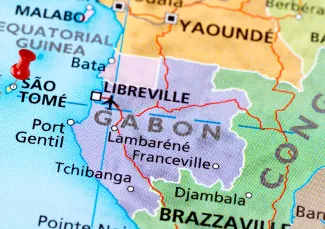
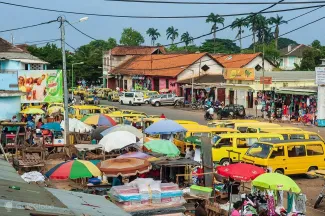
São Tomé and Príncipe is a small island developing state (SIDS) with limited land area and high dependence on natural ecosystems. The population is concentrated in urban areas on São Tomé island, with rural communities relying heavily on agriculture, fisheries, and forest resources.
Key Socioeconomic Indicators
- Population: ~230,000
- GDP (nominal): ~USD 550–600 million
- GDP per capita: ~USD 2,500–2,700
Its economy relies primarily on smallholder agriculture (notably cocoa and coffee), fisheries, tourism, and services, with significant support from external aid. Limited land area and high exposure to climate shocks, including sea-level rise and extreme weather events, increase environmental vulnerability. Sustainable management of the islands’ ecosystems is therefore essential for food security, livelihoods, and climate resilience.
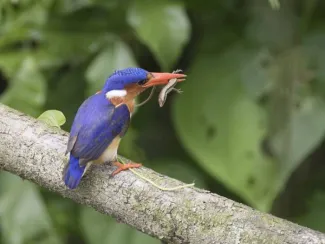
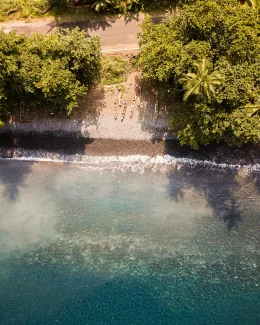
Sao Tome and Principe host exceptionally high levels of endemism for Africa, with over 700 plant species and roughly 60 endemic or near-endemic birds, alongside distinctive small mammals and bats found nowhere else. The islands’ forests, mangroves, and coral reefs form globally significant habitats that support rich biodiversity and deliver vital ecosystem services, including watershed protection, climate regulation, and coastal resilience. Shorelines and beaches also serve as critical nesting sites for green and hawksbill turtles, reinforcing the islands’ importance for marine biodiversity.
Protecting these ecosystems is essential not only for preserving unique species but also for sustaining the livelihoods and cultural heritage of local communities who depend on healthy ecosystems for food, water, tourism, and traditional practices. Integrated conservation efforts—combining habitat protection, species monitoring, sustainable livelihoods, and community engagement—are key to maintaining biodiversity and the services it provides in the long term.
Despite its ecological value, São Tomé and Príncipe faces multiple pressures that threaten its unique biodiversity and ecosystems:
- Deforestation and land conversion for agriculture compress habitats and reduce connectivity.
- Climate change and sea-level rise are impacting coastal areas, mangroves, and nearshore ecosystems.
- Limited capacity for conservation and scientific monitoring hampers timely data collection and enforcement.
- Invasive species and habitat fragmentation threaten endemic species and ecosystem integrity.
Addressing these challenges requires integrated island-scale planning, ecosystem-based adaptation, and community engagement. Key strategies include strengthening governance and monitoring, promoting sustainable land use and livelihoods, restoring degraded habitats, and fostering local stewardship to ensure the long-term sustainability of the islands’ unique biodiversity and ecosystems.
| São Tomé e Príncipe's intact forests - the Obô Natural Parks and their buffer zones: a treasure to conserve and restore. |
|
View project |
Source : Country information synthesized from international reference sources, national data, scientific literature and CBLI project documentation.