
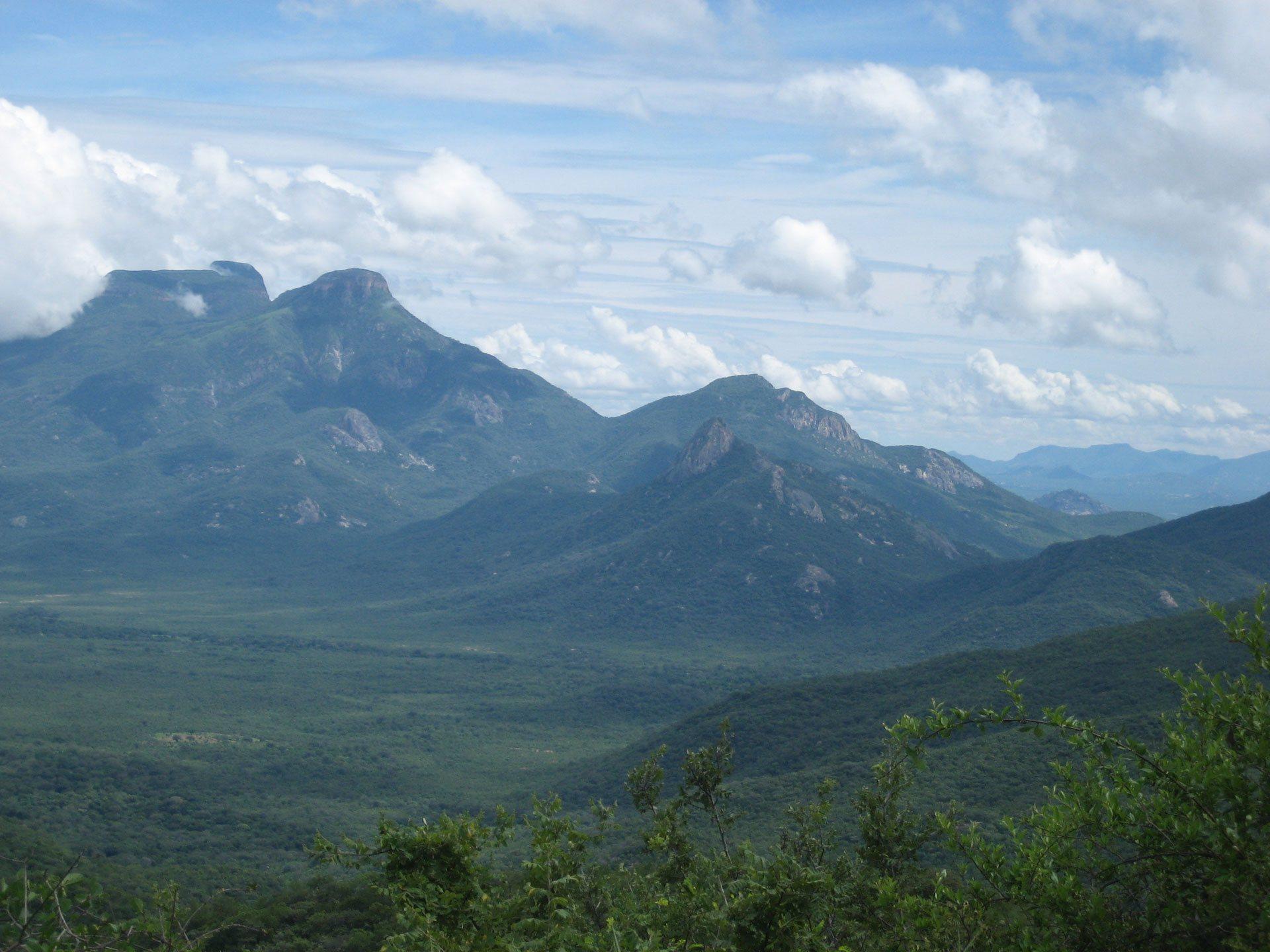
Angola is a vast and ecologically diverse country in south-western Africa, bordered by Namibia, Zambia, the Democratic Republic of the Congo (DRC), and the Atlantic Ocean. The country is characterized by a rapidly growing population and an economy largely driven by oil and mineral resources, creating significant challenges in balancing economic development with the conservation of its natural capital.
While Angola’s forest ecosystems lie largely outside the core Congo Basin forest block, the Maiombe forest landscape in Cabinda, forming the southernmost extension of the Congo Basin rainforest, is of high regional ecological importance. Through its engagement in the Congo Basin Landscapes Initiative (CBLI), Angola focuses on strengthening sustainable forest governance, enhancing transboundary cooperation, promoting community-based conservation, and safeguarding biodiversity from threats linked to unsustainable land use, logging, and resource extraction.
Sections
Topography
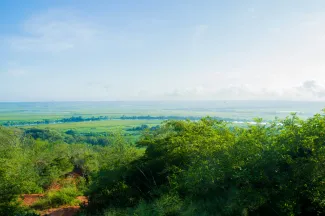
Angola’s landscapes are highly diverse, ranging from tropical forests in the north to central highlands, expansive savannas, wetlands, and an extensive Atlantic coastline. This ecological diversity reflects the country’s varied topography and climatic gradients.
The terrain transitions from low-lying coastal plains to elevated interior plateaus and central highlands, intersected by river valleys and escarpments, and includes rugged mountainous areas such as the Angolan Highlands. This pronounced topographic variation underpins a wide range of ecosystems, supporting dense forest formations in the north and more arid and semi-arid landscapes in the south.
Water Systems
Key rivers include the Cuanza, Cuando/Cubango, Zambezi, and Cunene, which drain into the Atlantic or form important transboundary basins, sustaining agriculture, freshwater biodiversity, and local livelihoods. These waters also feed into wetland systems that support both people and wildlife.
Regional Position
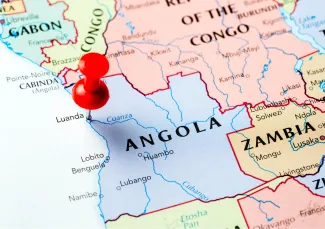
Angola is a lower-middle-income country and one of Southern Africa’s largest and most populous economies, with development shaped by its substantial natural resource endowment and post-conflict recovery trajectory. The economy has historically been driven by oil and gas production, which continues to dominate exports and government revenues, while mining, agriculture, and services represent growing but still underdeveloped sectors.
According to the World Bank and the International Monetary Fund, Angola has experienced a period of economic recovery in recent years, supported by macroeconomic reforms, fiscal consolidation, and efforts to improve governance. Real GDP growth has rebounded, and national development strategies emphasize economic diversification and more inclusive growth. However, the economy remains highly exposed to external shocks due to its reliance on hydrocarbon revenues.
Despite these gains, poverty and inequality remain significant challenges, particularly in rural and forest-dependent areas. Rapid population growth, a youthful demographic profile, and rising demand for energy, food, and land are increasing pressure on natural resources and ecosystems.
Key Socioeconomic Indicators
- Population: ~36 million
- Population growth rate: ~3.3% per year
- GDP (nominal): ~USD 105–110 billion
- GDP per capita: ~USD 3,000
Economic structure: Oil and gas dominate exports and fiscal revenues; agriculture employs a large share of the population but remains largely subsistence-based and underproductive
Richness of Species and Ecosystems
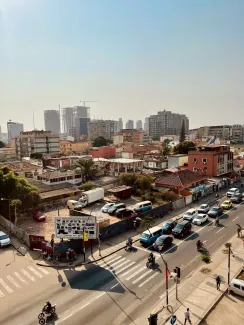
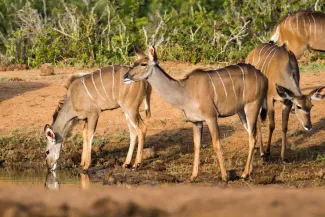
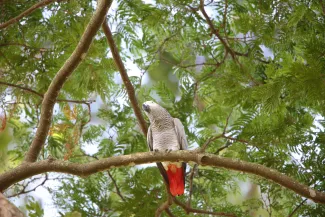
Angola’s biodiversity is exceptionally rich, spanning seven of Africa’s nine terrestrial biomes and 15 ecoregions, from rainforests and Miombo woodlands to savannas and desert ecosystems. The country hosts over 290 species of mammals, numerous bird species (approximately 940 recorded), and significant amphibian and reptile diversity. It’s second only to South Africa in terms of ecoregion diversity. Some globally rare species, like the Giant Sable Antelope (Hippotragus niger variani) — Angola’s national symbol — are found here and are critically endangered. (World Land Trust)
Protected Areas & Key Habitats
Angola contains important forest and wildlife reserves such as Kumbira Forest (a bird conservation area), and scattered protected sites that provide critical habitat for endemic and migratory species.
Despite its exceptional ecological diversity, Angola's ecosystems face a number of growing pressures.
Deforestation and forest degradation, particularly in the Maiombe forest landscape, are driven by unsustainable logging, agricultural expansion, infrastructure development, and increasing demand for fuelwood and charcoal. Habitat fragmentation is affecting forest connectivity and biodiversity, while unsustainable hunting and wildlife exploitation continue to threaten several species. Mining and other extractive activities also contribute to habitat degradation and pollution in some areas.
Limited technical and institutional capacity for biodiversity monitoring and environmental management further constrains effective conservation planning and enforcement. Addressing these challenges requires integrated landscape approaches that strengthen governance, promote sustainable land use, enhance transboundary cooperation, and support community-based conservation—key priorities of the Congo Basin Landscapes Initiative (CBLI) in Angola.
| Integrated conservation of the Maiombe forest ecosystem in Cabinda Province Angola |
|
View project |
Source : Country information synthesized from international reference sources, national data, scientific literature and CBLI project documentation.