
Why wildlife health and human health are inseparable
Where Risk Emerges
The COVID-19 pandemic clearly demonstrated the interconnected nature of human, animal, and environmental health. The wide-ranging effects of SARS-CoV-2 showed how zoonotic spillover events can disrupt economies, social systems, and global public health.
With over 250 known zoonotic viruses already spilled over from animals to humans—and an estimated 1.67 million undescribed viruses residing in mammals and birds (half of which could infect humans)—the threat of future spillover events remains real and urgent.
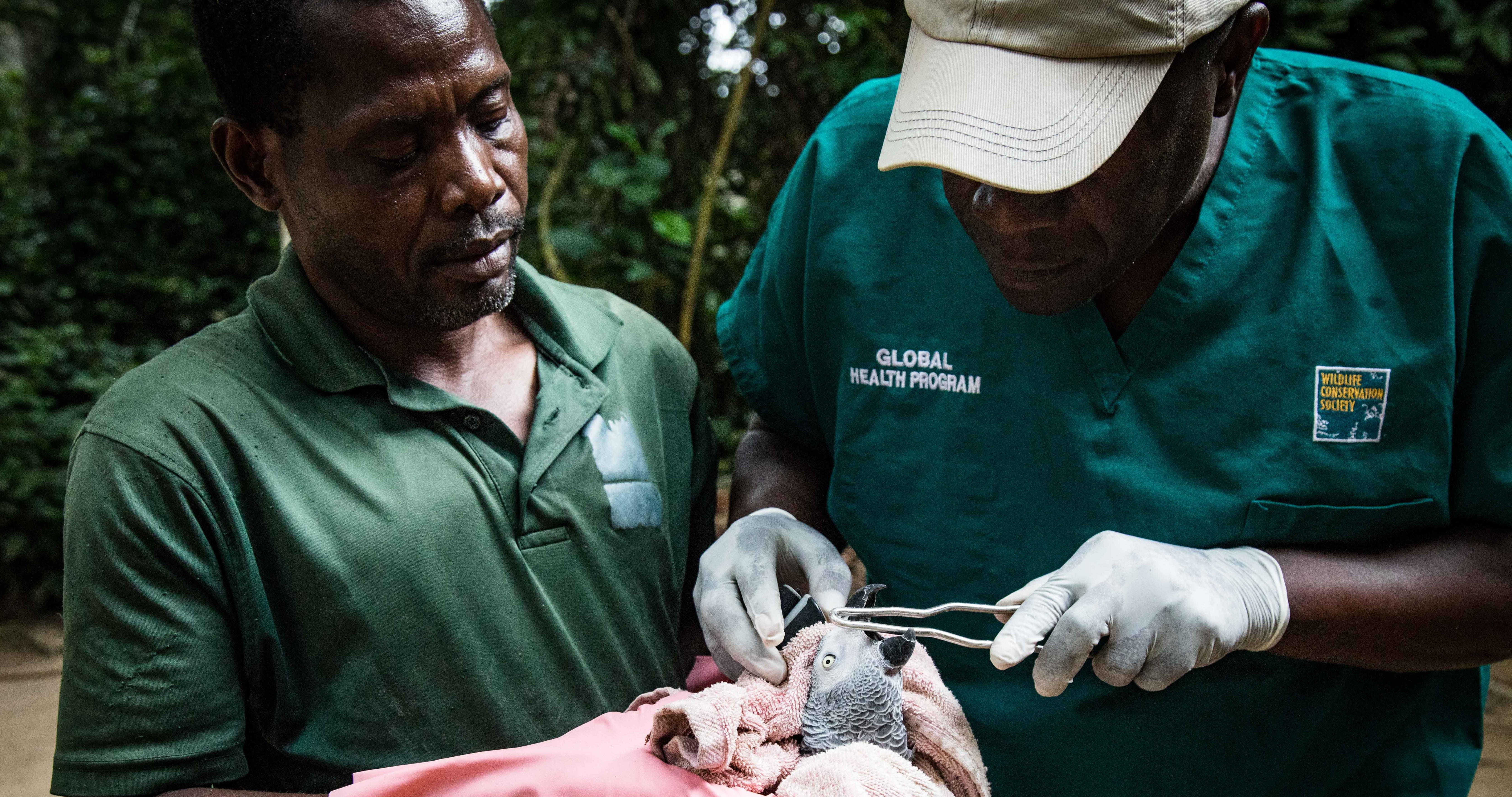
Emergence of these viruses is a dynamic process that involves environmental, behavioral, and virus host factors. The UNEP-ILRI report “Preventing the next pandemic: Zoonotic diseases and how to break the chain of transmission”[*] lists seven human mediated factors that are most likely driving the emergence of zoonotic diseases:
- increasing human demand for animal protein,
- unsustainable agricultural intensification,
- increased use and exploitation of wildlife,
- unsustainable utilization of natural resources accelerated by urbanization, land use change and extractive industries,
- increased travel and transportation;
- changes in food supply; and
- climate change.
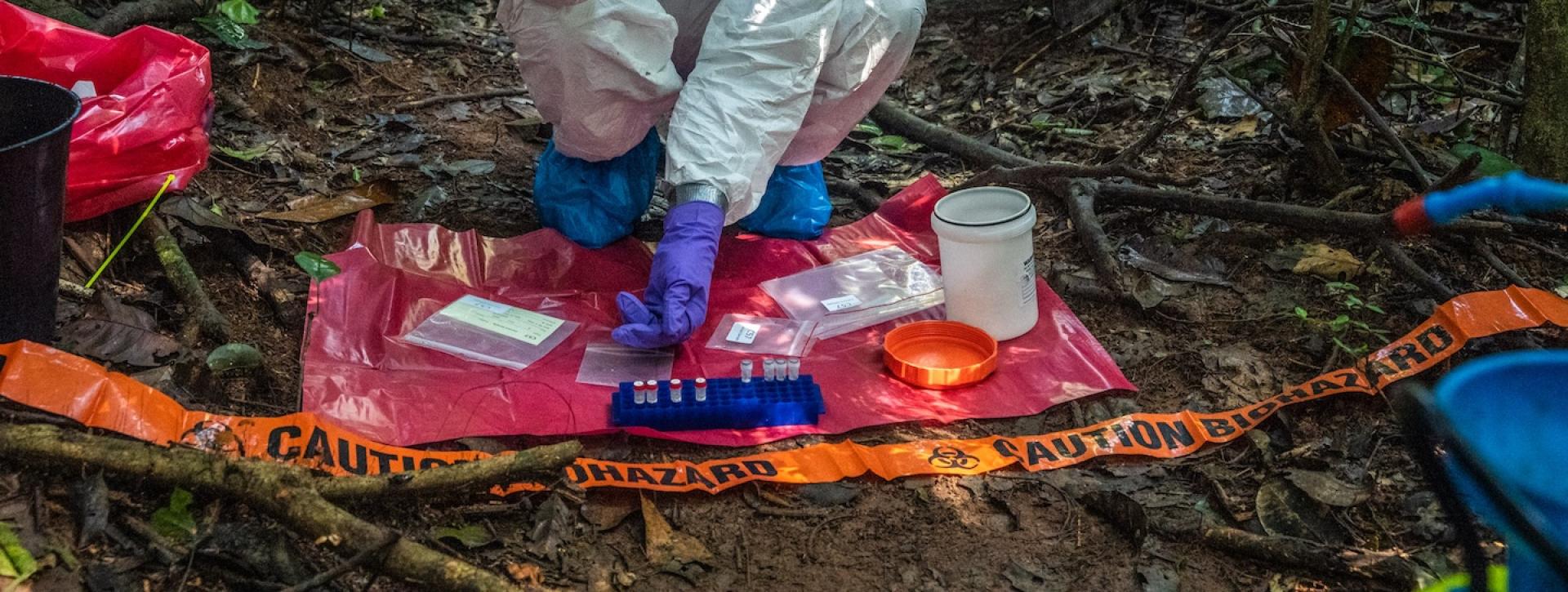
The north of the Republic of Congo (RoC) contains many of these high-risk factors. Epidemics—including repeated waves of Ebola—have been well documented there in recent decades. In the RoC’s rainforest ecosystems, expanding logging and road construction open previously remote forest areas to human activity and hunting. These disturbances alter local disease ecology and bring humans, wildlife, and potential pathogens into closer contact.
In the Ndoki-Likouala landscape in RoC, the Wildlife Conservation Society (WCS) and partners are addressing these challenges by strengthening One Health approaches that link human health, wildlife monitoring, and community-led early warning.
Detecting Signals Earlier
Outbreaks are rarely completely unannounced. They are often preceded by early warning signals:
- Unusual wildlife mortality (e.g., unexplained animal deaths in the forest)
- Livestock illness
- Increased human–wildlife interaction
Historically, detecting these signals quickly was difficult because reporting systems were fragmented, and laboratory capacity was often located far from where risks first emerged.
Within the Ndoki-Likouala landscape, WCS and partners are helping strengthen earlier detection systems closer to the source of risk. Efforts include : community-based reporting systems; field surveillance networks; and faster diagnostic approaches in remote forest regions.
Current progress in the landscape includes:
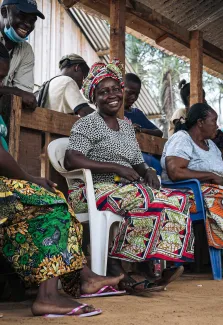
109 villages fully integrated into early warning systems.
7,963 community members actively engaged/reached through community-based approaches.
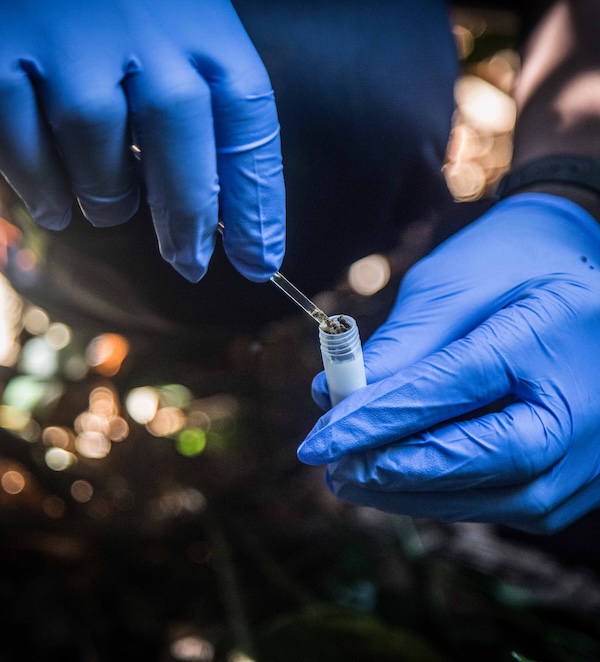
Field-based diagnostic tools deployed to drastically reduce the time between initial detection and outbreak response.
From Centralized Response to Landscape Preparedness
Traditionally, disease outbreak response relied heavily on centralized reporting and distant laboratories. Increasingly, surveillance systems are becoming more distributed across landscapes themselves.
When communities report unusual events and field teams gather real-time data on site, information moves rapidly between local actors, researchers, and public health authorities. This shift helps strengthen preparedness by:
- Improving local detection capacity among forest communities.
Reducing reporting delays so responses can begin in hours rather than weeks.
Strengthening coordination across remote, transboundary forest regions.
Rather than responding only after outbreaks occur, landscape-based surveillance systems help identify risks earlier and closer to their source.
A One Health reality
Environmental conditions, wildlife health and human activity are closely connected particularly in regions like the Congo Basin. The same ecosystems that support biodiversity also shape local mobility patterns, livelihood activities and opportunities for contact between people, wildlife and potential pathogens.
In the Ndoki-Likouala landscape,integrated surveillance systems combines wildlife health monitoring; community reporting; and field diagnostics. Together, these approaches help build a more complete picture of how land-use and environmental changes, wildlife health, and human activity interact across forest landscapes.
By strengthening knowledge of these connections, they also contribute to a broader understanding of the factors that influence both ecosystem integrity and community resilience.
Why this matters
The Congo Basin is globally important not only for biodiversity and climate stability, but ecological changes within its forest ecosystems can have direct implications for regional and global health security.
As pressures on forests evolve, understanding interactions between ecosystems, wildlife, and people becomes increasingly important. Experiences from the Ndoki-Likouala landscape highlight how practical One Health approaches can help strengthen coordination between environmental monitoring, disease surveillance, and community participation- improving preparedness closer to where risks emerge.
The lesson extends beyond outbreak response alone; forest health and human health are not separate challenges. They are interconnected parts of the same landscape system. Strengthening connections between environmental monitoring, wildlife health, and local surveillance can contribute to a more complete understanding of risk across forest landscapes.
---------
[*] References & Further Reading: Grace, D., Refisch, J., MacMillan, S., Wright, C.Y., Bett, B., Robinson, D.L., Wernecke, B., Lee, H.S., Karesh, W.B., Machalaba, C., Fraenkel, A., Barbieri, M., Kappelle, M. (2020). Preventing the next pandemic: Zoonotic diseases and how to break the chain of transmission. A Scientific Assessment with Key Messages for Policy-Makers. A Special Volume of UNEP’s Frontiers Report Series.