The project, “São Tomé e Príncipe’s Intact Forests — the Obô Natural Parks and Their Buffer Zones: A Treasure to Conserve and Restore,” aims to protect, restore, and sustainably manage the remaining pristine forests within the Obô Natural Parks and their surrounding buffer zones. It focuses on conserving exceptional biodiversity, safeguarding ecosystem services, and enhancing local livelihoods through sustainable practices, thereby preserving São Tomé and Príncipe’s natural heritage for future generations.
Co-financing Total
USD 12,695,032
GEF Project Grant
USD 6,535,015
GEF Agency Fees
USD 588,151
Image
Sections
Objectives
- To effectively conserve the remaining intact forests within the Obô Natural Parks and their buffer zones.
- To restore degraded forest areas and ecological connectivity across landscape matrices.
- To strengthen governance, policies, and institutional capacity for protected area management.
- To promote sustainable livelihood options for local communities that are aligned with conservation goals.
- To establish sustainable financing mechanisms for long-term protection and restoration of forests.
- To enhance environmental monitoring, data collection, and knowledge-sharing to support adaptive management.
Components
- Strengthening the management and enforcement capacities of conservation authorities within the Obô Natural Parks and buffer zones.
- Conducting ecological restoration activities in degraded forest areas to improve connectivity and biodiversity resilience.
- Developing and implementing conservation-friendly land-use planning and zoning frameworks.
- Supporting sustainable livelihood initiatives for local communities, including eco-tourism, sustainable harvesting, and agroforestry.
- Establishing innovative financial solutions such as payments for ecosystem services (PES), eco-enterprises, and funding from international donors.
- Building capacity for environmental research, biodiversity monitoring, and data-driven decision-making.
- Promoting community engagement, environmental education, and awareness campaigns to foster local stewardship.
- Creating multi-stakeholder platforms for dialogue, coordination, and partnership building among government, communities, donors, and NGOs.
Threats
- Deforestation driven by illegal logging, agriculture expansion, and infrastructure development.
- Habitat fragmentation and ecological degradation resulting from unsustainable land use.
- Limited capacity and resources for effective protected area enforcement and management.
- Land tenure ambiguities and weak governance frameworks limiting community participation and benefit-sharing.
- Climate change impacts threatening ecosystem stability and biodiversity
- Socio-economic pressures on local communities due to poverty and lack of sustainable livelihood alternatives.
Interventions
- Improving protected area management, enforcement, and patrol systems within Obô Natural Parks and buffer zones.
- Restoring degraded forests through tree planting, invasive species control, and habitat rehabilitation.
- Developing conservation-oriented land-use planning tools and zoning regulations that balance ecological and community needs.
- Supporting sustainable livelihood projects, including eco-tourism and non-timber forest products (NTFP) valorization.
- Establishing innovative financial mechanisms to ensure sustained funding, such as PES schemes and green grants.
- Enhancing scientific research, biodiversity monitoring systems, and capacity building for local stewards.
- Facilitating community participation through education, stakeholder engagement, and benefit-sharing arrangements.
- Strengthening regional and national policies that support forest conservation, restoration, and sustainable use.
Outcomes
- Improved management and protection of Obô Natural Parks and buffer zones, reducing illegal activities and habitat loss.
- Restored ecological corridors and increased forest cover, boosting biodiversity resilience.
- Enhanced governance, policies, and institutional capacities for long-term protected area management.
- Increased income and sustainable livelihoods for local communities engaged in conservation activities.
- Established diversified and sustainable financing streams to support forest conservation and restoration efforts.
- Active community participation in conservation, leading to stronger local stewardship and environmental awareness.
- Better data collection and knowledge sharing to inform adaptive management strategies.
Expected impact
- Preservation of São Tomé and Príncipe’s unique biodiversity and rare ecosystems.
- Climate change mitigation through forest restoration and carbon sequestration.
- Socio-economic benefits for local communities, reducing poverty through sustainable resource use.
- Strengthened protected area networks and landscape connectivity.
- Replicable models of community-inclusive conservation and restoration applicable to other regions.
- Progress toward national commitments under biodiversity and climate change strategies.
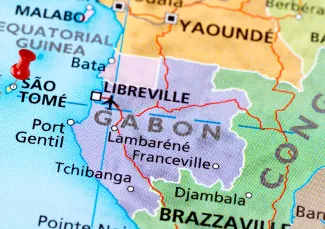
Area of intervention
Image
- UNEP (United Nations Environment Programme)
- UNODC (United Nations Office on Drugs and Crime)
- Re:wild (formerly known as WILD Foundation)
- Conservation International
- Zoological Society of London (ZSL), supported via their DEFRA-funded Biodiverse Landscapes Fund
- COMIFAC (Central African Forest Commission)
- FSC (Forest Stewardship Council)
- WCMC (World Conservation Monitoring Centre)
Image
Image
Image

Image

Image

Image

Image