[through an inclusive Landscape-scale approach, effective land use planning and promotion of local governance}
This project aims to consolidate and expand successful practices and lessons learned from previous interventions in the Monte Alen and Rio Campo landscapes. It focuses on implementing an inclusive, landscape-scale management approach that emphasizes effective Land Use Planning (LUP) and strengthening local governance to foster sustainable, equitable management of forest and biodiversity resources.
Co-financing Total
USD 32,450,000
GEF Project Grant
USD 5,354,587
GEF Agency Fees
USD 481,913

Sections
Objectives
- Scale Monte Alen/Rio Campo approaches to transform landscape management.
- Ensure inclusive engagement (communities, Indigenous Peoples, women, marginalized).
- Strengthen land-use planning with ecological, social, economic factors.
- Enhance local governance for sustainable land/NRM.
- Capture and share lessons for policy.
- Foster adaptive, locally tailored innovations.
- Secure long-term sustainability via empowerment, capacity building, policy.
Components
- Landscape-scale Management and Learning
- Inclusive Stakeholder Engagement
- Land Use Planning (LUP) and Zoning
- Capacity Building and Local Governance Strengthening
- Monitoring, Learning, and Knowledge Sharing
- Policy Advocacy and Mainstreaming
- Pilot and Demonstration of Models
Threats
- Limited institutional capacity,
- delays in cascading training to local actors, and
- weak enforcement of updated Protected Areas Law (2023-2024).
- Deforestation, forest degradation, and habitat fragmentation : Risk of losing 22% of moist forests in DRC by 2050
- Limited inclusion of marginalized groups, leading to social conflicts.
- Weak land use planning and enforcement.
- Insufficient capacity of local institutions for adaptive landscape management.
- Land tenure insecurity and overlapping claims.
- Climate change impacts affecting forest health and livelihoods.
- Insufficient integration of traditional land management and modern land use policies.
Interventions
- Document and scale lessons learned from prior projects in Monte Alen and Rio Campo landscapes.
- Facilitate participatory stakeholder consultations to co-develop landscape management strategies.
- Strengthen local governance structures and customary land rights within the landscapes.
- Develop and operationalize integrated land use plans, including zoning and management rules.
- Provide targeted capacity building in sustainable land use, governance, and conflict resolution.
- Support community-led initiatives such as community forest management, eco-tourism, and sustainable harvesting.
- Promote gender equality and inclusiveness in decision-making processes.
- Establish knowledge exchange platforms for North-South and South-South learning.
- Pilot innovative governance and financing approaches that incentivize sustainable use.
Outcomes
- Effective, inclusive governance structures actively managing landscape resources.
- Broader adoption of landscape-scale land use planning and zoning.
- Improved land tenure security and conflict resolution mechanisms.
- Increased stakeholder satisfaction and social cohesion in landscape management.
- Proven models of inclusive and sustainable landscape management scaled up regionally.
- Enhanced capacities of local institutions and communities to sustain efforts.
- Better integration of traditional knowledge and modern management practices.
- Policy frameworks aligned with landscape management principles.
Activities
(in progress or completed)
- Facilitated cross-border multi-stakeholder dialogues on sustainable land use and policy.
- Conducted capacity-building workshops for indigenous peoples, local communities, and government officials, including 10 training sessions on land use planning and governance.
- Developed and disseminated training kits to judges, law enforcement, and communities to enhance enforcement and knowledge sharing.
- Promoted sustainable livelihood initiatives, such as ecotourism and agroforestry projects.
- Engaged the private sector in sustainable logging certification and best practices.
- Participated in the Kribi transboundary conservation meeting (October 2024) to advance Cameroon-Equatorial Guinea cooperation and agreed on joint conservation strategies.
- Aligned training programs with updated land use planning methodologies and protected areas legislation.
Expected impact
- Strengthened transboundary cooperation, policy dialogue, and formal agreements between Cameroon and Equatorial Guinea.
- Improved capacity and governance for land use planning, enforcement, and sustainable resource management.
- Increased community engagement and capacity to implement sustainable land use practices.
- Enhanced private sector practices and livelihoods through certification and sustainable agriculture initiatives.
- Contributed to ecosystem conservation and reduced degradation through coordinated regional efforts.
Area of intervention
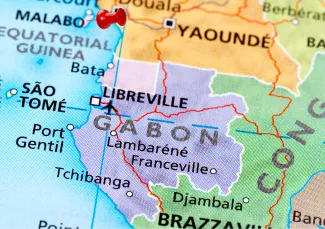
Executing Partners: Government of Equatorial Guinea, Ministry of Agriculture, Livestock, Forests and Environment | GEF Agency: IUCN (lead for Equatorial Guinea child project)
Project Partners: Regional bodies: COMIFAC, CEFDHAC, REPALEAC | NGOs: Wildlife Conservation Society (WCS), Biodiversity Initiative | Private sector companies involved in sustainable forest management