
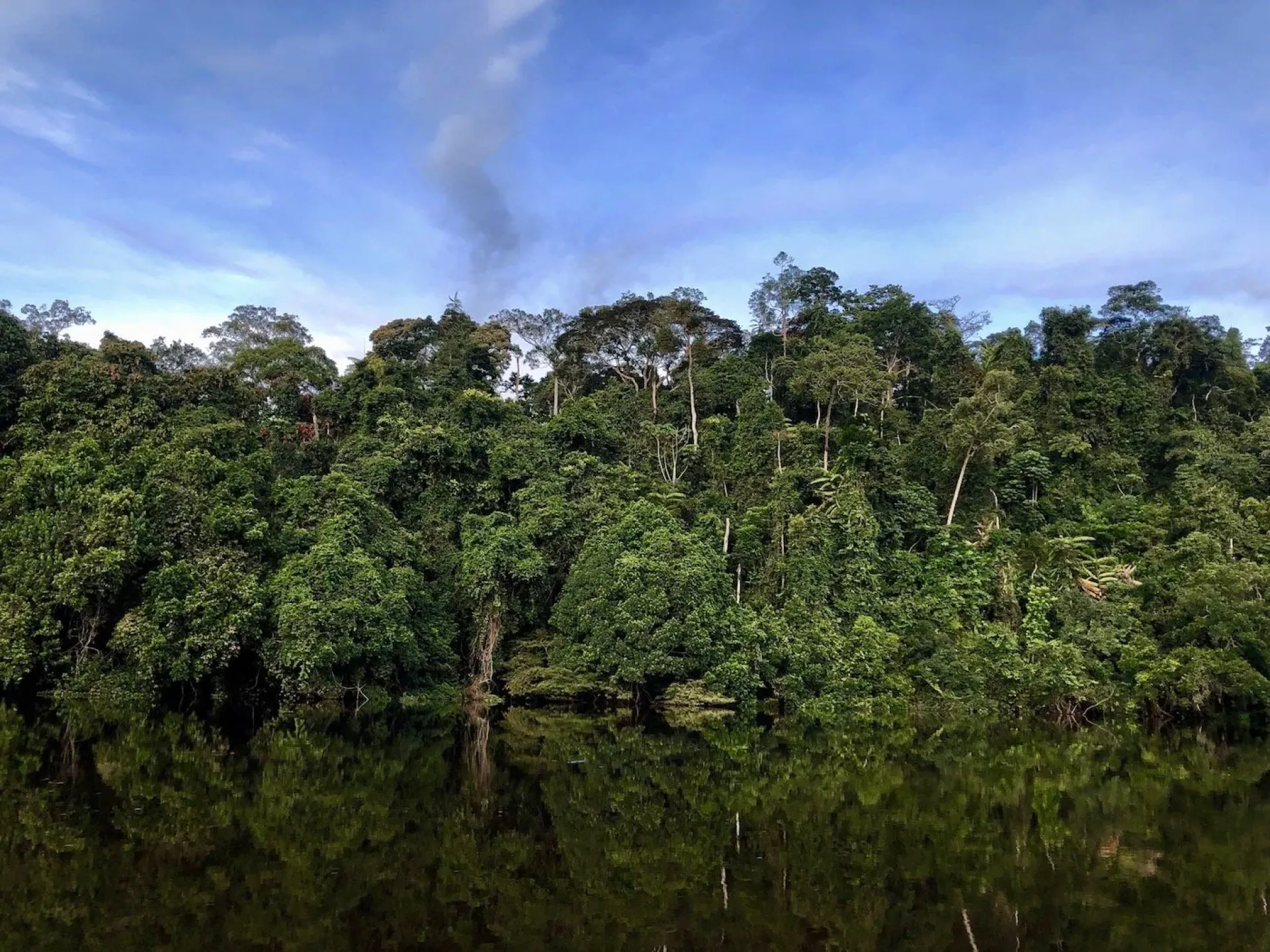
Funded by the Global Environment Facility (GEF-8) and implemented by Cameroon’s Ministry of Environment, Protection of Nature and Sustainable Development, the Dja Landscape Project is designed to strengthen governance and enhance ecosystem connectivity for biodiversity conservation, while creating sustainable livelihood opportunities for local communities.
Officially launched on September 10, 2025, the project has moved swiftly from vision to action laying the foundation for lasting, system-wide transformation. A new era of community-driven environmental governance is now taking shape in southern Cameroon. In this context, the Oveng Council has demonstrated strong leadership by becoming the third municipality within the Dja Landscape to initiate the establishment of a Municipal Landscape Management Commission (MLMC), marking a significant step toward inclusive and participatory land management.
Following similar moves by Mintom and Djoum earlier in 2026, Oveng is helping shape a growing network of local governance structures designed to protect one of the Congo Basin’s most vital ecosystems while ensuring communities remain at the heart of decision-making.
From Community Consent to Concrete Action
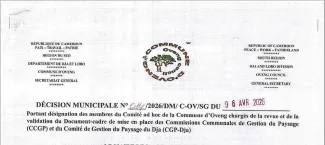
On 6 April 2026, Oveng’s municipal leadership formalized this progress by establishing an Ad Hoc Committee tasked with reviewing and validating the framework for the future MLMC.
This decision didn’t emerge in isolation it builds on a strong legal and participatory foundation. Grounded in Cameroon’s decentralization laws and guided by the principles of Free, Prior, and Informed Consent (FPIC), the initiative reflects a broader shift toward governance models that prioritize transparency, equity, and local ownership.
The committee has a focused mission:
- Review and analyze the proposed framework for both the MLMC and the wider Dja Landscape Management Board
- Contribute to validating a final, consensus-based governance framework
- Ensure that community voices especially those of Indigenous peoples are fully embedded in the process
Importantly, this is a temporary body with a clear mandate. Once the framework is finalized and adopted, the committee will dissolve keeping the process efficient and purpose driven.
A Process Rooted in Community Voice
What makes Oveng’s progress particularly noteworthy is what came before it.
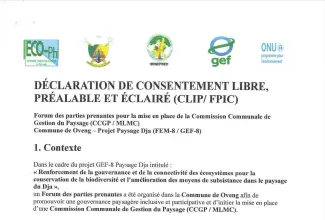
On 27 March 2026, a diverse group of stakeholders gathered for a major consultation forum. Local authorities, traditional leaders, Indigenous Baka communities, women, youth, farmers, civil society, and private sector representatives all took part in shaping the future of their landscape.
This was not symbolic participation—it was a structured and meaningful process anchored in FPIC principles.
Participants confirmed their support in a formal declaration:
“We have been sufficiently informed of the objectives and the process… We give our free consent.”
The Three Foundations of FPIC
- Free: Participation was voluntary, without pressure or coercion
- Prior: Communities were informed well in advance through outreach and sensitization
- Informed: Information was shared clearly and accessibly, including in local languages
This ensured that every participant could ask questions, express concerns, and make informed decisions about their involvement.
A Committee That Reflects the Community
The newly established Ad Hoc Committee brings together 12 representatives from across Oveng’s social fabric. It includes municipal officials, traditional authorities, a representative of the Indigenous Baka community, as well as voices from women, youth, civil society, the private sector, and farmers’ groups.
This diverse composition ensures that the governance framework is shaped by those who live and depend on the landscape every day.
Looking Ahead: Building Lasting Governance
While the Ad Hoc Committee is temporary, its impact will be long-lasting.
Once the framework is finalized, it will pave the way for:
- The creation of a permanent Municipal Landscape Management Commission in Oveng
- The launch of a broader Dja Landscape Management Board, connecting councils, communities, and institutions across the region
Together, these structures will form the backbone of a new governance model one that balances environmental protection with community empowerment.
A Growing Movement Across the Dja Landscape
With Oveng joining Mintom and Djoum, momentum is building toward a unified, landscape wide governance system.
This emerging model goes beyond conservation. It recognizes that the future of the Dja Landscape depends on the people who live there ensuring they are not only consulted, but actively leading the stewardship of their environment.
As this approach expands, it offers a powerful example of how inclusive governance can transform both communities and ecosystems for generations to come.