
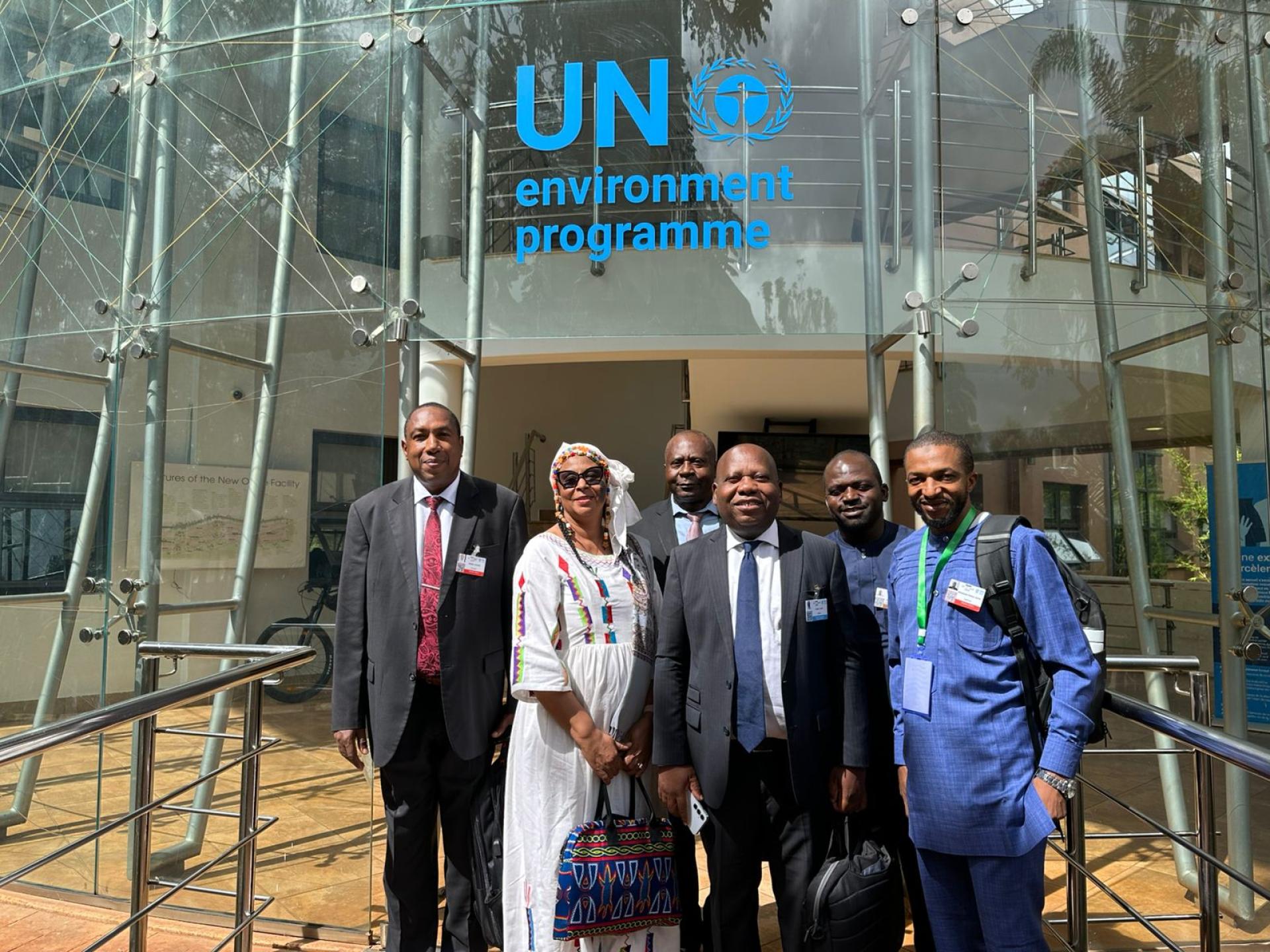
With one of Africa’s most substantial and strategically composed delegations present, Cameroon arrived in Nairobi not as a passive participant, but as an active contributor. As the global community gathered, the country emerged as one ready to share concrete, field tested solutions from the Congo Basin.
Cameroon’s delegation reflected the full spectrum of programme implementation. It brought together national leadership, technical expertise supported by the United Nations Environment Programme (UNEP), and civil society representatives sharing direct experience from the field. This diverse composition reflected a coordinated national effort to translate environmental policy into measurable impact.
When the 2026 Global Forum for GEF Integrated Programs opened on April 13th at the United Nations Office in Nairobi, discussions centered on a key question: How can integrated programs move from design to demonstrate results? Cameroon’s contribution drew on the experience of its GEF-8 DJa Landscape project – an initiative that came with both practical insights and tested approaches.
From preparation to practice
A preparatory meeting held on March 23rd in Yaounde brought together key stakeholders, including the Project Management Unit technical team, UNEP task manager, Dr. Andre Kamdem Toham and National project Director Dr Haman Unusa.
The session helped consolidate the country’s contributions to the CBLI’s Knowledge Cafe on integrated landscapes approaches titled: “From Integrated Design to Landscape transformation: practical approaches to communicating integrated landscapes”. Five priorities emerged:
- Building an operational delivery framework
Cameroon demonstrated how governance systems, clearly defined roles, and coordinated processes helped translate programme design into implementation during the critical early stages. This experience highlighted the importance of structured delivery mechanisms in moving from planning to action.
- Institutionalizing inclusion
Rather than treating inclusion as an add-on, the Dja landscape Project embedded gender equity and the participation of Indigenous Peoples and Local Communities (IPLCs) into its governance structures from the outset. This approach supported more consistent engagement and stronger ownership at local level.
- Linking GRM and FPIC for stronger governance
The integration of a functional Grievance Redress Mechanism (GRM) with Free, Prior, and Informed Consent (FPIC) principles contributed to strengthening trust and accountability. This approach also supported the establishment of integrated municipal landscapes management committees, including in areas such as Mintom and Djoum.
- Leveraging OECM and natural capital accounting
Cameroon shared its experience in applying Other Effective Conservation Measures (OECMs) and natural capital accounting (NCA) as practical tools for early-stage decision-making. These approaches helped align environmental and economic considerations within planning processes.
- Real-time monitoring and adaptive
Through strengthened monitoring and evaluation systems, the project management unit (PMU) tracked GEF-8 indicators and used this information to support adaptive management. This allowed for ongoing adjustments based on emerging results and lessons.
A strong presence in Forum discussions
Cameroon’s role at the Forum was further reflected in its leadership of discussions on governance, inclusion, and accountability. Dr Haman Unusa chaired a dedicated roundtable, joined by civil society partners including; African Indigenous Women Organization Central African Network (AIWO-CAN), African Conservation and Development Foundation (ACDEF), and Environment Conservation for Public Health (ECO-PH), who brought grounded, field-based perspectives.
More than a symbolic presence, Cameroon’s participation reflected a coordinated, multi-level efforts backed by institutional support and field experience. The delegation’s contributions highlighted how integrated approaches can be operationalized in practice, particularly in complex landscape contexts such as the Congo Basin. As discussion unfolded in Nairobi, Cameroon’s experience helped illustrate a broader point: effective environmental governance is built through sustained effort, coordination and learning overtime.
Beyond the Knowledge Café, the Cameroonian delegation actively participated in four thematic field visits that preceded the GEF Global Forum in Nairobi.
The visits covered a broad range of environmental themes:
- At the Upper Tana – Ndakaine Dam, the delegation explored integrated watershed management, linking upstream land use with downstream ecosystem protection for coastal resilience and biodiversity conservation.
- At the Wildlife Warriors Kids Field Lab, south of Nairobi National Park, they engaged with community-based conservation education and human–wildlife coexistence strategies.
- The Brackenhurst Conference Centre in Tigoni, Limuru, offered insights into large-scale forest restoration and land degradation neutrality through community forestry models.
- Finally, the Nairobi Kamukunji Area highlighted urban resilience and sustainable infrastructure under the Cities Integrated Program.
Team Cameroon also conducted high level public diplomacy meetings with two senior officials at the United Nations Environment Programme including Johan Robinson, Head of the Biodiversity and Land Degradation Unit, and Ruth Igamba, Programme Management Assistant. Discussions centered on the achievements of the Dja Landscape Project and yielded a promising outcome: both officials committed to a future field visit to the project site to appraise the reality on the ground.