
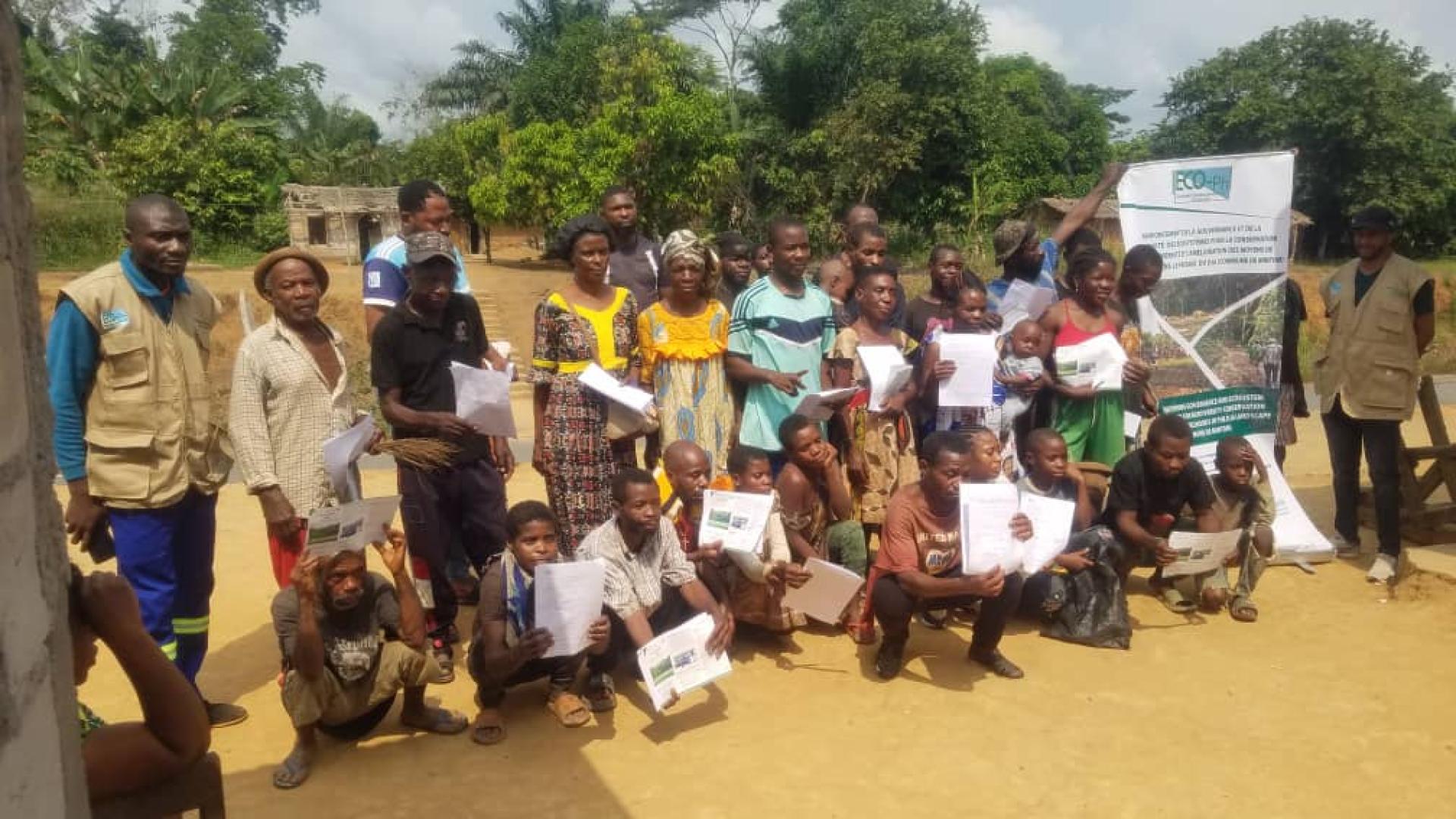
Building on the precedent set by neighbouring Mintom Council, Institutional strengthening under the GEF-8 Dja Landscape Project has reached a new milestone in Djoum Municipality, marking a significant step toward sustainable and inclusive landscape governance in southern Cameroon.
Following a multi-stakeholder forum held on 26 March 2026, the Mayor of Djoum, His Majesty Foumane Ngane Vincent, officially signed Municipal Decision No. 010-2026/DM/C-DJO/SG establishing an Ad Hoc Committee tasked with operationalizing the Municipal Landscape Management Commission (MLMC). This Commission is envisioned as a permanent, multi-stakeholder platform to coordinate land-use planning and natural resource governance across the municipality.
Laying the Foundation for Sustainable Governance
The creation of the Ad Hoc Committee reflects Djoum’s commitment to transparent, participatory, and accountable land governance systems. The committee has a clear and brief mandate: to review, refine, and validate the institutional and regulatory framework that will guide the establishment of the Municipal Landscape Management Committee, MLMC.
Once established, the MLMC will serve as a permanent platform for dialogue, conflict prevention, and coordinated decision-making at the landscape level. It will align local development priorities with biodiversity conservation, climate resilience, and the protection of community rights.
From Dialogue to Durable Institutions
The Ad Hoc Committee plays a pivotal transitional role. Its responsibilities include reviewing and validating the draft Municipal Landscape Management Committee framework and internal regulations; ensuring the framework reflects local realities and stakeholder priorities; embedding safeguards such as Free, Prior and Informed Consent (FPIC); and supporting the eventual establishment of both MLMCs and the broader Dja Landscape Management Committee.
Importantly, the committee is designed as a mission-specific body and will be dissolved once the final framework is formally adopted, ensuring efficiency and avoiding unnecessary bureaucratic layers.
An Inclusive and Participatory Process
The consultative process in Djoum brought together a diverse range of stakeholders, including municipal authorities, traditional leaders, Indigenous Baka communities, women’s and youth groups, farmers, civil society organizations, private sector actors, and decentralized technical services from the Ministry of Forestry and Wildlife, MINFOF, and the Ministry of Agriculture and Rural Development, MINADER.
Guided by FPIC principles, the process ensured that information was shared in advance and in accessible formats; local languages were used where necessary; and all participants had the opportunity to express concerns and provide or withhold consent.
A formal FPIC Declaration, signed by the Mayor, further reinforced the municipality’s commitment to rights-based and inclusive governance.
Participants also defined key conditions to guide the MLMC’s formation: equitable representation of all stakeholder groups; strong inclusion of women, youth, and Indigenous Baka communities; and selection of committed and motivated members to drive the Commission’s work.
The resulting 13-member Ad Hoc Committee reflects this diversity, bringing together representatives from government, traditional leadership, Indigenous communities, civil society, the private sector, and technical services.
Building Momentum Across the Dja Landscape
Djoum’s progress builds on a precedent set by neighbouring Mintom Municipality, where a similar decision was signed in February 2026. Together, these actions signal growing momentum across the Dja Landscape toward decentralized, inclusive governance systems.
“This milestone moves the Dja Landscape Project from dialogue to durable institutional architecture. Djoum, following Mintom’s lead, is helping to shape a governance model that can be replicated across the entire landscape.”
Looking Ahead
The next phase will focus on finalizing and validating the MLMC framework, followed by its formal adoption and the launch of the Commission as a fully operational governance body.
As additional councils advance similar processes, the decisions taken in Djoum and Mintom stand as foundational steps toward a cohesive, landscape-wide governance model—one that balances environmental sustainability with the rights and aspirations of local and Indigenous communities.