
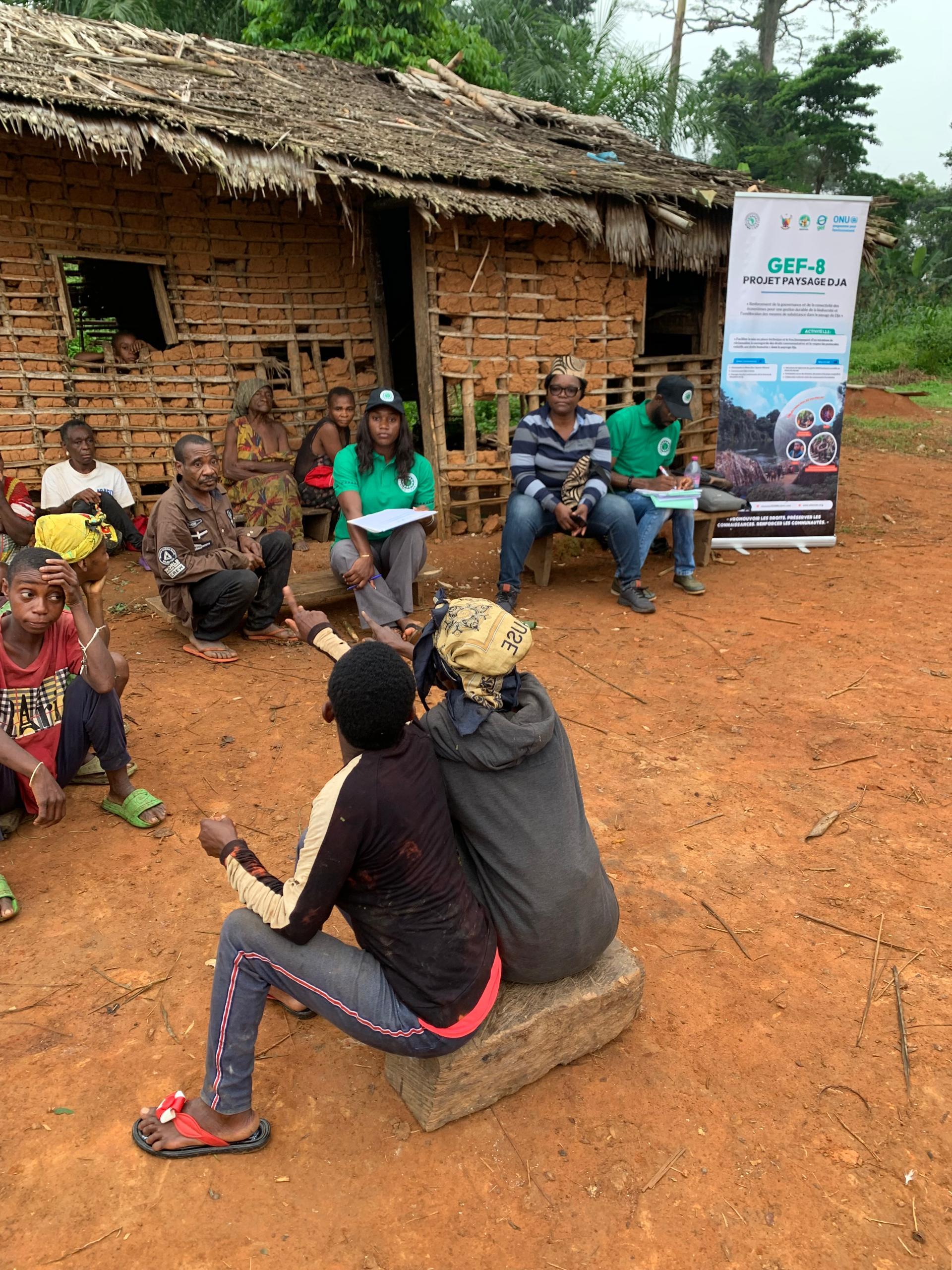
Context & Background
Nestled in the heart of southeastern Cameroon, the Dja Landscape stretches across millions of hectares of pristine Congo Basin rainforest; one of the most biodiverse and ecologically critical ecosystems on Earth. Home to forest elephants, western lowland gorillas, and countless endemic species, this landscape has long required a delicate balance between conservation imperatives and the livelihoods of the communities who depend on it.
Under the Congo Basin Landscapes Initiative, the GEF-8 Congo Critical Forest Biome Integrated Programme implemented by Cameroon's Ministry of Environment, Nature Protection and Sustainable Development under the technical supervision of the United Nations Environment Programme (UNEP) is charting a transformative course. At the centre of this approach is a firm conviction: meaningful community engagement is not merely a safeguard requirement — it is a powerful engine for lasting success.
FPIC: From Compliance to Transformation
By embedding Free, Prior and Informed Consent (FPIC) as a foundational principle rather than a procedural checkbox the Dja Landscape Project is redefining what conservation governance can look like. Across the landscape, FPIC processes have systematically shifted communities from passive beneficiaries to active decision-makers with genuine stakes in the outcomes.
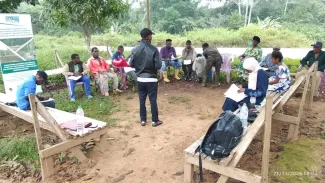
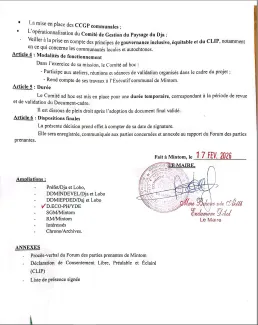
In the Mintom Council, structured FPIC processes have opened vital spaces for dialogue, built trust between communities and local authorities, and fostered mutual accountability with project implementers. This inclusive engagement has delivered a significant institutional breakthrough: the Mayor of Mintom established an ad hoc committee to create the Mintom Municipal Landscape Management Commission (MLMC) — a pioneering governance body that represents a concrete shift toward decentralised, community-informed landscape stewardship. Similar milestones are being achieved in the councils of Somalomo and Ngoyla in East Cameroon.
Key Institutional Achievement
The establishment of the Mintom Municipal Landscape Management Commission (MLMC) marks a landmark step in decentralised conservation governance in Cameroon — a direct outcome of sustained, FPIC-guided community engagement.
Grassroots Impact: Conservation Meets Community Wellbeing
At the village level, the transformative power of FPIC is most tangible. In Dioula, a village in Cameroon's East Region, the FPIC process has catalysed community-led development initiatives firmly rooted in local priorities and aspirations.
With full consent and active participation, the community is establishing a community forest. As a pioneering pilot, a medicinal plant garden is being developed to serve as the foundation of a local community pharmacy directly linking biodiversity conservation to health outcomes and sustainable livelihoods. In a remarkable demonstration of ownership and collective trust, a local resident voluntarily offered land for this initiative, underscoring the depth of community buy-in.
These outcomes align squarely with the Congo Basin Landscapes Initiative's broader vision: promoting sustainable livelihoods and community-driven solutions that integrate traditional knowledge with modern conservation approaches.
Strengthening Accountability: The Grievance Redress Mechanism
Complementing FPIC is the establishment of a Grievance Redress Mechanism (GRM) across the localities of Djoum, Mintom, Oveng, Mvangan, and Somalomo — further reinforcing transparency and accountability in project governance.
The GRM provides a culturally appropriate, accessible platform through which Indigenous Peoples and local communities can voice concerns, seek clarification, and ensure their rights are respected. By institutionalising feedback loops and embedding responsiveness into project governance systems, the GRM ensures that FPIC is not a one-time event but a living, dynamic process.
Together, FPIC and the GRM are constructing a new governance architecture in the Dja Landscape; one that is inclusive, accountable, and built for long-term resilience. They are enabling municipalities, customary authorities, and communities to co-create solutions and integrate local priorities into territorial planning processes.
Lessons Learned and the Path Forward
The experience from Mintom and Dioula carries a lesson that resonates far beyond the Dja Landscape: sustainable conservation impact is only possible when communities are fully informed, genuinely consulted, and meaningfully involved. FPIC is not merely a procedural step — it is the engine that fuels trust, unlocks local initiative, and drives lasting change.
As the project advances, the early results are already compelling: stronger institutions, empowered communities, and a shared vision for a future where people and nature thrive together. In the Dja Landscape, this approach is proving that conservation and community development are not competing goals — they are inseparable ones.