
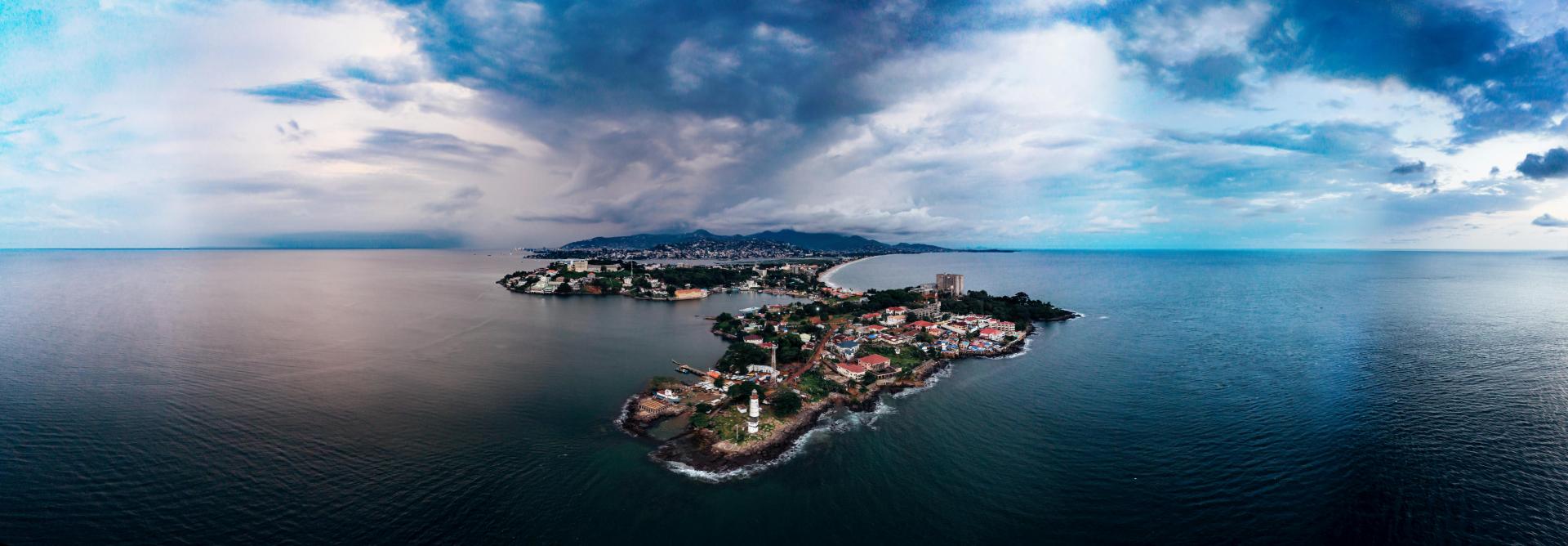
Equatorial Guinea, though small in size, contains ecologically significant forest, coastal, and island ecosystems within the Congo Basin region. Its mainland territory, Río Muni, forms part of the western Congo Basin forest block, while the islands of Bioko and Annobón host unique and endemic biodiversity of global importance.
These ecosystems contribute to regional biodiversity conservation, climate regulation, and the provision of ecosystem services for local communities. Under the Congo Basin Landscapes Initiative (CBLI), engagement in Equatorial Guinea focuses on strengthening forest governance, improving biodiversity monitoring, and supporting sustainable land-use planning in Río Muni, in line with UNEP’s ecosystem protection and resilience objectives.
Sections
Topography
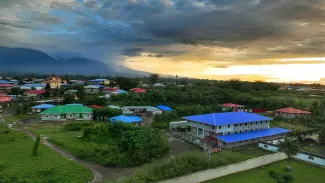
Equatorial Guinea’s geography combines mainland lowland forest landscapes with volcanic island systems, creating high ecological diversity within a compact territory. The mainland region, Río Muni, consists primarily of lowland tropical rainforests and gently undulating hills, intersected by river valleys and forming part of the western margin of the Congo Basin forest ecosystem. These landscapes are dominated by dense evergreen forests characteristic of theGuineo-Congolian biome.
The islands of Bioko and Annobón are of volcanic origin and feature steep slopes, rugged terrain, and pronounced altitudinal gradients. Bioko rises sharply from the coast to volcanic peaks, supporting montane and submontane forestswith high levels of endemism, while Annobón is smaller, more isolated, and characterized by steep escarpments and limited lowland areas. This topographic complexity underpins diverse forest types and contributes to significant biodiversity values.
Water Systems
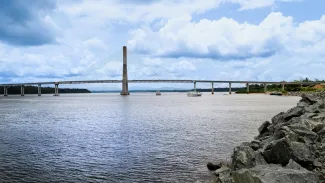
Equatorial Guinea’s hydrology is dominated by short, fast-flowing river systems that originate in forested uplands and drain directly into the Atlantic Ocean. In Río Muni, these rivers support humid tropical forest ecosystems, freshwater biodiversity, and local water supply, while also influencing sediment and nutrient flows to coastal areas.
Along the coastline, river mouths and low-lying areas sustain wetlands, mangroves, and estuarine ecosystems, consistent with Ramsar-classified coastal and inland wetland types. These systems play a critical role in coastal protection, fisheries productivity, carbon sequestration, and biodiversity conservation, serving as nursery habitats for fish and other aquatic species. Their ecological integrity is closely linked to upstream land-use practices, underscoring the importance of integrated land–water management approaches promoted under the CBLI.
Regional Position
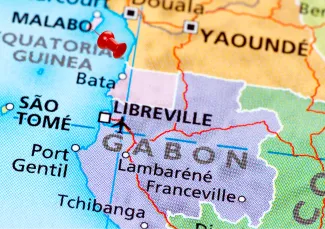
Equatorial Guinea is classified as a high-income country based on oil and gas revenues, yet development outcomes remain uneven, with limited economic diversification and persistent disparities between urban and rural areas. The economy is highly dependent on hydrocarbons, making it vulnerable to fluctuations in global energy markets and declining production.
Key Socioeconomic Indicators
- Population: ~1.7 million
- GDP (nominal): ~USD 12–14 billion
- GDP per capita: ~USD 7,000–8,000
Oil and gas account for the majority of GDP, exports, and public revenue, while agriculture and forestry play a smaller role nationally but remain locally important for rural livelihoods, particularly in Río Muni. In recent years, economic contraction linked to declining hydrocarbon output has reinforced the need for economic diversification, rural development, and strengthened environmental governance.
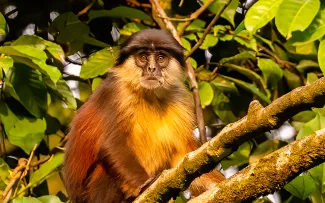
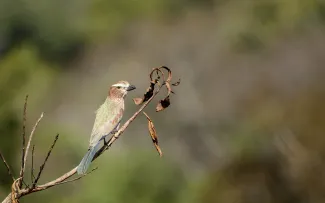
Equatorial Guinea supports high levels of biodiversity and endemism, particularly on Bioko Island, which is recognized as a regional biodiversity hotspot. The country’s forest ecosystems host species of global conservation concern, including drills, red colobus monkeys, forest elephants, and a wide diversity of amphibians, birds, and plant species.
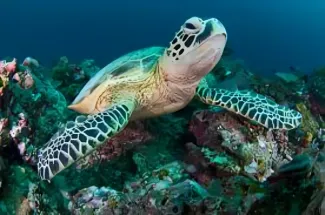
In addition to terrestrial ecosystems, Equatorial Guinea’s coastal and marine environments include mangroves, estuaries, and nearshore habitats that are critical for fisheries, coastal protection, and carbon sequestration. These interconnected forest, freshwater, and coastal systems provide essential ecosystem services and contribute to both national and regional conservation priorities.
Despite their ecological importance, Equatorial Guinea’s ecosystems face several interrelated pressures. Deforestation and forest degradation, driven by agricultural expansion, logging, and infrastructure development, are increasing in parts of Río Muni. Bushmeat hunting and wildlife trade, particularly on the mainland, continue to threaten vulnerable species.
Conservation efforts are further constrained by limited institutional capacity, data gaps, and monitoring coverage, affecting effective planning and enforcement. On the islands, climate change impacts, including sea-level rise and increased climate variability, heighten the vulnerability of coastal and montane ecosystems, underscoring the need for integrated, ecosystem-based management approaches.
| Developing biodiversity and biocarbon finance financing instruments for conserving forests in Equatorial Guinea |
|
View project |
| Transforming and scaling up results and lessons learned in the Monte Alen and Rio Campo Landscapes [..] |
|
View project |
Source : Country information synthesized from international reference sources, national data, scientific literature and CBLI project documentation.