
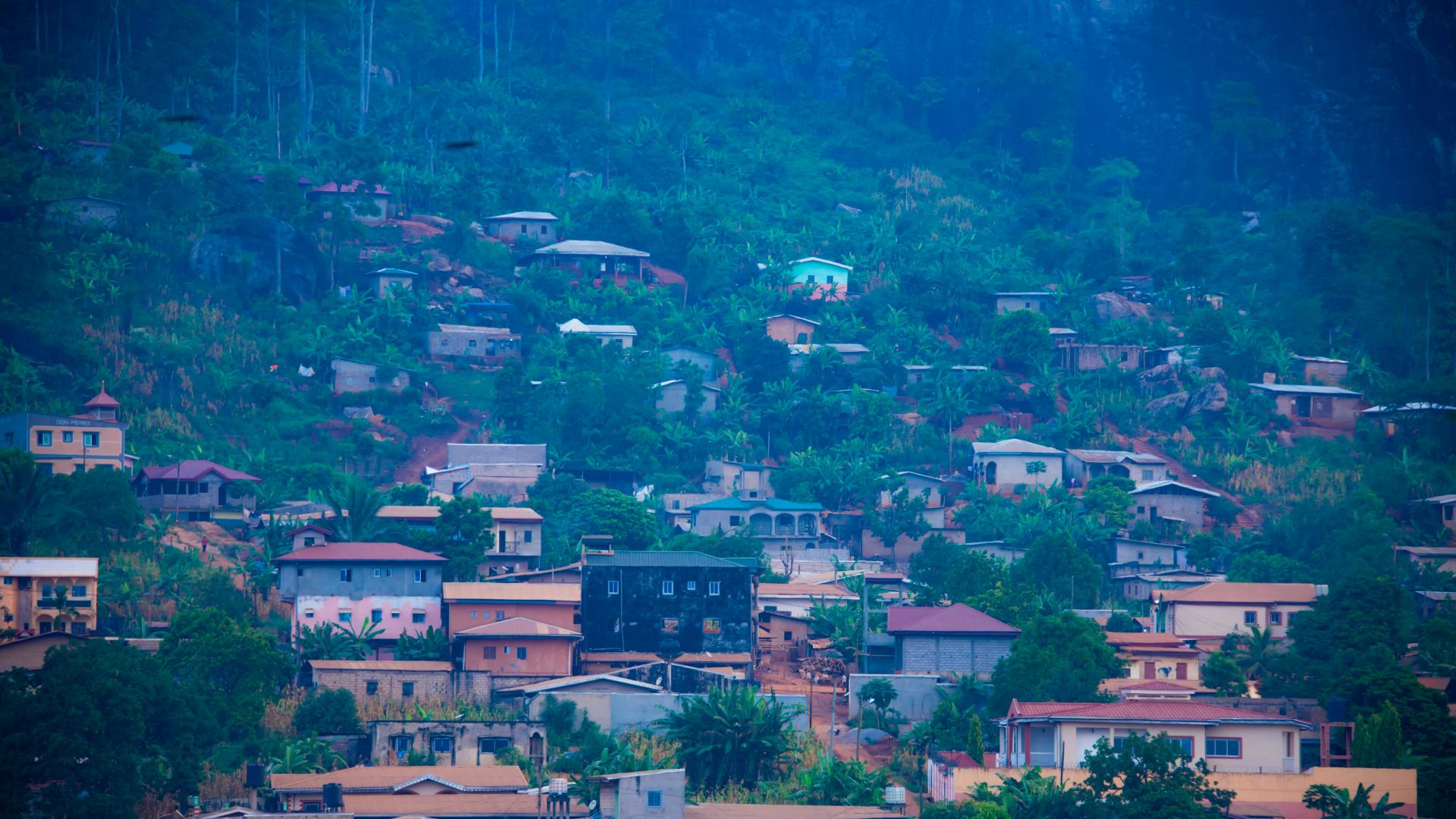
Cameroon’s exceptional ecological diversity has earned it the title “Africa in miniature”, reflecting the wide range of environments found within its borders—from Atlantic coastal lowlands and dense tropical rainforests to savannas and mountainous regions. As a core country within the Congo Basin rainforest biome, Cameroon plays a central role in regional biodiversity conservation and landscape connectivity.
Under the Congo Basin Landscapes Initiative (CBLI), Cameroon’s priorities focus on strengthening landscape-level governance, securing ecological connectivity, and ensuring that conservation efforts contribute directly to sustainable livelihoods. Through national CBLI projects, UNEP and partners are supporting improved governance frameworks, inclusive land-use planning, and community-based conservation approaches, with particular emphasis on the participation of indigenous peoples and women in forest value chains.
Sections
Topography
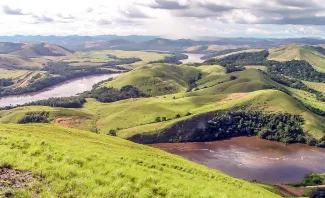
Cameroon’s landscape includes coastal plains, central plateaus, high mountains (e.g., Mount Cameroon), and extensive forest areas in the south. This varied topography supports a wide range of ecosystems from mangroves to montane forests.
Water Systems
Numerous rivers traverse Cameroon, feeding both Atlantic coastal basins and the Congo Basin via tributaries like the Dja River. These freshwater systems are vital for aquatic biodiversity and human communities.
Regional Position
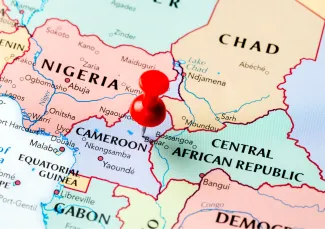
Cameroon is a lower-middle-income country with a relatively diversified economy compared to many countries in the region. Economic activity is driven by agriculture, forestry, oil, mining, and services, with agriculture remaining the backbone of rural livelihoods. According to IMF and World Bank projections, economic growth is expected to remain steady, though moderate, with national strategies prioritizing economic resilience, infrastructure development, and reduced dependence on primary commodity exports.
A large share of the population lives in rural areas and remains highly dependent on land and forest resources, making sustainable natural resource management central to both poverty reduction and environmental sustainability.
Key Socioeconomic Indicators
- Population: ~29 million
- GDP (nominal): ~USD 48–50 billion
- GDP per capita: ~USD 1,700
- Economic structure: Agriculture, forestry, oil, mining, and services; cocoa, coffee, and timber are major exports
- Employment: Agriculture employs approximately 60% of the workforce
- Poverty: Concentrated in rural and forested regions, particularly in the south and east
Congo Basin Forest Biodiversity Hotspot
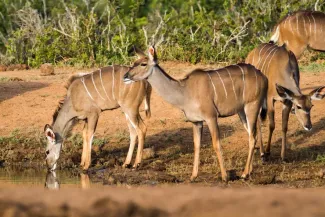
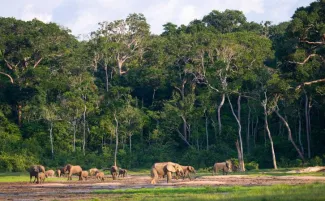
Cameroon’s southern rainforests are part of the globally significant Congo Basin rainforest, which collectively holds over 10,000 tropical plant species, more than 400 mammal species, 1,000 bird speci es, and 700 fish species. Many species are endemic or threatened with extinction.
Key Protected Areas
- Dja Faunal Reserve — a UNESCO World Heritage Site renowned for its intact biodiversity and significance within the Congo Basin.
- Ngoyla Faunal Reserve — provides critical habitat connectivity for rainforest wildlife.
- Lobéké National Park — part of the tri-national Sangha landscape, rich in birdlife and forest mammals.
- These sites contribute not only to national biodiversity conservation but also to regional ecological resilience and carbon sequestration.
Habitat Loss & Fragmentation
Illegal logging, mining, and expansion of agricultural land (including oil palm and other agro-industrial plantations) contribute to forest loss, fragmentation, and degradation. CBFP
Poaching & Wildlife Trade
Commercial and subsistence hunting, bushmeat trade, and illegal trade in wildlife parts (e.g., ivory, pangolin scales) are major drivers of declining populations of elephants, primates, and other species. CBFP
Resource Governance Issues
Weak enforcement, limited capacity for monitoring natural resource exploitation, and insufficient integration of local communities into land-use planning undermine conservation effectiveness. Congo Basin Landscapes Initiative
| Integrated management of Cameroon’s forest landscapes in the Congo Basin |
|
View project |
| Strengthening Governance and Ecosystem Connectivity for Biodiversity Conservation and Improved Livelihoods in the Dja Landscape |
|
View project |
Source : Country information synthesized from international reference sources, national data, scientific literature and CBLI project documentation.