
Developing land use management plans that integrate and support livelihoods of local communities while conserving biodiversity is a key activity of the UNEP led and GEF-funded Congo Forest Integrated Programme, which is part of UNEP's Congo Basin Landscapes Initiative (CBLI). While developing these plans, and to support the conservation of the Congo Basin Rainforest, the Programme is actively working with governments and regional institutions such as the Central Africa Forest Commission (COMIFAC) and the Economic Community of Central African States (ECCAS) to strengthen transboundary networks working on addressing wildlife crime. This approach aims to bring together support for the appropriate enforcement of relevant laws, training for ecoguards and law enforcement officials, alongside monitoring the illegal killing of wildlife.
To date, the Initiative has focused on training judicial authorities and ecoguards on crime scene investigations, and has developed a study, available to government officials in the Congo Basin region, around the illegal trade of ivory, great apes, grey parrots and pangolin.
Training of judicial authorities and ecoguards to improve wildlife crime investigation and judiciaries processes across the region is ongoing and is led by CITES-MIKE together with the United Nations Office on Drugs and Crime (UNODC).
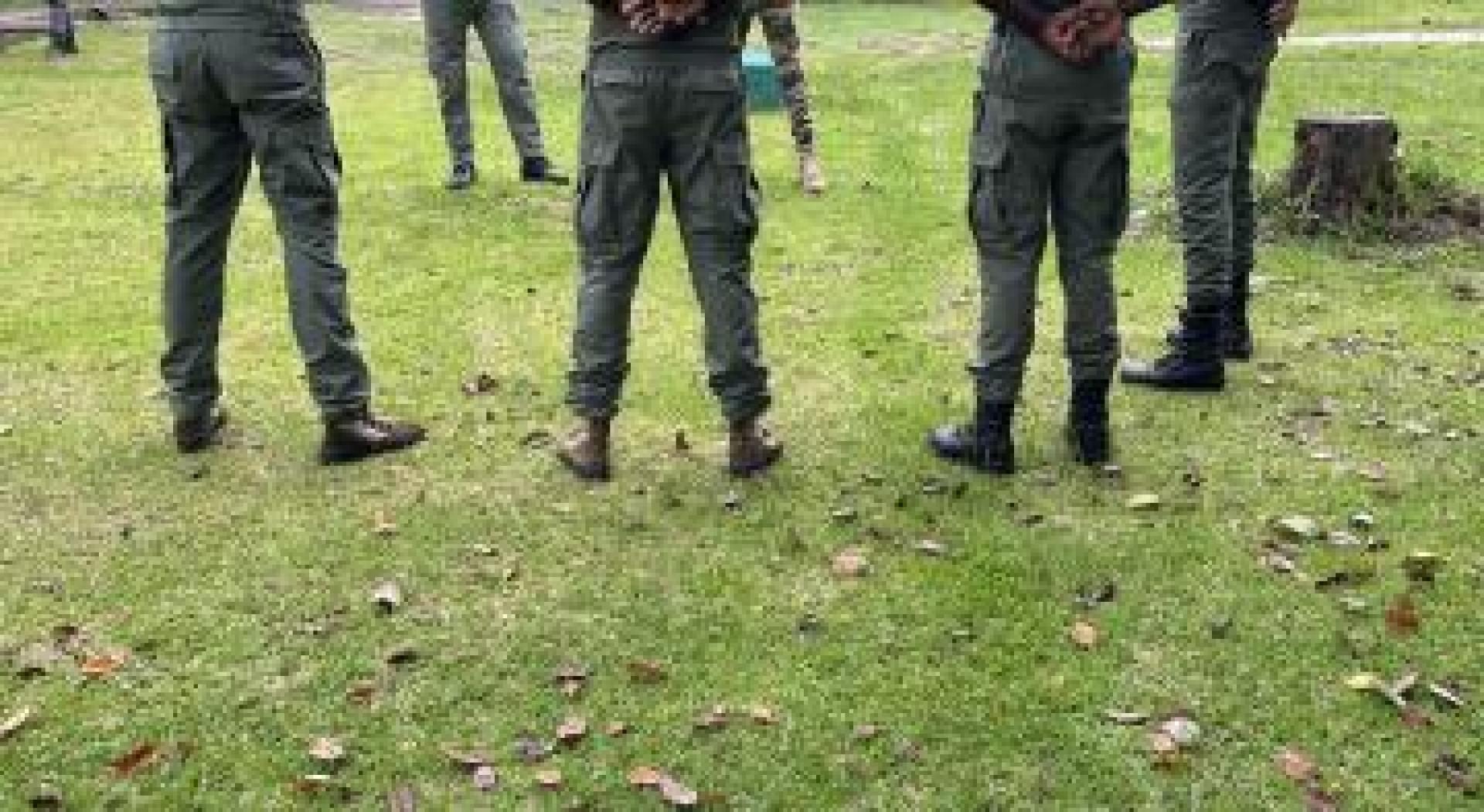
In 2024, two training sessions have been conducted on crime scene management and on informant network management, surveillance techniques and the judicial treatment of wildlife crime scenes. More than 40of judicial authorities and ecoguards in Gabon and Democratic Republic of the Congo were trained. The different training sessions took place in August 2024 respectively in Kinshasa and Libreville.
Organized by CITES MIKE together with the United Nations Office on Drugs and Crime in the framework of the GEF-funded Congo Forest Integrated Programme, these sessions equipped park rangers and judicial authorities with the skills to secure crime scenes and advance cases, while promoting regional cooperation and knowledge sharing
As information around illegal wildlife trade is key to law enforcement activities in this area, the CBLI has supported UNODC to produce a report on the illegal trade in ivory, great apes, grey parrots and pangolin in the Congo Basin. The report will help guide and inform the development of the ECCAS action plan and eco-security policy and strategy as well as the awareness-raising and behavior change campaigns about wildlife trafficking.
The Programme is also leveraging CITES-MIKE’s 23 years of experience in monitoring trends in the illegal killing of elephants to assess the effectiveness of capacity-building initiatives and their impact on wildlife crime prevention. This includes gathering and analysing data from participating sites to identify changes in the Proportion of Illegally Killed Elephants (PIKE) for the sub-region.
These activities illustrate how the Programme is reinforcing transboundary cooperation in the area of illegal wildlife trade and contributing to conserving biodiversity in the Congo Basin.
More information about the Congo Forest Integrated Programme and the Congo Basin Landscapes Initiative here.