
Value Chains Based on Science and Best Practices
In the heart of Central Africa, where over 2.8 million square kilometers of forests store an estimated 30 gigatons of carbon and support more than 130 million people, the GEF-funded and UNEP-led Congo Forest Integrated Programme (IP) is achieving transformation. By forging links to international markets, scaling successful models from Cameroon's TRIDOM landscape to Republic of Congo's Lac Télé Community Reserve (RCLT), and grounding all interventions in rigorous science-based approaches, this integrated approach demonstrates how environmental protection, economic growth, community empowerment and science can work together to create lasting change in one of the world's most critical forest ecosystems.
Transformation Proven by Real Results
The Congo Basin faces mounting pressure from unsustainable land use practices, with agricultural expansion particularly for commodities like cocoa and potentially palm oil threatening some of the world's most biodiverse ecosystems. This is compounded by variable commercial engagement and climate change-induced stressors such as habitat degradation and altered hydrological regimes.
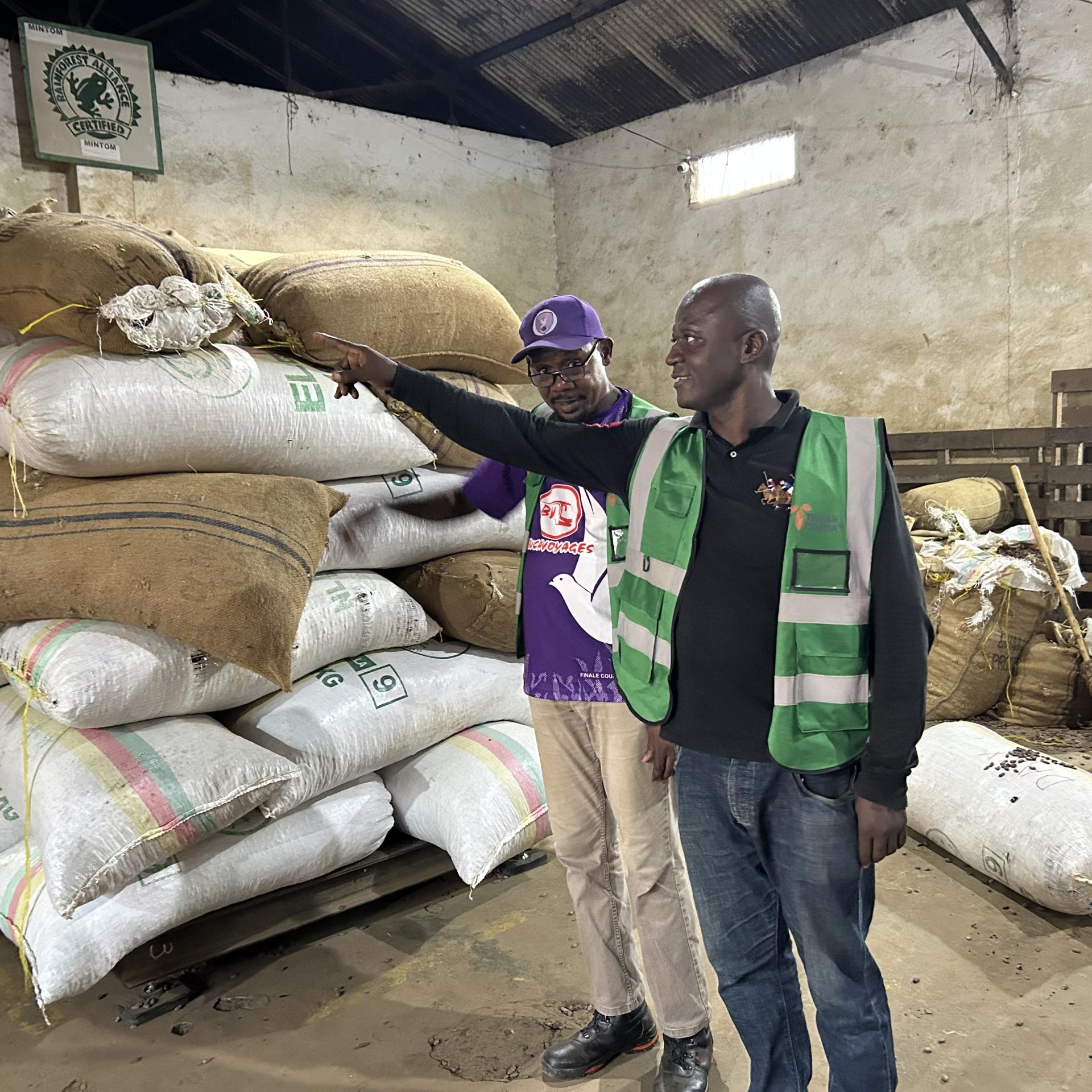
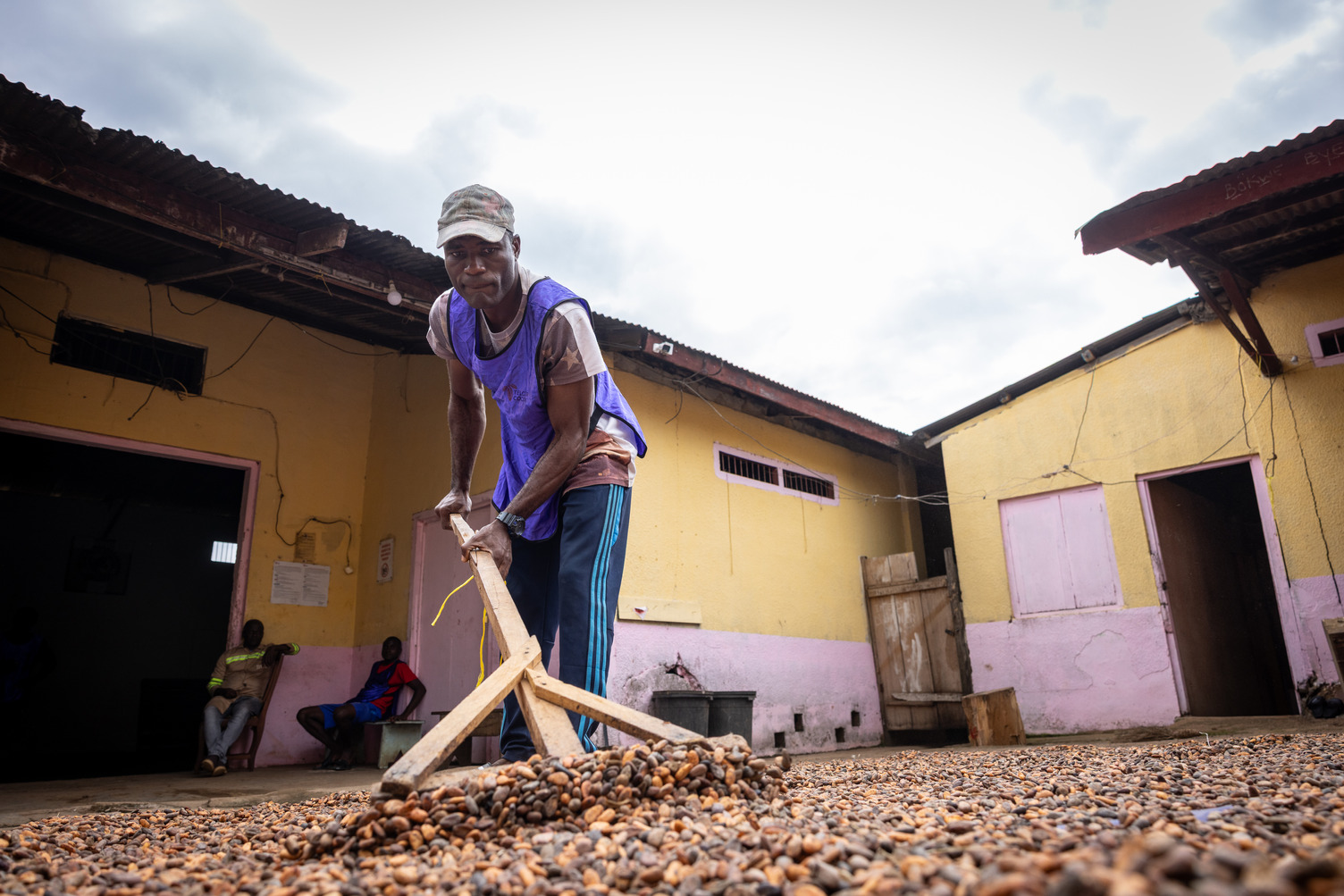
In the area of cocoa production, the Program's approach addresses these challenges through training to combat issues like pod rot disease, technical support for sustainable agroforestry practices that teach farmers to produce cocoa under shade using natural treatment methods, and market linkage facilitation that connects farmers to international certification entities. These methods promote high yields while helping eliminate the need to clear forests for new farms, demonstrating how environmental protection and economic growth can work hand in hand.
The proof is in the numbers. In southern Cameroon's TRIDOM landscape, the SCOOPS-PROCAM Cooperative (Societe Cooperative Simplifiée des Producteurs de Cacao de Mintom) has grown from just 28 members to 186 members since its creation in 2018. Profits have risen four-fold over this time and production has increased dramatically from 16 tonnes in 2018 to 58 tonnes in the 2022-2023 season, the first year they were certified.
Strategic partnerships with leading commodity companies drive this transformation. The program has established collaborations between local cocoa cooperatives and international trading companies to promote sustainable cocoa production. These partnerships create deforestation-free supply chains by connecting smallholder farmers to global markets through strict environmental standards, including Rainforest Alliance certification, and social protections based on UN human rights principles.
Formal agreements further demonstrate the program's commitment to scalable partnerships. Memoranda of Understanding signed with Diamond SA and negotiations underway with COFCAO/Atlantic Cocoa/Theobroma ensure farm-level traceability and exclude cocoa from protected areas and biodiversity hotspots from international supply chains.
For Indigenous communities like the Baka, this model helps improve incomes while protecting their environment. René Etoua Meto'o, a cocoa farmer from the Baka community whose cocoa trees are located within the rainforest near Mintom, exemplifies this transformation. “What gives me the greatest pleasure is the different training we have received on cocoa production, which has allowed us to better understand the best cocoa production practices," said René. "My family is now getting a premium price for our cocoa which allows us to survive and invest to produce better cocoa." Learn more about René’s journey.
Exchanging and scaling these lessons learned
A regional knowledge management system facilitates cross-border collaboration through standardized data-sharing protocols, allowing stakeholders to exchange these lessons learned and replicate successful models.
One example is the cocoa agroforestry assessment conducted in the Lac Télé landscape from May 2023 to March 2024. This study identified 318 cocoa farmers (255 men, 63 women) across 15 villages cultivating 200 hectares. From this group, 160 producers (142 men, 18 women) were selected for targeted technical assistance based on six criteria: minimum farm size of 0.5 hectares, commitment to sustainable practices including agroforestry and zero deforestation, vulnerability status, willingness to pursue certification such as Rainforest Alliance, proximity to high-biodiversity areas, and leadership roles within producer networks.
Building Knowledge for Sustainable Production of Palm Oil
The cocoa value chain is not the only value chain where the Congo Forest IP is having an impact in the Congo Basin.
A cornerstone of the program's approach is the development of comprehensive knowledge resources for sustainable vegetable oils, with special focus on palm oil.
The landmark study, produced by the Congo Forest IP "Mapping oil palm plantations and their implications on forest and great ape habitat loss in Central Africa" found that while oil palm contributes minimally to overall great ape habitat loss compared to other deforestation drivers, the rapid growth in cultivation particularly by smallholders poses escalating risks due to rising global vegetable oil demand.
This research is helping our partners support local communities to make informed decisions about sustainable palm oil development in the Congo Basin.
Looking Forward: Scaling Proven Models
The next phase of the Congo Forest IP will see efforts to create deforestation-free supply chains intensify by working with additional private sector partners and expanding certification programs that ensure environmental and social standards are met. This includes scaling up training programs for sustainable agricultural practices, enhancing traceability systems, and developing new financing mechanisms that make sustainable production economically attractive for smallholder farmers. The findings from the palm oil mapping study will also be integrated into these efforts, providing data to guide sustainable expansion of palm oil farming, and prevent further encroachment into great ape habitats.
A Vision for Regional Transformation
The Congo Basin's forests are not just carbon stores or biodiversity repositories; they are living landscapes where millions of people build their livelihoods. Through continued innovation in public-private partnerships and community empowerment, all backed by research and science, the GEF Congo Forest Integrated Program is demonstrating that protecting biodiversity hotspots and supporting forest-dependent communities aren't mutually exclusive goals they're complementary pathways to a more sustainable future.