
The Congo Basin Landscapes Initiative is supporting regional development and integrating wildlife protection into planning processes. The aim is to support the cohabitation of local forest communities with wildlife, protecting the Congo Basin’s immense biodiversity while minimizing the risks of disease transmission between humans and wildlife and vice versa.
To achieve this, and focusing on great apes and elephants, the Wildlife Conservation Society (WCS), the Programme’s partner in the Republic of Congo, is leading the Programme’s work to roll out and support the application of a zoonotic diseases surveillance system in the TNS (Tri-national de la Sangha) transboundary landscape.
On the ground, this is practical work, supporting communities around education, sample analysis and rapid testing for Ebola and anthrax in the TNS landscape - the transboundary area where Cameroon, the Republic of the Congo and the Central Africa Republic meet. This landscape houses some of the highest numbers of great apes in human coexistence and are high-concern areas for Ebola and other zoonotic disease spillover.
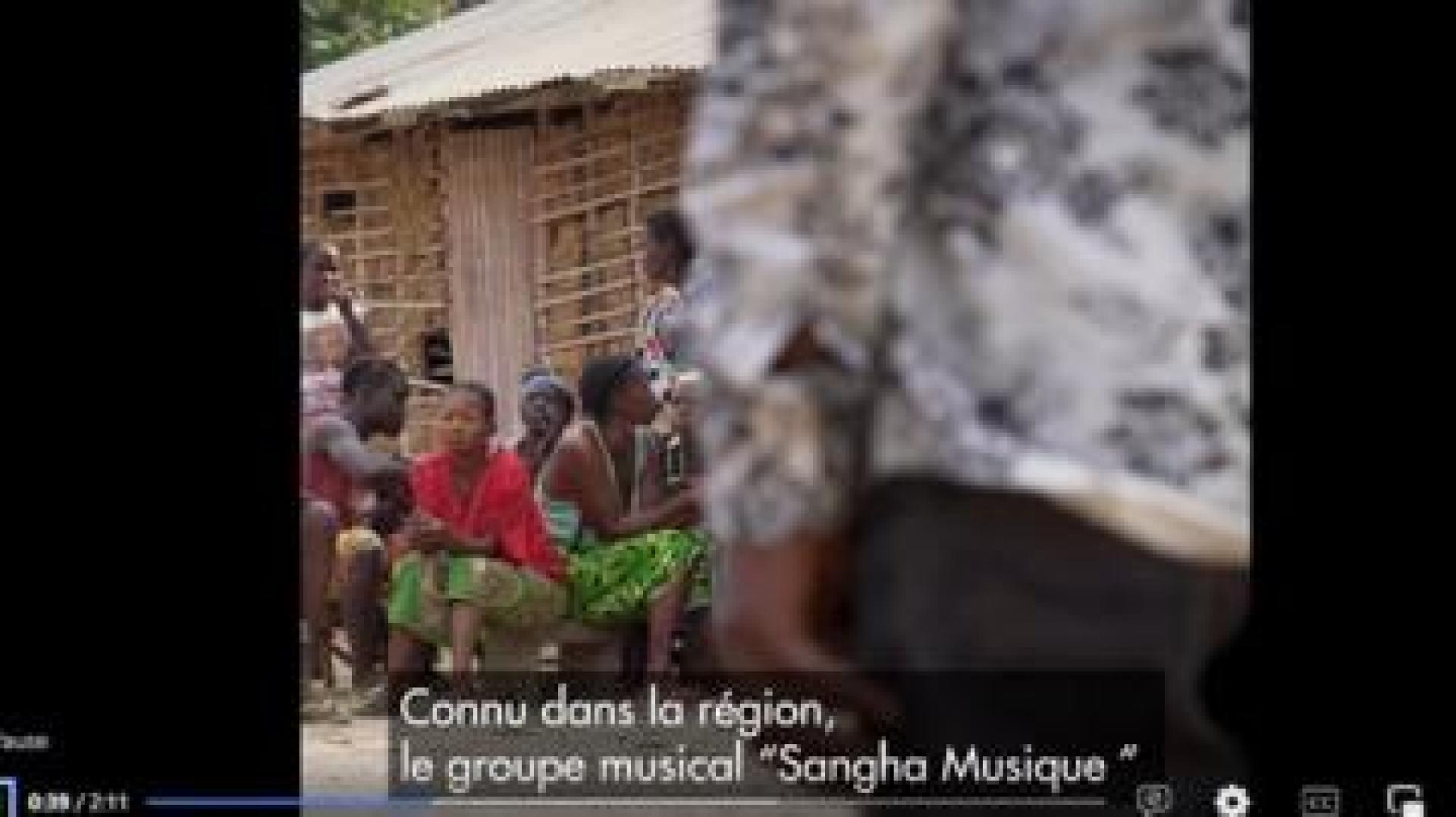
WCS has implemented a range of activities to minimize the risks of zoonotic disease transmission, in the far north of the Congo. In 2024, WCS led innovative awareness raising missions with a local music group (Sangha musique), two agents from the Ministry of Health and a community officer from the logging company CIB Olam. Sangha Musique’s songs are being used to reach members of local communities in northern Congo, highlighting the need to avoid contact with wild animal carcasses to reduce the risk of disease transmission Click here for the link to the video.
Thanks to the support of the GEF and other donors, they visited 23 villages, engaging with around 1,400 people. Sangha musique’s songs highlighted the need to avoid contact with wild animal carcasses to reduce the risk of disease transmission, as did posters, also distributed as part of this campaign. Forty-three WCS field staff were also trained to sample carcasses of animals for disease and nearly 500 camera traps have been installed in the TNS landscape to monitor wildlife activity and gather additional data on sick or injured wildlife within the landscape. During the year, six carcasses (1 chimpanzee, 2 gorilla, 1 elephant, 1 blue duiker and 1 bongo) have been tested for the Ebola virus and anthrax. With the quick development of mpox in DRC, WCS started integrating this test in the carcasses found.
Monitoring and tackling the threat of disease transmission through outreach, testing and mitigation of transmission risks is just one way that the GEF-funded Congo Basin Landscapes Initiative is supporting biodiversity in the Congo Tropical Forest.
More information about the Congo Basin Landscapes Initiative here.