
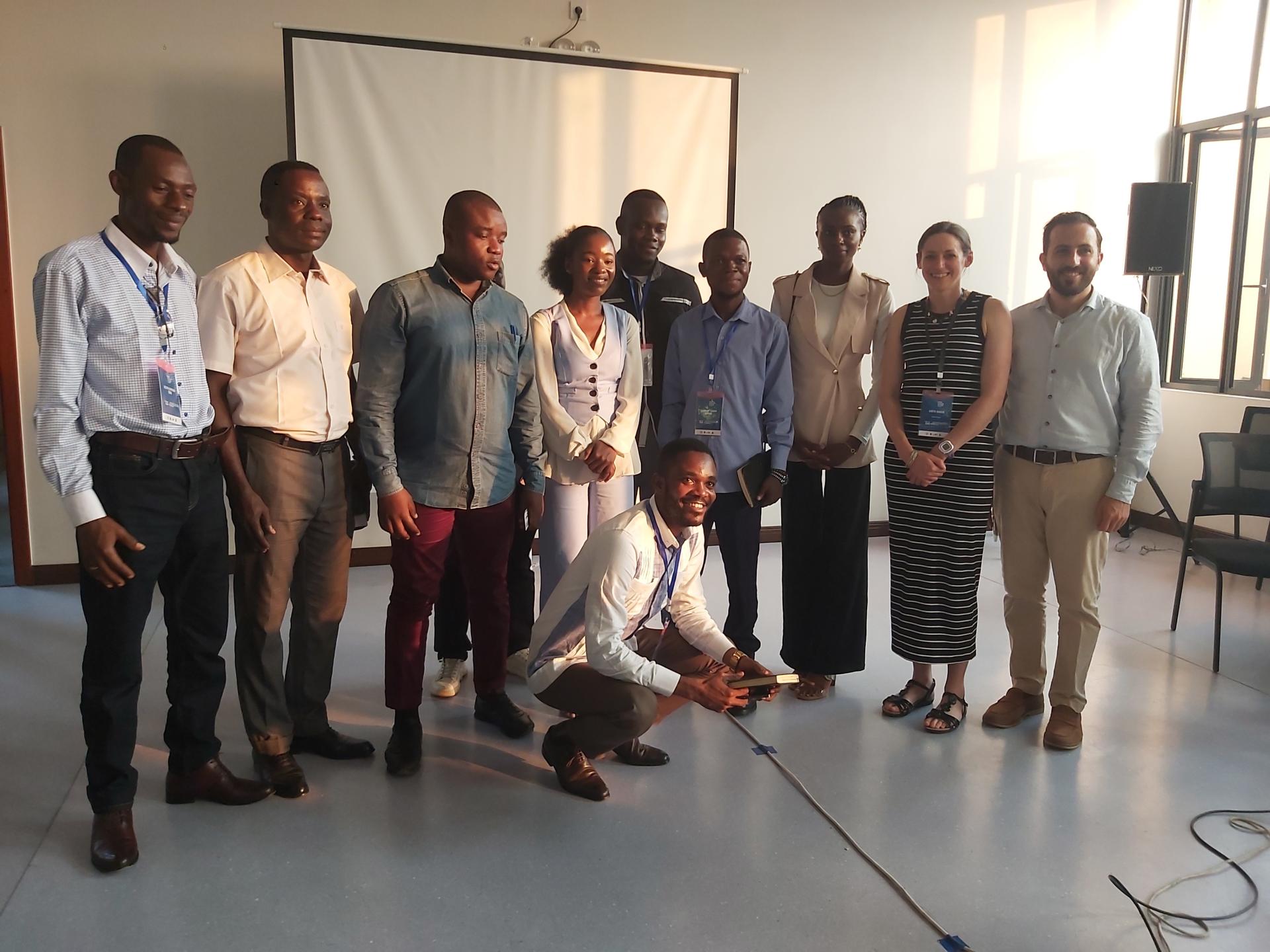
During the Congo Basin Forum 2025, the United Nations Environment Programme (UNEP) and its partners convened a side event titled “From Data to Decision: Advancing Sustainable Peatland Management in the Congo Basin through Hydrological Modeling and Monitoring Tools.” The session brought together over 60 participants—both in-person and online—to spotlight the power of data and science in shaping sustainable futures for one of the world’s most critical carbon sinks.
Held at the Centre Culturel et Artistique des Pays d’Afrique Centrale in Kinshasa, the hybrid session featured contributions from UNEP, FAO, GRID-Geneva, UNEP-DHI, and the University of Leeds. The event underscored the crucial role of the Congo Basin peatlands, which store approximately 29 billion tonnes of carbon—equivalent to nearly two years of global CO₂ equivalent emissions.
Juan Carlos Vasquez, Head of the Biodiversity, People and Landscapes Unit at UNEP, opened the session by highlighting the importance of the Congo Basin peatlands—not only for the region but for the health of the entire planet. He underscored their vital role in carbon storage, biodiversity conservation, and climate regulation.
“A study by researchers at Leiden University revealed that among over 18 million science-indexed publications between 2010 and 2019, only 3.9% were cited at least once by policy documents included in the Overton database,” noted Simon Tanios, Technical Coordinator of the water and climate component of the project, during the session’s opening. This example illustrates the critical need to strengthen the interface between science and policy, ensuring that research findings are more accessible, actionable, and impactful for decision-making processes.
Participants were introduced to various tools being co-developed under the IKI-funded project “Securing Crucial Biodiversity, Carbon, and Water Stores in the Congo Basin Peatlands by Enabling Evidence-Based Decision-Making and Good Governance.” These include a hydrological model and Hydrological Decision Support System (HDSS), a peatland monitoring system, and a spatial mapping platform. Developed in close collaboration with national counterparts in the Democratic Republic of the Congo (DRC) and the Republic of the Congo (RoC), these tools aim to enable evidence-based decision-making and strengthen sustainable peatland management across the Lac Télé–Lac Tumba landscape of the Congo Basin.
The session concluded with a lively Q&A session, where meaningful exchanges highlighted the enthusiasm and commitment of participants to continued collaboration. The IKI-funded Congo Peatlands Project will continue its activities until 2027, working closely with national stakeholders in the DRC and RoC to deliver these tools to relevant institutions. Efforts will focus on institutional anchoring, capacity strengthening, and the long-term sustainability of tool use and upgrades in the region.
The forum overall served as a dynamic platform for engagement and knowledge exchange, drawing participants from various countries around the world and representing a diverse range of stakeholders—from early-career researchers to experienced policymakers. Key discussions centered on scaling up research, improving access to data, and ensuring that conservation strategies remain inclusive and contextually appropriate. As one participant summarized, “Strengthening local research capacity and integrating it with global datasets is essential for effective, grounded decision-making.” One of the key takeaways was the strength of local scientific contributions, particularly from young researchers and students, in addressing complex sustainability challenges.
More information about the Congo Basin Landscapes Initiative here.
For more information on UNEP's work in the Congo Basin, please contact:
Annie Claude Nzamo, ac.nsom-zamo@un.org
Programme Management Officer, UNEP
For details about the session and UNEP’s water and climate work within the project, contact:
Simon Tanios, simon.tanios@un.org
Associate Programme Management Officer, UNEP